
A well-designed home is about more than choosing attractive finishes for individual rooms. Material consistency helps every space feel connected, creating a calmer and more intentional environment. By repeating complementary colours, textures and finishes throughout the home, designers establish visual harmony while allowing each room to maintain its own function and character.
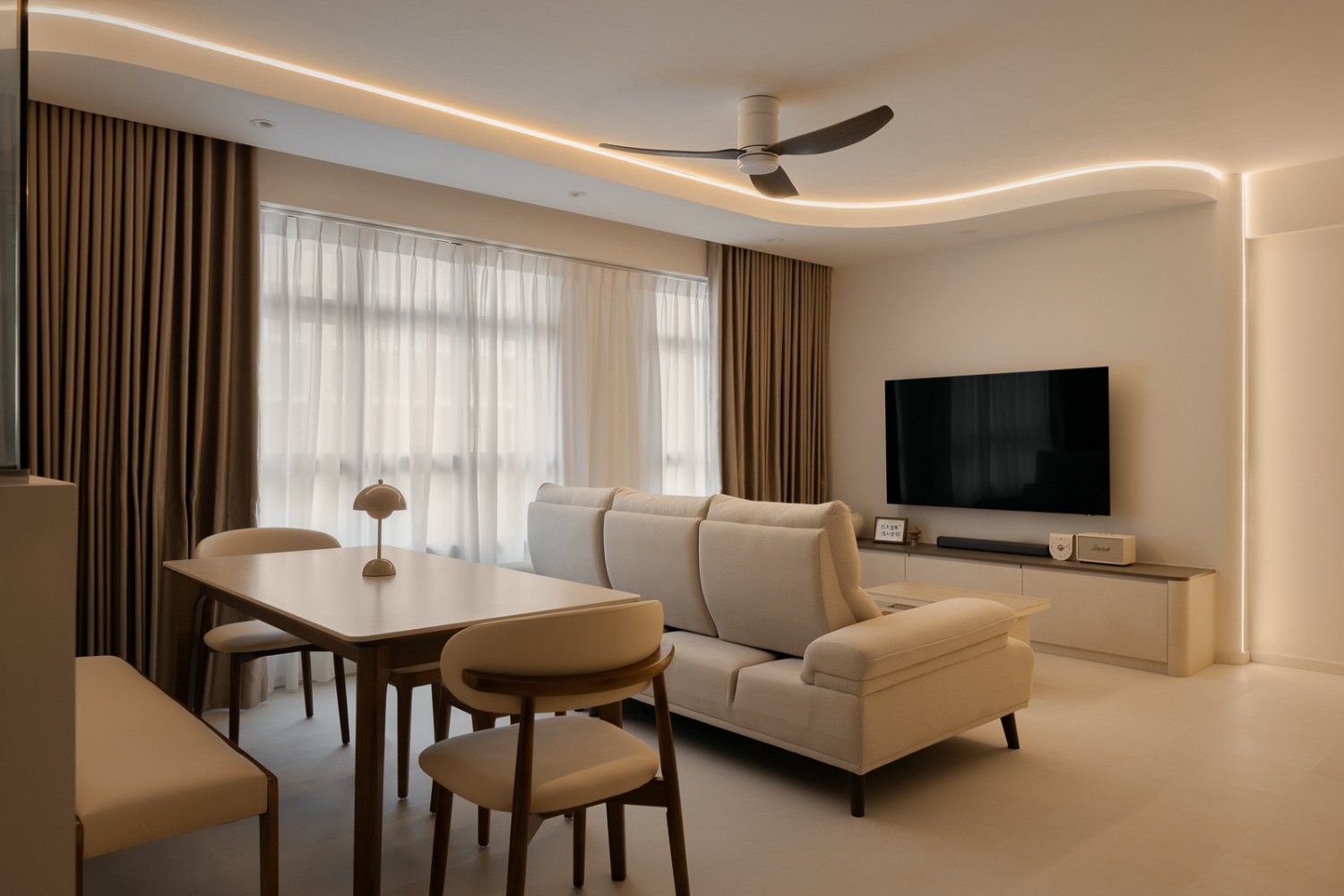
When homeowners begin planning a renovation, it is common to select finishes room by room. While each space may look appealing on its own, the overall home can end up feeling disconnected if materials, colours and textures change too dramatically from one area to another.
Material consistency is the design principle of creating visual continuity across the home through a carefully curated palette of finishes. Rather than introducing completely different colours and materials in every room, designers repeat selected elements in different ways, allowing the home to feel cohesive without appearing repetitive.
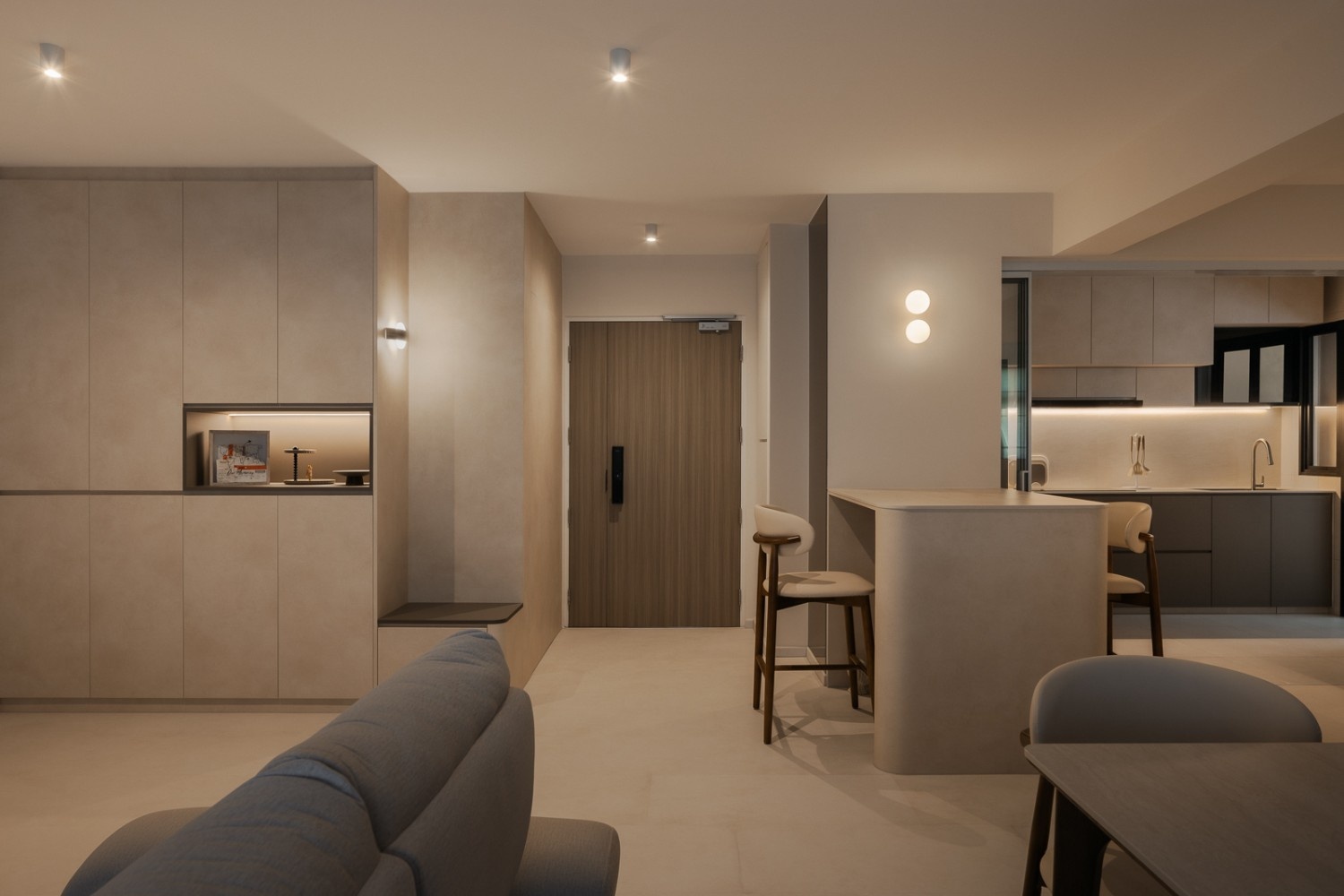
One of the biggest advantages of a consistent material palette is that it makes the home feel larger and more open. When flooring, cabinetry colours and wall finishes transition smoothly between spaces, the eye naturally moves throughout the home without unnecessary visual interruptions. This is particularly valuable in HDB flats and condominiums, where maintaining a sense of openness is often a priority.
In this home, warm neutral tones form the foundation of the design. Soft beige surfaces, light stone-inspired finishes and gentle taupe cabinetry are carried consistently from the living room into the kitchen, bathrooms and bedrooms. Rather than introducing bold feature walls or contrasting colours in each room, the design relies on subtle variations within the same colour family to create depth.
Wood accents are used selectively throughout the home to add warmth and definition. The dining chairs, bedroom doors, bathroom door frames and selected cabinetry all share similar dark wood finishes, helping each space feel visually connected. Because the wood appears consistently instead of randomly, it becomes a unifying feature rather than an isolated design element.
Another important aspect of material consistency is balancing contrast. Using the same finish everywhere can make a home feel flat or monotonous. Instead, designers often establish a hierarchy of primary and secondary materials. In this project, light-coloured surfaces remain the dominant material, while darker cabinetry and wood details provide contrast in carefully selected locations. This creates visual interest without disrupting the overall harmony.
Consistency also extends beyond colours and finishes into architectural details. Rounded corners appear repeatedly throughout the home, from the kitchen island to the ceiling profile and wall transitions. These recurring shapes reinforce the home's soft contemporary aesthetic and create a subtle design language that connects every room. Even when homeowners may not consciously notice these repeated details, they contribute significantly to how cohesive the home feels.
Lighting further strengthens material consistency by allowing finishes to appear similar throughout the day. Warm concealed lighting, backlit bathroom mirrors and evenly distributed ambient lighting ensure that the neutral palette maintains its inviting appearance regardless of the room. Consistent lighting colour temperatures also prevent different materials from appearing mismatched under varying light sources.
Storage design plays a role as well. Full-height cabinetry with clean, handleless profiles appears across multiple spaces, reducing visual clutter while maintaining the same minimalist aesthetic. Instead of treating storage as separate pieces of furniture, integrated cabinetry becomes part of the home's architectural language.
Material consistency also makes future updates easier. Homes built around timeless neutral finishes can accommodate changing furniture styles, artwork or decorative accessories without requiring major renovations. Homeowners have greater flexibility to refresh their interiors over time because the underlying material palette remains versatile and enduring.
Achieving consistency does not mean every room should look identical. Bedrooms, bathrooms and living spaces all serve different purposes and can introduce slight variations through furniture, lighting or decorative elements. The goal is to create enough continuity that the home feels intentionally designed as a whole, while allowing each space to express its own function.
Ultimately, a cohesive material palette creates more than visual appeal. It improves the flow between spaces, enhances the perception of openness and gives the home a timeless quality that remains enjoyable for years. By carefully repeating colours, finishes, wood accents and architectural details, designers can create interiors that feel balanced, welcoming and effortlessly connected.
Material consistency refers to using complementary colours, finishes and textures throughout a home to create a cohesive and visually connected interior.
No. The materials should complement one another rather than be identical. Small variations help define different spaces while maintaining overall harmony.
Neutral finishes provide flexibility, make spaces feel larger and create a timeless backdrop that works well with changing furniture and décor.
Repeating similar wood finishes across furniture, doors and cabinetry introduces warmth while visually linking different areas of the home.
Yes. Using a continuous palette of flooring, cabinetry colours and finishes reduces visual interruptions, making spaces feel more open and spacious.