
Dark wood has long been associated with luxury interiors, but many homeowners worry it will make their homes feel smaller or gloomy. When balanced with lighter finishes, natural daylight, and layered lighting, dark wood can instead create warmth, depth, and timeless elegance. Understanding this balance is key to designing a home that feels both inviting and visually refined.
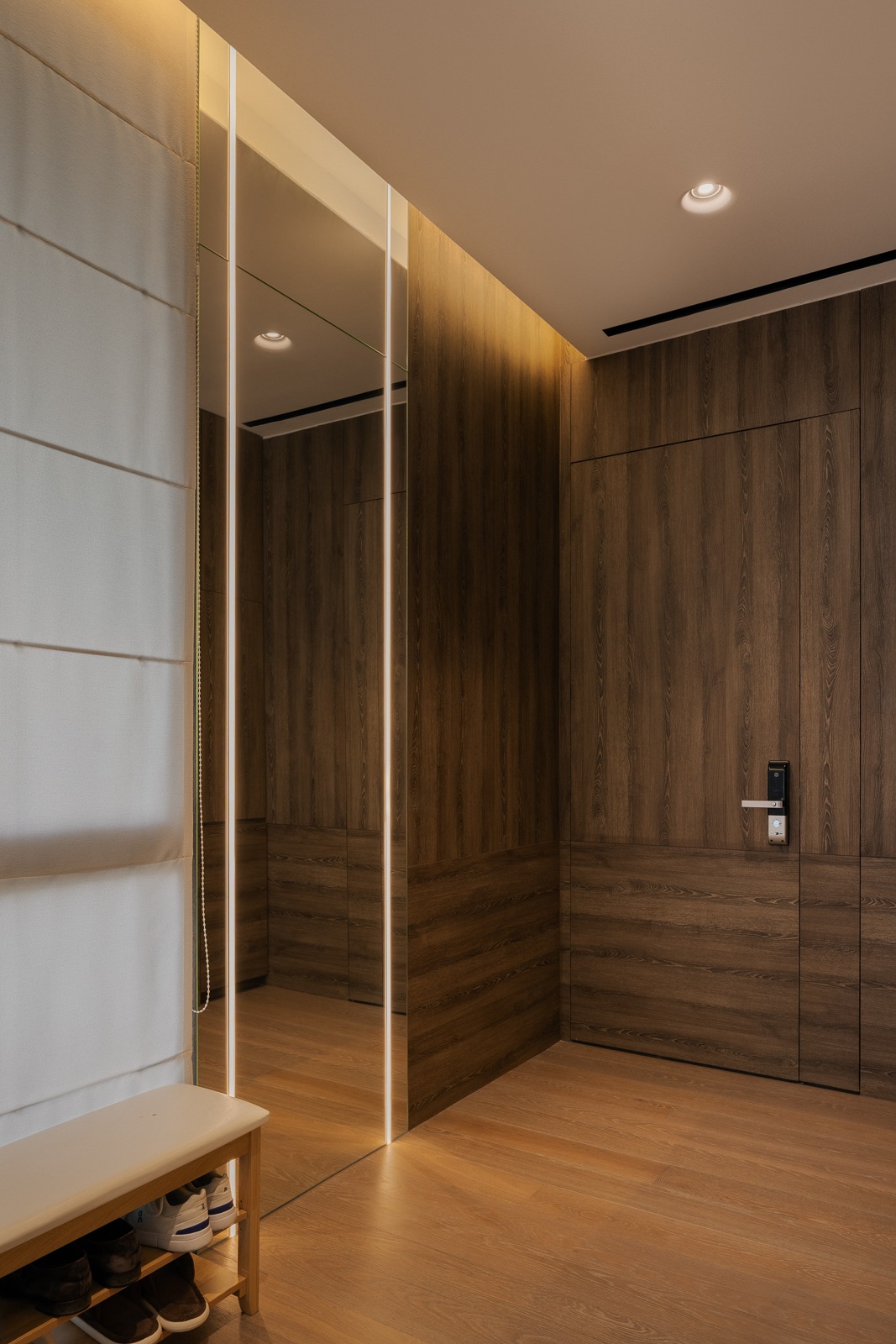
Many homeowners are naturally drawn to the richness of dark wood but hesitate to incorporate it into their renovation. A common concern is that darker finishes will make rooms feel smaller, reduce natural brightness, or create an overly heavy atmosphere. While these concerns are understandable, the outcome depends far more on how dark materials are balanced than on the colour itself.
One of the most effective design principles is contrast. Instead of applying dark wood throughout an entire room, designers often pair it with light walls, pale ceilings, and neutral furnishings. This creates visual balance by allowing each material to highlight the other. The lighter surfaces reflect daylight throughout the space, while the darker wood introduces depth, texture, and definition.
Natural light plays an equally important role. Large windows, full-height glazing, and sheer curtains soften incoming sunlight while allowing the wood to reveal its natural grain and warmth. Rather than appearing flat or oppressive, darker finishes become richer and more dimensional as the light changes throughout the day. This is why many contemporary interiors combine dark wood with generous daylight instead of relying solely on artificial lighting.
Layered lighting further enhances the effect after sunset. Instead of depending on a single bright ceiling light, designers typically combine recessed downlights, concealed LED strips, display lighting, and indirect cove lighting. These multiple light sources reduce harsh shadows and gently illuminate wood surfaces, making the space feel warm rather than dim. Warm colour temperatures, typically around 2700K to 3000K, complement wood particularly well by enhancing its natural tones.
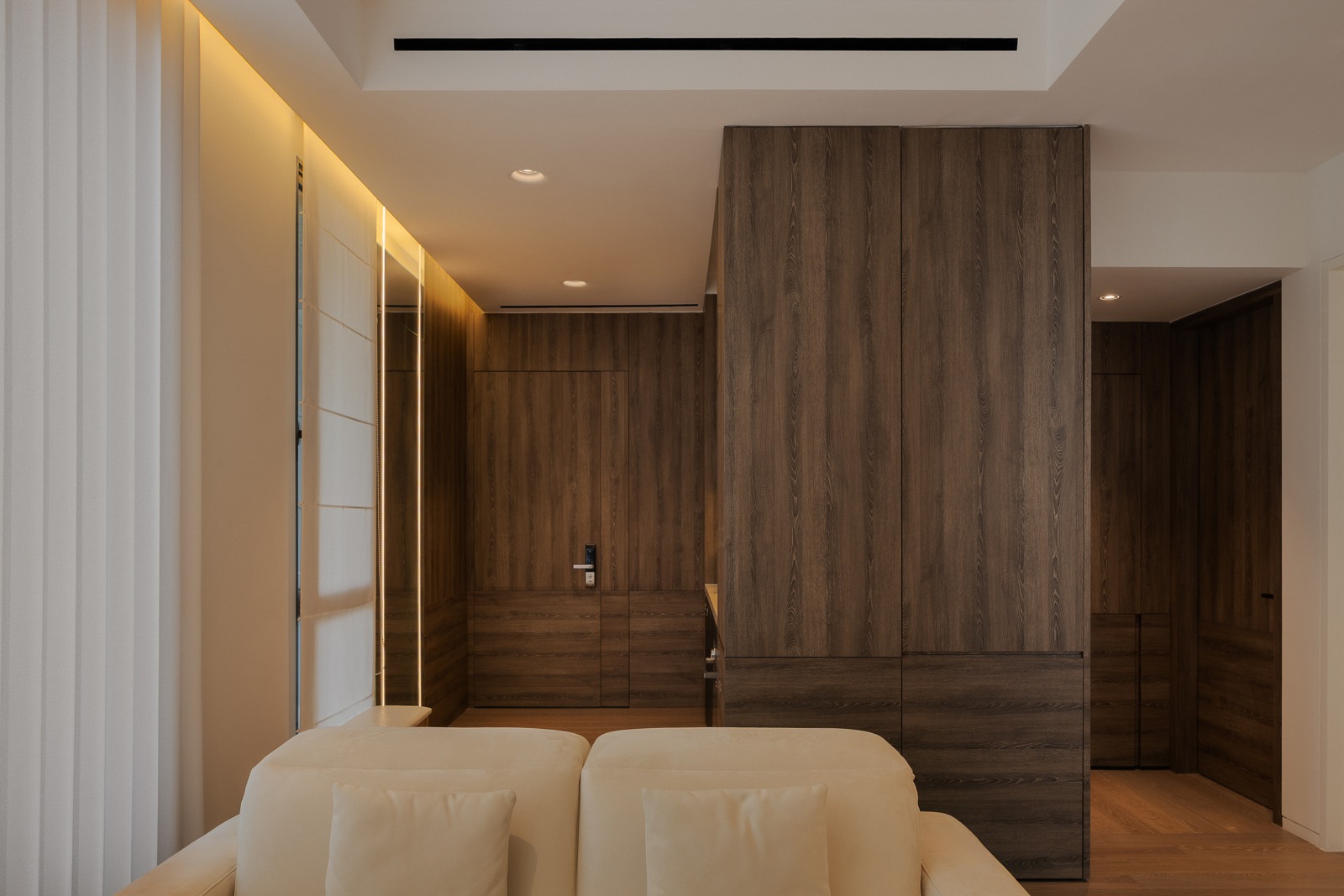
Another important consideration is where dark materials are placed. Large wardrobe walls, entrance cabinetry, or feature storage units often benefit from dark wood because they visually anchor the room. Surrounding these elements with lighter flooring, painted walls, or cream-coloured upholstery prevents the overall space from feeling overwhelming. This selective placement allows wood to become a focal feature without dominating the entire interior.
Texture also contributes significantly to the final appearance. Modern woodgrain laminates introduce subtle variations in tone and grain direction that create visual interest even within a restrained colour palette. Unlike glossy finishes, matte wood surfaces absorb light more softly and produce a calmer, more contemporary aesthetic. This understated finish aligns particularly well with modern minimalist interiors.
Dark wood also performs well from a practical perspective. Compared with very light finishes, it can be more forgiving in concealing minor wear, fingerprints, or everyday scuffs in frequently used areas such as entryways or living room cabinetry. At the same time, choosing durable laminate finishes simplifies maintenance while preserving the warmth associated with natural wood.
Storage design becomes especially important when working with darker materials. Large uninterrupted cabinet fronts can appear heavy if not carefully detailed. Designers often break up expansive surfaces with open display niches, integrated lighting, recessed handles, or subtle horizontal divisions. These features introduce rhythm and reduce visual mass while maintaining a clean, uncluttered appearance.
The furniture palette should complement rather than compete with the wood. Soft neutral sofas, light rugs, and simple coffee tables create visual breathing room that prevents the room from feeling enclosed. Black accents, such as slim furniture legs or lighting fixtures, can reinforce the contemporary character without overwhelming the softer tones.
Ultimately, dark wood is not about making a statement through colour alone. Its strength lies in creating contrast, warmth, and architectural depth. When balanced with natural light, concealed lighting, and lighter surrounding finishes, it produces interiors that feel elegant, comfortable, and timeless. Rather than making a home feel smaller, thoughtfully applied dark wood often gives it greater richness, sophistication, and a stronger sense of character.
Not necessarily. When balanced with light walls, natural daylight, and neutral furnishings, dark wood adds depth without making the room feel enclosed.
Soft whites, warm beiges, light greys, and natural stone tones complement dark wood while maintaining a bright and balanced interior.
Warm white lighting between 2700K and 3000K, combined with concealed LEDs and layered lighting, enhances the warmth and natural grain of wood finishes.
Yes. Dark wood can introduce warmth and visual contrast while preserving the clean lines and uncluttered appearance associated with minimalist interiors.
Incorporating display niches, integrated lighting, lighter surrounding materials, and simple detailing helps break up large surfaces and creates a lighter visual appearance.