
Microcement has become increasingly popular in contemporary interior design for its seamless appearance and understated elegance. Beyond its aesthetics, it offers practical advantages that make it suitable for modern homes when specified and installed correctly.
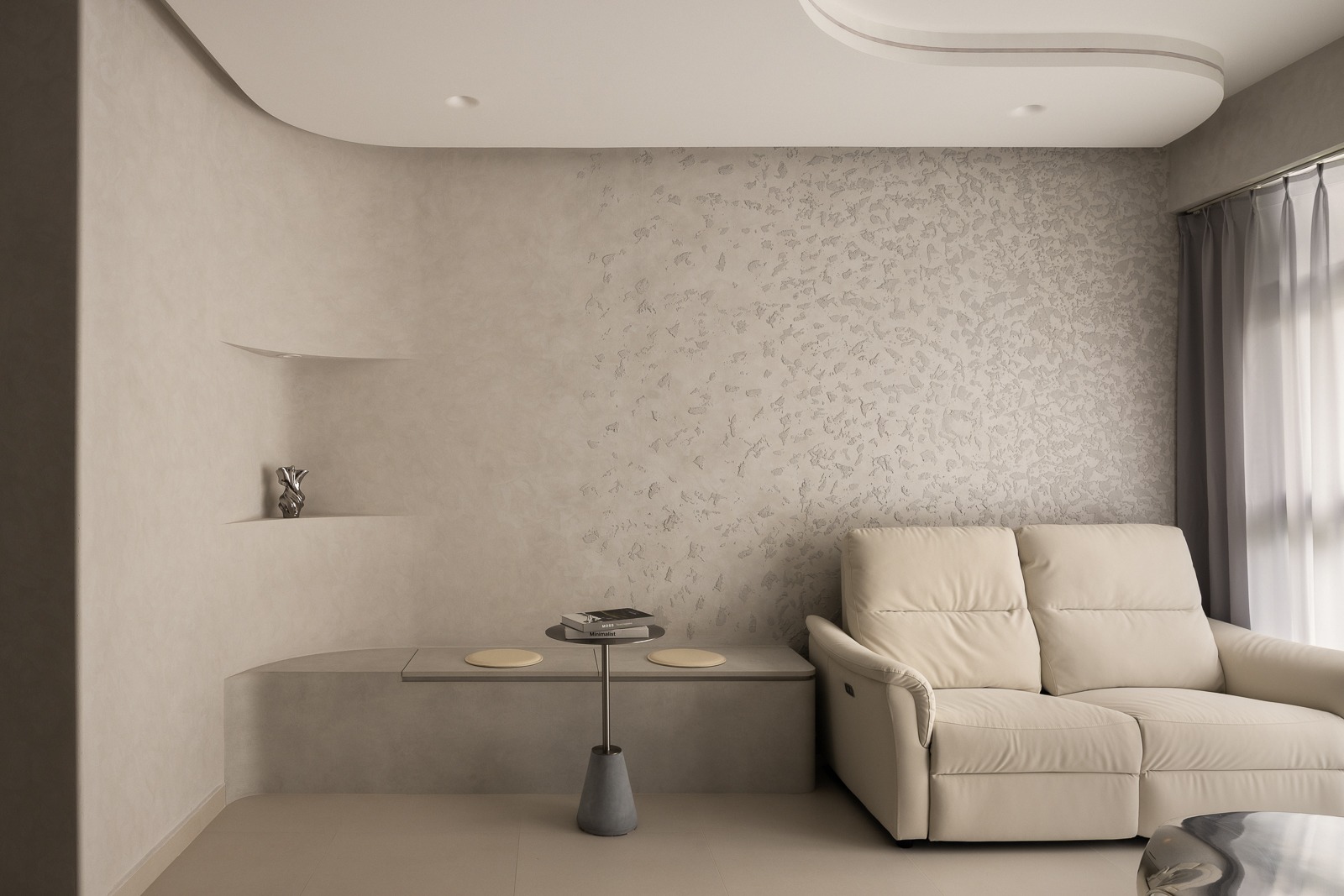
Interior finishes play a significant role in shaping how a home feels. While furniture and decorative pieces can easily be replaced, the walls, ceilings and built-in elements establish the architectural character of a space for years to come. One finish that has gained considerable attention in recent years is microcement, valued for its seamless appearance, tactile quality and ability to create calm, minimalist interiors.
Unlike conventional painted walls or tiled surfaces, microcement is a decorative cement-based coating that is applied in thin layers over prepared substrates. When installed correctly, it creates a continuous finish with minimal visible joints, allowing walls, cabinetry and architectural features to appear as though they have been sculpted from a single material.
One of the greatest advantages of microcement is its ability to visually enlarge a space. Traditional tiles introduce numerous grout lines that naturally divide surfaces into smaller sections. By removing these interruptions, seamless finishes encourage the eye to travel continuously across the room, creating a stronger perception of openness. This makes microcement particularly effective in compact apartments where visual spaciousness is highly valued.
The material also complements contemporary minimalist interiors because of its subtle texture. Rather than presenting a perfectly flat painted surface, microcement introduces gentle tonal variation and handcrafted movement. These natural imperfections add depth while remaining visually quiet, preventing minimalist spaces from feeling cold or overly clinical.
This home demonstrates how the finish can extend beyond walls into built-in cabinetry and kitchen elements. Concealed doors blend into surrounding wall panels, allowing functional storage to disappear into the architecture. Instead of individual furniture pieces competing for attention, the emphasis shifts towards the overall volume and form of the space.
Curved design elements further reinforce this sculptural approach. The rounded kitchen island softens circulation through the home while reducing sharp corners that often dominate compact layouts. Curves naturally encourage movement around the island and can improve comfort in high-traffic areas by eliminating hard edges.
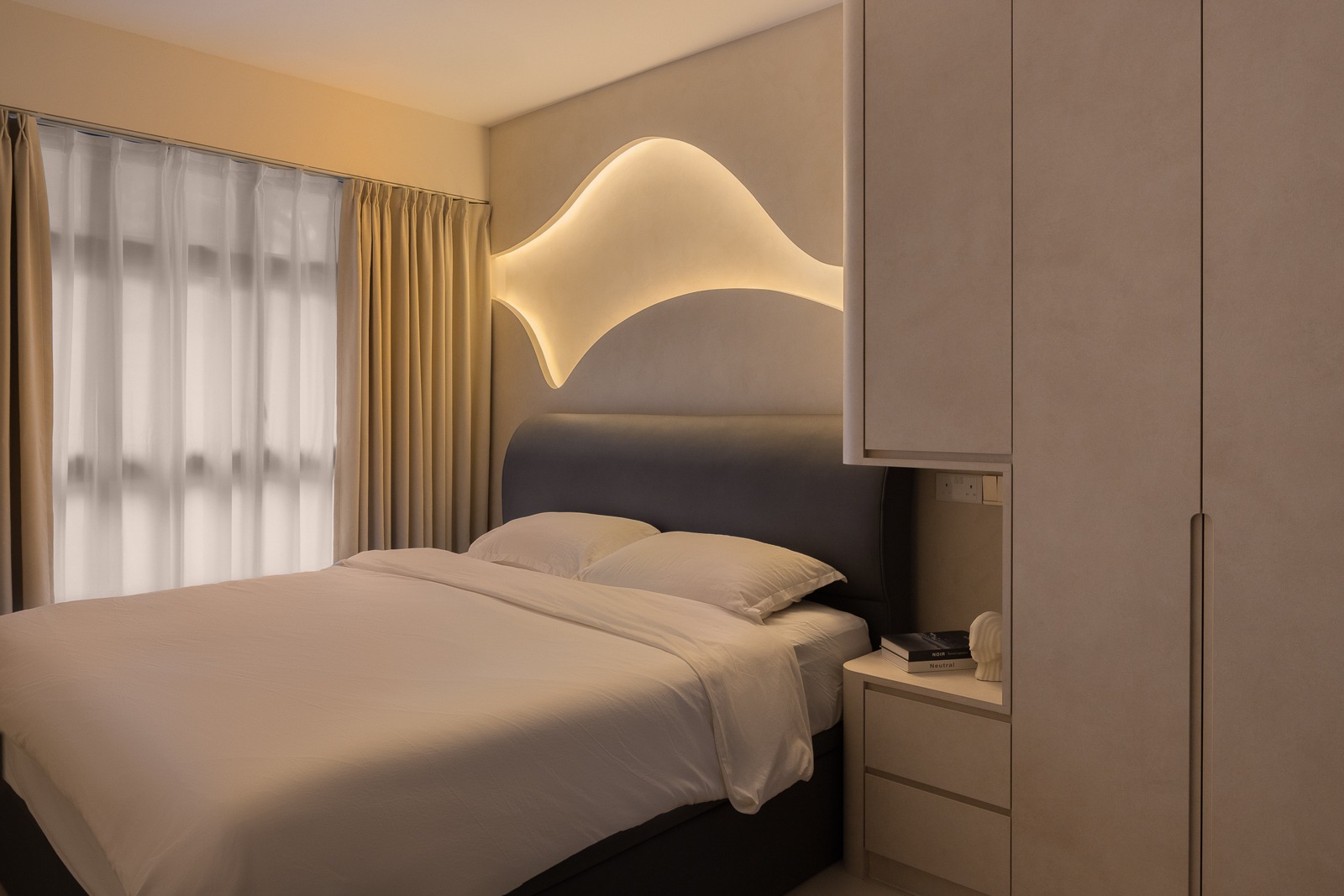
Soft geometry continues throughout the interior. Feature lighting, ceiling profiles and bedroom headboards adopt flowing organic forms instead of rigid straight lines. This repetition creates visual harmony because the same language of curves appears consistently across different spaces.
Lighting becomes particularly important when working with textured materials like microcement. Concealed LED strips grazing across curved walls and ceilings highlight subtle surface variations, producing soft shadows that enhance depth without overwhelming the interior. Indirect lighting also reduces glare, creating a more comfortable atmosphere for everyday living.
The decorative pendant lighting within the kitchen acts as both functional illumination and sculptural artwork. Large statement fixtures can become focal points in minimalist homes, allowing the overall material palette to remain restrained while introducing personality through form rather than excessive colour or ornamentation.
Another notable feature is the integration of concealed utility spaces. The laundry area is hidden behind full-height flush cabinetry that matches the surrounding walls. This allows everyday appliances to remain accessible without contributing visual clutter to the kitchen. Concealed utility zones are increasingly popular because they help maintain the calm aesthetic that many homeowners seek while keeping practical household functions close at hand.
Material restraint is another important lesson demonstrated throughout the project. Rather than introducing numerous finishes, the design relies on a carefully controlled palette of warm neutrals, soft greys and muted taupe tones. Limiting the number of materials allows individual architectural elements such as curved ceilings, textured walls and sculptural lighting to become the visual focus.
Homeowners considering microcement should also understand its practical requirements. The quality of installation is significantly more important than the material itself. Proper substrate preparation, experienced workmanship and suitable protective sealers are essential for achieving a durable finish. Poor installation may result in hairline cracking, uneven textures or premature wear.
Maintenance is generally straightforward. Daily cleaning typically requires only a soft cloth or mild detergent, while abrasive chemicals should be avoided to preserve the protective sealer. Periodic resealing may be recommended depending on the location and level of use, particularly in wet areas or high-traffic spaces.
Although microcement is highly versatile, it is not necessarily the best choice for every application. Homes with significant structural movement or unstable substrates may require additional preparation before installation. Working with experienced designers and contractors ensures that the material is used where its performance characteristics are most suitable.
Ultimately, the success of this interior lies not in the material alone but in the thoughtful integration of finish, lighting and form. Seamless surfaces reduce visual distraction, sculptural curves soften the architecture and concealed storage maintains a clean environment for daily living. Together, these decisions demonstrate how carefully selected materials can transform an ordinary apartment into a timeless home that feels calm, refined and intentionally designed.
Microcement is a thin cement-based decorative coating that creates seamless finishes on walls, floors, ceilings and built-in furniture with minimal visible joints.
Yes. When properly sealed and professionally installed, microcement performs well in kitchens and creates a clean, continuous appearance that is easy to maintain.
Microcement itself is durable, but its performance depends heavily on correct substrate preparation and installation. Structural movement beneath the surface may lead to cracks if not properly addressed.
Curves soften the visual appearance of a home, improve circulation around furniture and create a more welcoming, organic atmosphere compared to sharp geometric forms.
Concealed storage reduces visual clutter by hiding appliances and everyday belongings behind flush cabinetry, allowing architectural details and carefully selected materials to remain the primary focus.