
Lighting is one of the most overlooked aspects of interior design, yet it has one of the greatest influences on how a home looks and functions. Rather than relying on a single ceiling light, designers use layered lighting to improve visibility, enhance comfort and highlight architectural features while creating different moods for everyday living.
Many homeowners focus heavily on furniture, colours and finishes during renovation but underestimate the importance of lighting. In reality, the same room can feel entirely different depending on how it is illuminated. Good lighting is not simply about making a space brighter. It is about delivering the right amount of light, in the right location, for the right activity.
Professional interior designers typically divide lighting into three primary categories: ambient lighting, task lighting and accent lighting. When these three layers work together, a home becomes significantly more functional while also feeling more refined and comfortable.
Ambient lighting serves as the primary source of illumination within a room. Recessed downlights, concealed cove lighting and ceiling-mounted fixtures provide even illumination that allows occupants to move comfortably throughout the space. Instead of creating harsh bright spots, good ambient lighting distributes light evenly to reduce shadows and visual fatigue.
Task lighting focuses on areas where specific activities are performed. Kitchens require sufficient countertop lighting for food preparation, bathrooms need well-lit vanity areas for grooming, while reading corners benefit from dedicated lamps that reduce eye strain. By directing light exactly where it is needed, task lighting improves both safety and usability.
Accent lighting is used to create depth and visual interest. Unlike ambient lighting, which aims to illuminate the entire room, accent lighting highlights architectural details, textures, shelving, artwork or decorative niches. This subtle layer prevents interiors from appearing flat and introduces a greater sense of dimension.
This project demonstrates layered lighting exceptionally well. Concealed LED strips beneath kitchen cabinets illuminate the worktops without creating shadows caused by the upper cabinetry. Since the light source is positioned in front of the user rather than behind them, food preparation becomes safer and more comfortable.
Similarly, under-cabinet lighting near the floor serves more than just an aesthetic purpose. The soft glow creates a floating effect for the cabinetry while also acting as gentle night lighting. This allows homeowners to navigate the kitchen safely without switching on bright ceiling lights during late-night use.
The bathrooms illustrate another important lighting principle. Instead of relying solely on overhead lighting, concealed lighting around mirrors provides balanced facial illumination. This reduces shadows across the face, making activities such as shaving, skincare and makeup application much easier compared to lighting from a single ceiling fixture.
Another educational concept is the importance of colour temperature. Warm white lighting generally creates a relaxing atmosphere suitable for living rooms and bedrooms, while neutral white lighting often works better in kitchens, bathrooms and workspaces where colour accuracy and visibility are more important. Choosing inconsistent colour temperatures throughout a home can create visual discomfort and make spaces feel disconnected.
Designers also pay close attention to glare control. Exposed light sources can produce uncomfortable brightness that distracts occupants and reduces visual comfort. Concealed LED strips, recessed fixtures and indirect cove lighting minimise direct glare while still providing sufficient illumination. The result is a softer and more comfortable lighting environment.
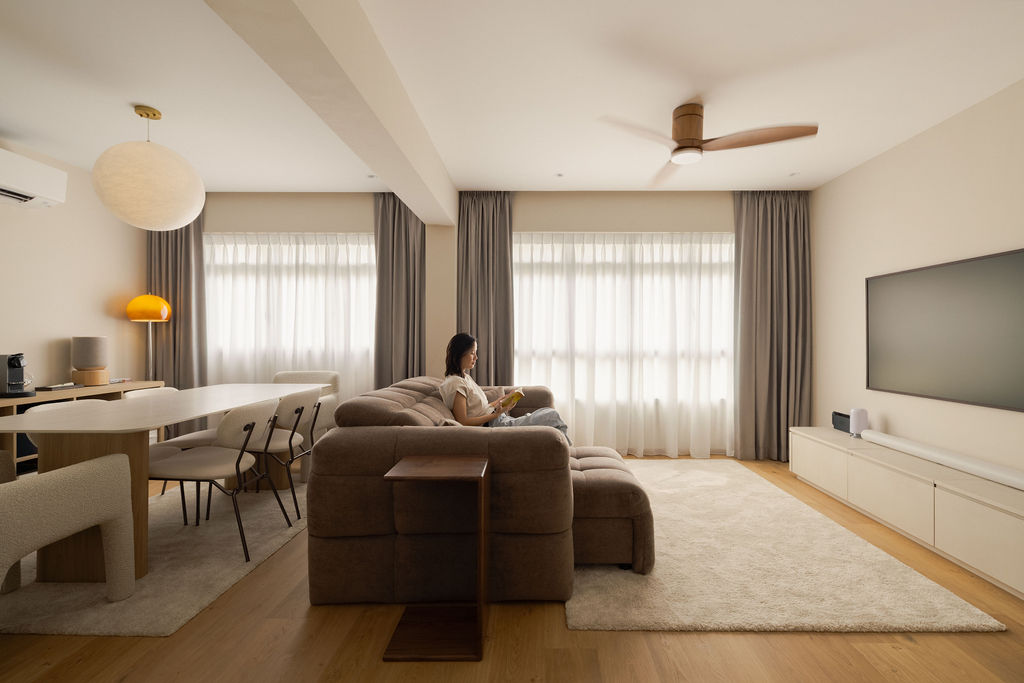
Natural light also forms an essential part of the lighting strategy. Large windows during the day reduce dependence on artificial lighting, while sheer curtains soften incoming sunlight and minimise harsh contrasts. As daylight fades, the layered artificial lighting seamlessly maintains a consistent level of brightness throughout the home.
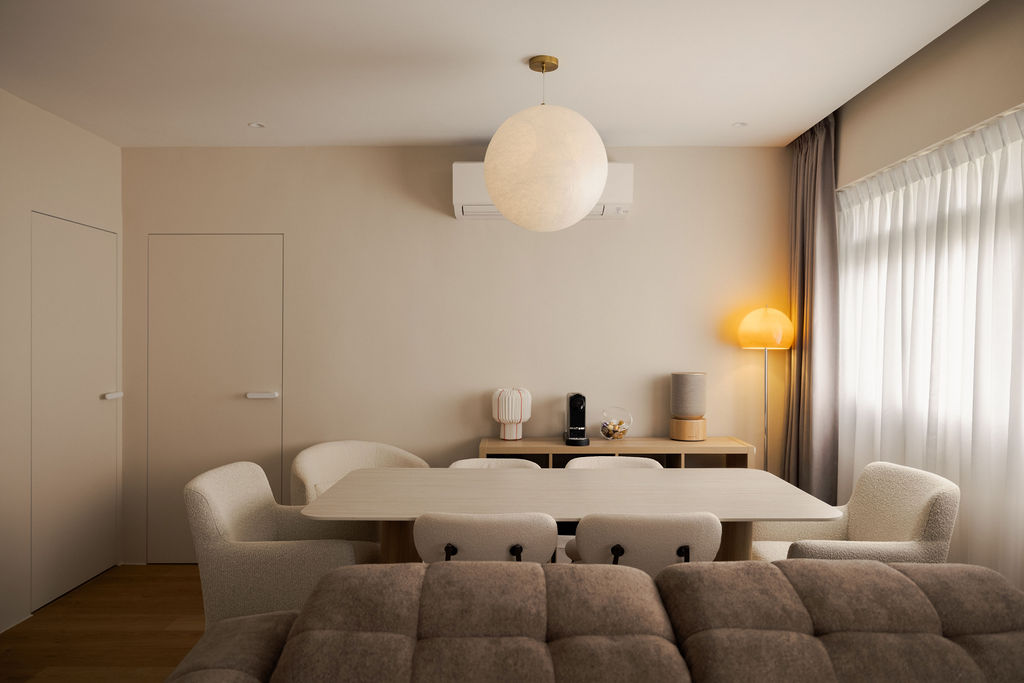
Lighting placement must also complement furniture layouts. For example, pendant lighting above the dining table provides focused illumination for meals while creating a visual centrepiece. Meanwhile, the surrounding ambient lighting ensures the rest of the room remains comfortably lit without creating excessive contrast.
Another principle demonstrated here is architectural lighting. Instead of using decorative fixtures alone, concealed lighting has been integrated into ceiling details and cabinetry to emphasise clean lines and proportions. These subtle highlights enhance the architecture itself rather than drawing attention solely to the light fittings.
Layered lighting also contributes to perceived spaciousness. By illuminating vertical surfaces, cabinetry and ceilings in addition to the floor, designers create greater visual depth. Rooms appear larger because the eye naturally perceives illuminated boundaries more clearly than dark, undefined edges.
Energy efficiency is another advantage of layered lighting. Rather than turning on every light simultaneously, homeowners can activate only the lighting needed for a particular activity. Reading, cooking, entertaining or relaxing each require different lighting levels, allowing energy consumption to be reduced without compromising comfort.
Finally, layered lighting supports emotional wellbeing. Bright, evenly illuminated environments improve concentration during work and household tasks, while softer indirect lighting encourages relaxation during evenings. Having multiple lighting scenes allows homeowners to adapt the atmosphere according to different activities throughout the day.
Ultimately, successful lighting design is not achieved by installing more light fixtures. It comes from understanding how different layers of light interact with architecture, materials and daily routines. When ambient, task and accent lighting are thoughtfully integrated, homes become brighter, more functional and significantly more enjoyable to live in.
Layered lighting combines ambient, task and accent lighting to create a balanced environment that is functional, comfortable and visually appealing.
Under-cabinet lighting illuminates work surfaces directly, reducing shadows and improving visibility for safer food preparation.
Warm white lighting is generally preferred for living and sleeping areas, while neutral white lighting works well in kitchens, bathrooms and workspaces where clearer visibility is needed.
Concealed lighting reduces glare, highlights architectural features and creates softer, more comfortable illumination compared to exposed light sources.
Yes. Illuminating ceilings, walls and architectural features creates greater visual depth, making rooms feel more spacious and open even without changing the physical layout.