
Minimalist interior design is not simply about removing furniture, decoration and colour. When too many elements are eliminated without considering texture, lighting and proportion, a home can feel sparse rather than intentional. A warmer approach to minimalism focuses on reducing visual clutter while introducing enough material depth, softness and contrast to create a comfortable living environment.
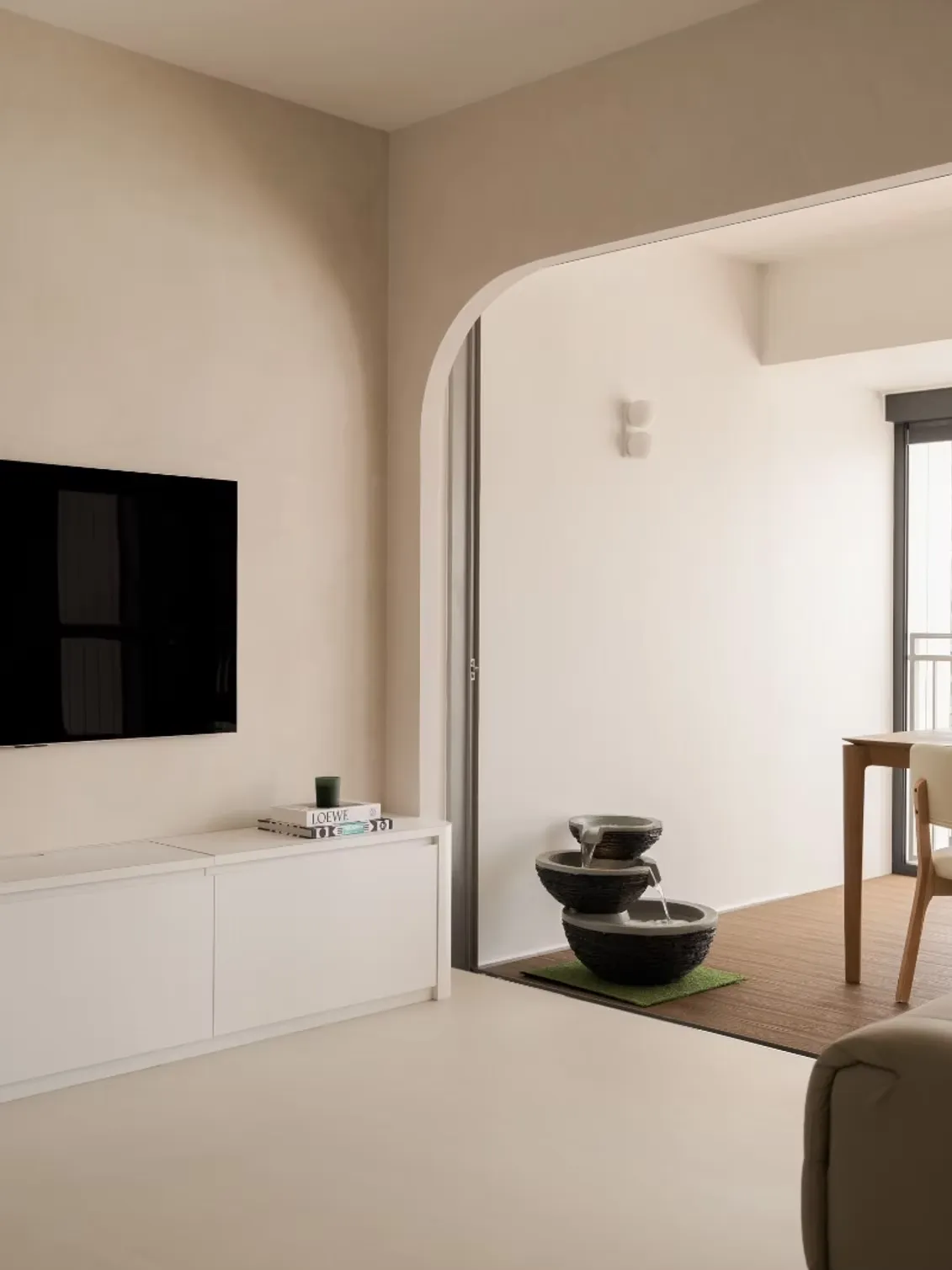
Minimalism is often interpreted as having fewer things, but the more useful principle is having fewer competing elements. A room can contain furniture, storage, artwork and personal belongings while still feeling minimalist if those elements have a clear visual relationship.
One reason some minimalist interiors feel cold is excessive uniformity. When walls, cabinetry, flooring and furniture all have similar smooth surfaces, there is little variation for light to interact with. The room may be visually clean, but it can also appear flat.
Texture provides a way to introduce depth without significantly increasing visual complexity. A textured wall beside smooth cabinetry, woven upholstery against a simple floor or subtle fluting within a built-in feature can create variation while maintaining a restrained palette.
The important distinction is between texture and pattern. Strong patterns often become focal points, whereas subtle textures can remain relatively quiet until viewed more closely. This makes texture particularly useful in minimalist interiors where the objective is to create richness without visual clutter.
Colour can be approached similarly. Warm minimalism does not require every surface to be beige. Instead, closely related neutral tones can be layered throughout a room. Off-white, cream, taupe, muted grey and warm wood tones can provide subtle differences between surfaces without creating strong visual boundaries.
Lighting has an equally important influence. A minimalist room illuminated only by bright overhead lights can feel considerably more clinical than the same space under softer, layered illumination.
Indirect lighting can wash walls or ceilings with light, while table lamps, pendants and concealed lighting create smaller areas of brightness. These layers produce shadows and gradients that reveal texture and make an otherwise simple room feel more dimensional.
Soft furnishings are another important counterbalance to architectural simplicity. Curtains, rugs, upholstered seating and bedding introduce materials that absorb both light and sound. Their visual softness helps offset the harder surfaces commonly found in flooring, cabinetry and countertops.
Furniture proportions should also be considered carefully. Minimalism does not require undersized furniture. In fact, one appropriately proportioned sofa can create a calmer composition than several smaller pieces occupying the same space.
Personal objects should not necessarily be removed either. A small number of books, artworks, ceramics or meaningful possessions can prevent a minimalist home from feeling anonymous. The difference lies in giving these objects sufficient space rather than displaying everything simultaneously.
Storage supports this approach by allowing homeowners to control what remains visible. Everyday objects can be kept within accessible concealed storage, while selected items become part of the interior.
Natural materials and nature-inspired finishes can also introduce warmth, but they should be used intentionally rather than applied to every surface. A few warm-toned elements can provide enough contrast against lighter neutral backgrounds.
Ultimately, warm minimalism is about editing rather than eliminating. Every surface does not need decoration, but neither does every surface need to look identical. By balancing simplicity with texture, comfortable furniture, layered lighting and selected personal objects, a minimalist home can feel both visually calm and genuinely lived in.
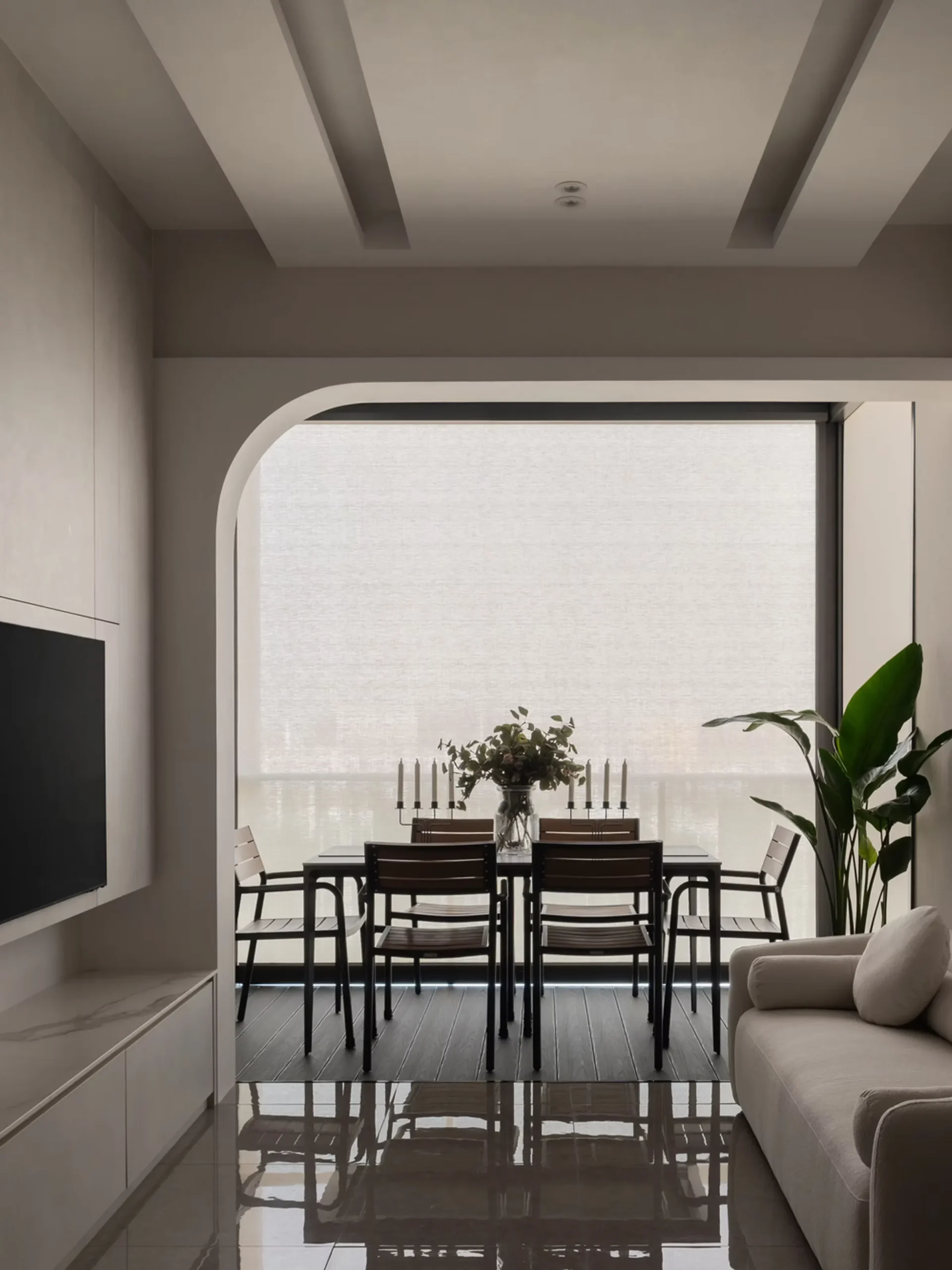
Layered lighting creates depth, highlights textures and produces a softer atmosphere than relying entirely on bright overhead illumination.