
Lighting is often treated as a finishing touch, but it is one of the most influential elements in interior design. A well-designed lighting scheme goes beyond simply making a room brighter. By layering different light sources, designers can improve functionality, create depth and highlight architectural features while allowing the ambience of a home to adapt throughout the day.
When homeowners think about lighting, they often focus on selecting attractive light fixtures or ensuring there are enough ceiling lights. While these decisions are important, professional lighting design is built upon a much broader concept known as layered lighting. Rather than relying on a single source of illumination, layered lighting combines multiple light types to support different activities while enhancing the overall character of the space.
The three primary layers are ambient lighting, task lighting and accent lighting. Ambient lighting provides the general illumination that allows people to move comfortably throughout a room. Task lighting delivers focused brightness for specific activities such as reading, cooking or working. Accent lighting highlights architectural details, artwork or decorative objects to create visual interest and depth.
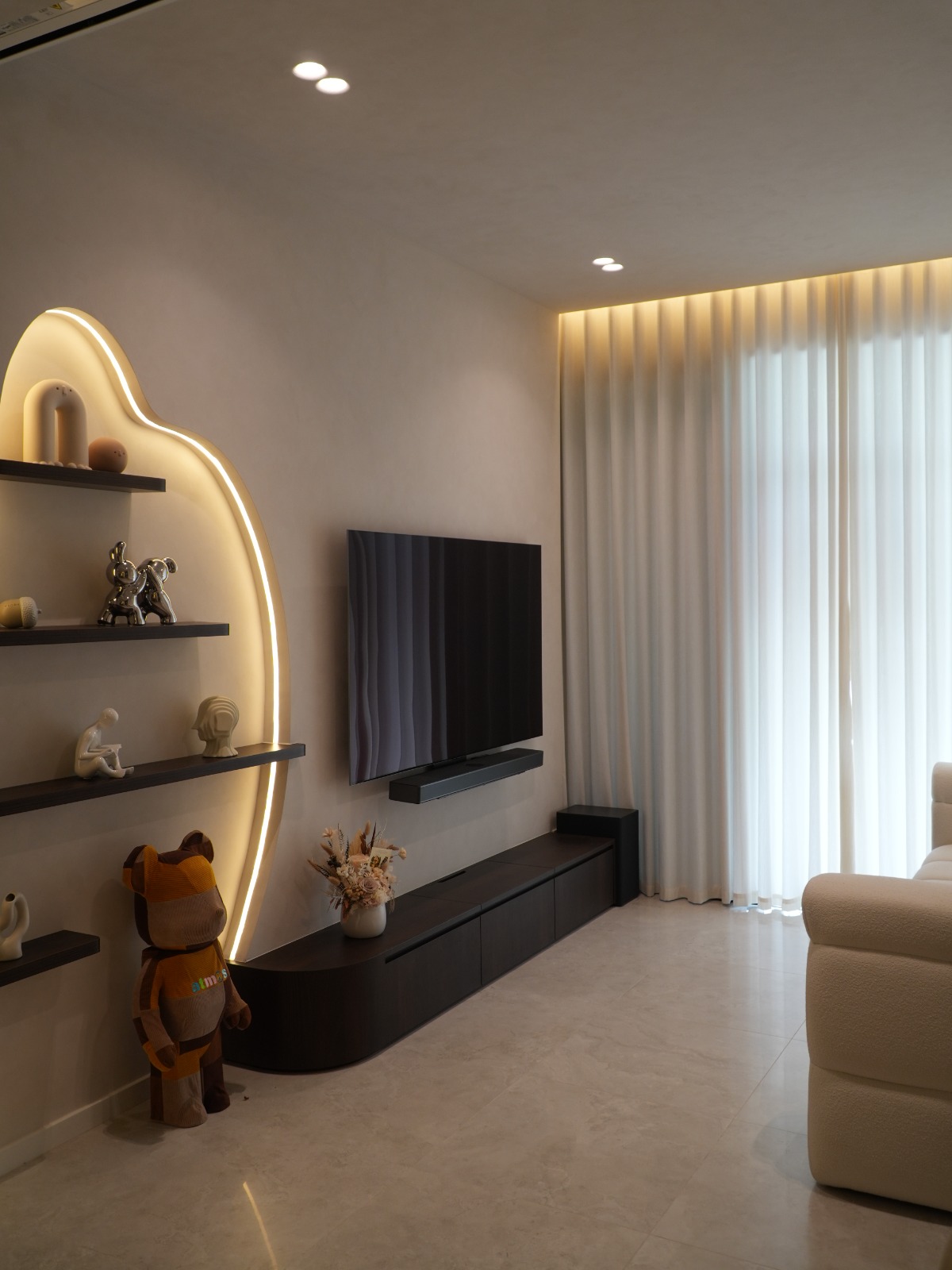
This home demonstrates how these three layers work together seamlessly. Recessed downlights provide consistent ambient lighting across the living area, ensuring the space remains bright enough for everyday activities. Instead of depending entirely on these ceiling lights, concealed LED strips introduce softer illumination that creates a more comfortable atmosphere while reducing harsh shadows.
One of the most striking examples is the illuminated feature wall with floating shelves. At first glance, the concealed lighting appears purely decorative, but it serves several practical purposes. The backlighting defines the organic architectural form, making it stand out even when the room is dimly lit. It also separates the feature from the surrounding wall, creating an illusion of depth that makes the room feel larger than its physical dimensions.
This illustrates an important interior design principle known as visual layering. By introducing light at different depths within the same wall, designers create contrast between illuminated and shadowed surfaces. The human eye naturally perceives these variations as dimensional, giving otherwise flat walls a richer architectural presence.
Floating shelves also benefit significantly from accent lighting. Decorative objects often become difficult to appreciate under standard ceiling lights because shadows obscure their form. By illuminating the display from behind, each decorative piece gains greater definition while avoiding excessive glare. This allows homeowners to showcase personal collections without requiring additional table lamps or spotlights.
The dining area demonstrates another important aspect of layered lighting through the suspended pendant light positioned directly above the table. Unlike general ceiling lighting, pendant lights create a more intimate pool of illumination that visually anchors the dining space. This subtle distinction helps define the dining area within an open-plan layout, allowing each zone to feel purposeful without introducing physical partitions.
Lighting also influences how materials are perceived. Smooth plaster walls, textured finishes, timber veneers and natural stone all interact differently with light. Soft indirect lighting reveals subtle textures that might disappear under harsh direct illumination. In this home, the textured wall finish becomes noticeably richer because concealed lighting gently washes across its surface rather than striking it directly.
Another educational concept demonstrated here is the use of indirect lighting to reduce visual fatigue. Direct lighting exposes the light source itself, which can create glare and discomfort during prolonged use. Indirect lighting conceals the light source, allowing illumination to bounce off surrounding surfaces before reaching the eye. This creates a softer environment that feels more relaxing, particularly during the evening.
Lighting can also influence how spacious a room appears. Bright ceilings naturally draw the eye upward, making spaces feel taller, while illuminated feature walls visually extend room boundaries. By strategically placing concealed lighting along architectural curves and recessed niches, designers create the perception of greater depth without altering the actual floor area.
An often-overlooked benefit of layered lighting is flexibility. Different activities require different lighting conditions. Bright ambient lighting may be ideal for cleaning or entertaining guests, while softer accent lighting creates a relaxing atmosphere for watching television or winding down after work. A layered lighting plan allows homeowners to adjust the mood without changing the physical design of the home.
The colour temperature of lighting is equally important. Warm white lighting, typically between 2700K and 3000K, creates a welcoming atmosphere that complements timber, neutral palettes and textured finishes. Cooler lighting may provide higher perceived brightness but can make residential interiors feel clinical if used excessively. This home demonstrates how warm lighting reinforces the calm, comfortable ambience while maintaining sufficient functionality.
Another key lesson is that lighting should work together with architecture rather than compete against it. Instead of placing decorative fixtures throughout every room, this project integrates lighting directly into the architectural forms. The illuminated feature wall, concealed LED strips and subtle pendant lighting all become part of the design itself, allowing the lighting to enhance the architecture rather than dominate it.
Effective lighting design is also about restraint. Excessive spotlights, overly bright LED strips or decorative fixtures placed without purpose can create visual clutter and uneven illumination. Professional designers carefully balance brightness, placement and contrast so that each layer complements the others rather than overwhelming the space.
Ultimately, successful interior lighting is not measured by how bright a room becomes, but by how comfortably it supports everyday life. Through thoughtful layering, careful placement and integration with architectural features, lighting becomes an invisible design tool that shapes atmosphere, improves functionality and elevates the overall living experience.
Layered lighting combines ambient, task and accent lighting to create a balanced environment that supports different activities while enhancing the overall appearance of a home.
Accent lighting highlights architectural features, artwork and decorative objects, creating depth and visual interest that cannot be achieved with ceiling lighting alone.
Ambient lighting provides overall illumination for the room, while task lighting delivers focused brightness for specific activities such as reading, cooking or working.
Yes. Besides creating ambience, concealed lighting improves visual comfort, highlights textures and architectural forms, reduces glare and contributes to the perception of a larger space.
Warm white lighting between 2700K and 3000K is generally preferred because it creates a comfortable, welcoming atmosphere while complementing natural materials and neutral colour palettes.