
Lighting is often the defining element that separates a minimalist home from one that feels cold or unfinished. Rather than relying solely on ceiling lights, a layered lighting strategy introduces warmth, highlights architectural details and enhances the atmosphere throughout the day. This home demonstrates how carefully integrated lighting creates depth while maintaining the simplicity that defines contemporary minimalist design.
Minimalist interiors are often associated with clean lines, neutral colours and uncluttered spaces. While these qualities create a calm environment, they can also make a home feel flat if lighting is treated as an afterthought. A successful minimalist home relies on lighting as an architectural element rather than simply a source of illumination. When multiple layers of lighting are thoughtfully integrated, they create warmth, improve functionality and bring depth to even the simplest interior.
This residence demonstrates how lighting can quietly shape the overall experience of a home. Instead of depending on a single ceiling fixture, different lighting layers work together to define individual spaces while maintaining a cohesive visual language. Warm lighting softens the neutral palette, enhances material textures and creates a welcoming atmosphere from the moment one enters the home.
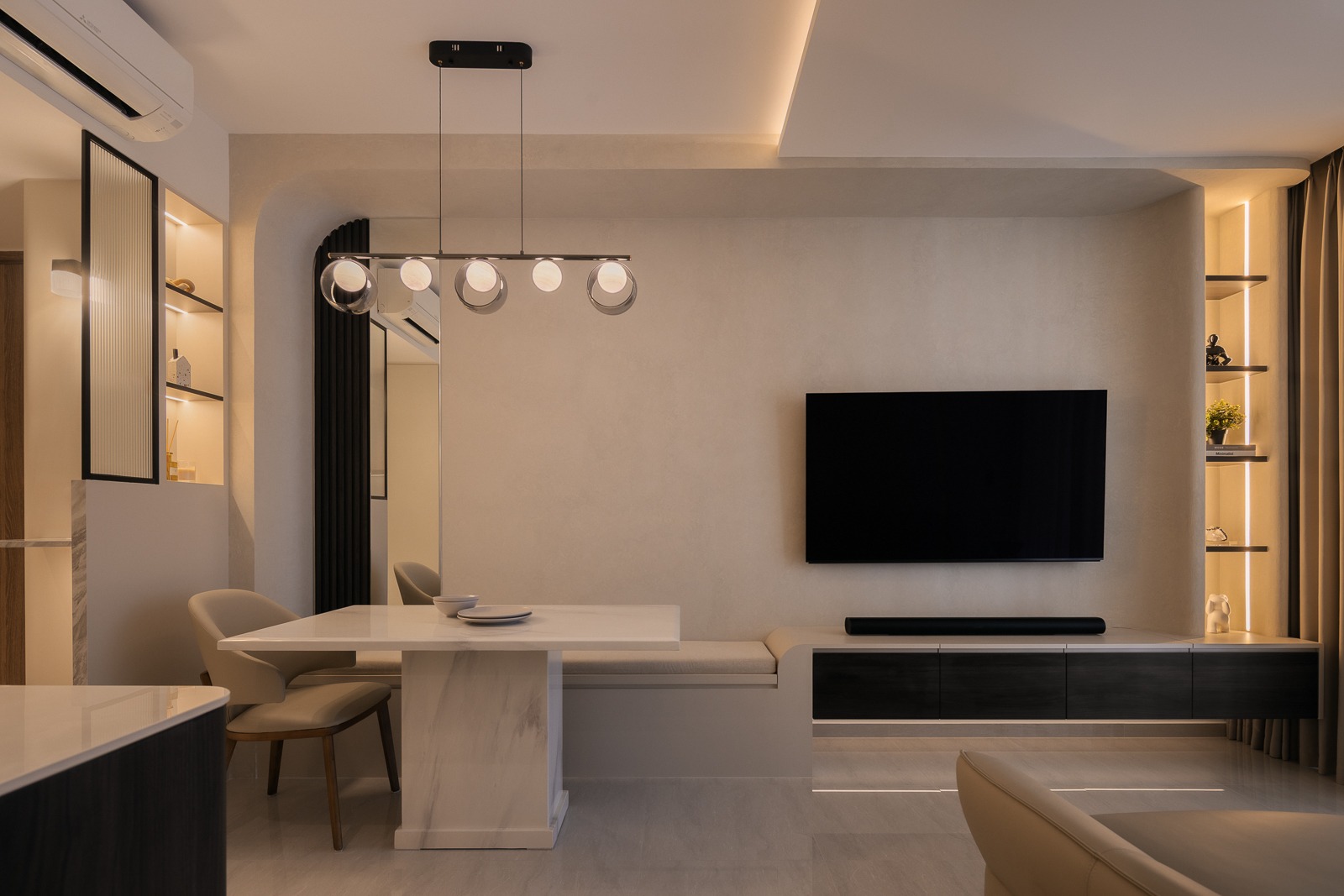
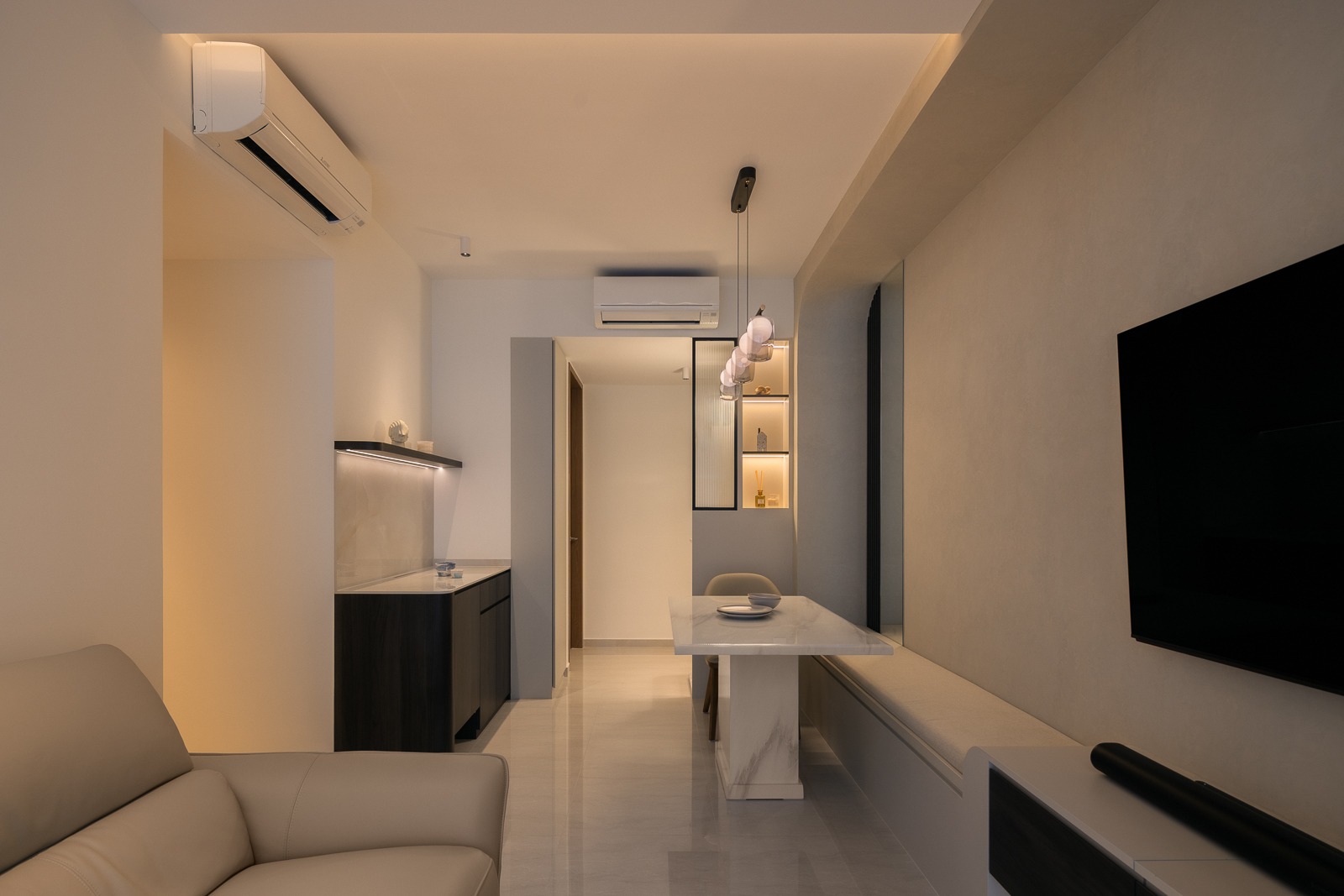
Indirect cove lighting forms the foundation of the lighting strategy. Hidden within the ceiling recesses, it gently washes light across the ceiling instead of shining directly into the room. This creates a softer ambience while visually lifting the ceiling, making the compact apartment feel more spacious. By eliminating harsh shadows, indirect lighting also contributes to a more relaxing environment suitable for both entertaining and everyday living.
Feature lighting further reinforces the architectural composition. Open display shelves are illuminated with concealed LED strips, drawing attention to decorative objects without overwhelming the overall design. Rather than becoming focal points themselves, the lights subtly emphasise the clean geometry of the shelving while introducing visual depth to otherwise flat walls.
The television feature wall illustrates how lighting and architecture can complement one another. Soft underlighting beneath the floating console creates the illusion that the cabinetry is suspended above the floor, reducing its visual weight and allowing the living area to feel lighter. Vertical illuminated shelving beside the television introduces balance while framing the feature wall with a gentle glow that enhances the room during the evening.
Task lighting remains equally important within a layered lighting approach. The study area incorporates integrated cabinet lighting that provides focused illumination across the work surface without creating glare on the computer screen. This improves usability while allowing the workspace to blend seamlessly into the home's minimalist aesthetic. By embedding lighting directly into the cabinetry, functionality is achieved without introducing unnecessary fixtures.
The bedroom adopts a similar philosophy through concealed headboard lighting. A continuous strip of warm light behind the upholstered headboard creates a soft backdrop that replaces the need for bright overhead lighting before bedtime. Integrated bedside lights provide focused illumination for reading while maintaining a calm and uncluttered appearance. The result is a sleeping environment that feels restful and intimate without sacrificing practicality.
Warm colour temperatures play a significant role in achieving this atmosphere. Throughout the home, lighting leans towards warm white tones rather than cooler daylight lighting. This complements the soft neutral palette, textured finishes and timber accents, creating an environment that feels comfortable throughout both day and night. Cooler lighting may provide greater brightness, but warmer tones generally contribute to a more relaxing residential setting.
Lighting also helps define different functional zones within an open-plan layout. The dining pendant creates a clear visual centre for meals without requiring physical partitions. Meanwhile, indirect ceiling lighting connects the living and dining areas into a cohesive whole, allowing each space to maintain its identity while preserving an open sense of continuity.
An effective lighting design also considers what remains hidden. Recessed light sources, concealed LED strips and integrated fixtures minimise visual clutter by allowing the architecture to take centre stage. Rather than filling the ceiling with numerous downlights, carefully positioned lighting creates a cleaner appearance while producing a more balanced distribution of illumination throughout the home.
Perhaps most importantly, layered lighting allows the home to adapt throughout the day. Bright task lighting supports cooking, working and other daily activities, while softer ambient lighting transforms the same spaces into comfortable environments for relaxing in the evening. This flexibility improves not only functionality but also the emotional experience of living within the home.
Ultimately, good lighting is not simply about brightness. It is about creating atmosphere, supporting daily routines and enhancing architectural design without drawing unnecessary attention to itself. By combining ambient, task and accent lighting into a cohesive strategy, this warm minimalist home demonstrates how thoughtful illumination can elevate every space while preserving the elegance and simplicity that define contemporary interior design.
Layered lighting combines ambient, task and accent lighting to create a balanced environment that is both functional and visually comfortable.
Warm lighting softens neutral colours, highlights material textures and creates a more inviting atmosphere compared to cooler lighting.
Hidden LED lighting reflects off ceilings, walls and cabinetry, reducing harsh shadows and visually expanding the perceived size of a space.
Yes. A well-proportioned pendant light helps define the dining space while providing focused illumination without requiring additional partitions.
Yes. By combining indirect lighting, integrated cabinetry lighting and decorative fixtures, homeowners can achieve better illumination while maintaining a cleaner and more minimalist ceiling design.