
Curves are becoming increasingly popular in modern interior design, offering a softer alternative to rigid straight lines. When thoughtfully integrated into ceilings, cabinetry, furniture and architectural elements, curved forms improve visual flow, soften spatial transitions and create homes that feel both elegant and comfortable without sacrificing functionality.
For many years, interior design has been dominated by straight lines, sharp corners and perfectly rectangular forms. While these elements create order and efficiency, an interior made entirely of straight edges can sometimes feel overly rigid. Introducing curves offers an effective way to soften a home's character while improving how spaces connect and flow together.
Curved design is far more than a decorative trend. When incorporated strategically, it influences circulation, enhances spatial perception and creates interiors that feel more inviting. In compact homes especially, rounded forms reduce visual interruption, allowing the eye to move naturally throughout the space.
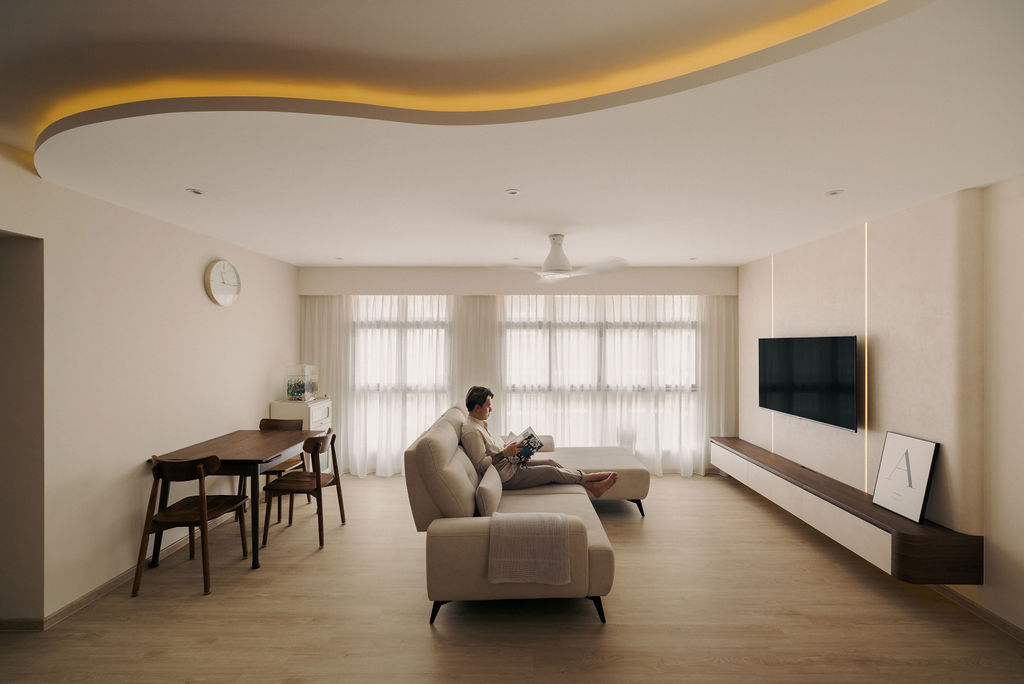
One of the most noticeable examples is the curved feature ceiling in the living area. Rather than ending abruptly, the ceiling gently sweeps across the room, creating a continuous visual movement that draws attention without overwhelming the space. Concealed cove lighting further emphasises this flowing profile, producing soft indirect illumination that highlights the architecture instead of relying solely on decorative fittings.
Rounded corners are repeated throughout the home to reinforce this sense of continuity. The kitchen peninsula replaces conventional square edges with smooth curves, making the breakfast counter feel lighter and easier to navigate. Besides contributing to the overall aesthetic, rounded corners improve safety by reducing sharp edges in frequently used circulation areas, making them especially practical for families with young children.
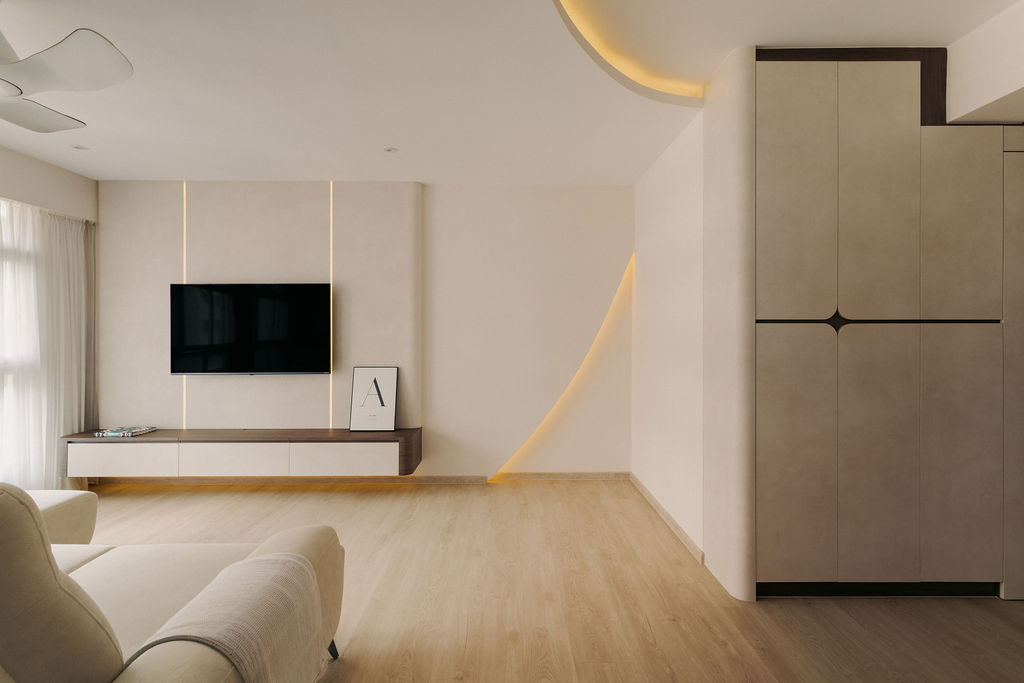
The living room demonstrates how curved detailing can coexist with clean contemporary design. The floating television console incorporates rounded ends that soften what would otherwise be a long linear feature wall. Slim vertical lighting integrated into the television backdrop introduces subtle visual rhythm while maintaining the minimalist appearance of the space.
Curves are also paired with carefully selected materials to enhance their effect. Neutral stone-inspired laminate finishes, warm timber accents and light wood flooring provide a restrained palette that allows the architectural forms to become the focal point. Instead of relying on bold colours or heavy textures, the design creates interest through shape, proportion and lighting.
The kitchen illustrates how curved forms can improve functionality without compromising efficiency. The peninsula extends preparation space while providing casual seating, making it suitable for quick meals, conversations or entertaining guests. Rounded edges encourage easier movement around the island, particularly in kitchens where circulation space may be limited.
Lighting plays a significant role in reinforcing the softness of these forms. Warm concealed LED lighting beneath cabinets, behind the bedhead and within ceiling coves creates gentle layers of illumination that reduce harsh shadows. This approach produces a comfortable atmosphere during the evening while also emphasising the home's architectural details.
Storage planning has also been carefully integrated into the design. Full-height cabinetry near the entrance maximises vertical storage while incorporating open shelving that breaks up large cabinet surfaces and provides opportunities for displaying books and decorative objects. This combination keeps practical storage discreet while preventing the joinery from feeling visually heavy.
In the bedroom, functionality is seamlessly integrated into the furniture design. The custom vanity transitions into a bedside ledge through a continuous curved profile, creating a multifunctional piece that saves space while maintaining visual consistency. Floating bedside tables and concealed lighting further contribute to the room's calm and uncluttered appearance.
Even the bathroom reflects the same design philosophy. Textured wall tiles introduce depth without relying on strong colour contrasts, while the floating vanity enhances the perception of floor space. A mirrored cabinet provides concealed storage, helping everyday essentials remain organised without crowding the compact room.
Material consistency strengthens the home's cohesive identity. Similar neutral tones, timber accents and softly textured finishes appear across the living room, kitchen, bedroom and bathroom, allowing each space to feel connected. Rather than designing each room independently, the home follows a unified language that supports both visual harmony and long-term timelessness.
Curved interiors are particularly effective because they influence how people experience a home emotionally. Rounded forms are naturally associated with comfort, relaxation and movement, creating environments that feel less formal and more welcoming. Combined with warm lighting and restrained material selections, they help transform everyday living spaces into environments that support both function and wellbeing.
Ultimately, successful curved design is about balance rather than excess. By introducing gentle architectural gestures, integrating multifunctional joinery and maintaining a cohesive material palette, homeowners can enjoy interiors that feel spacious, elegant and highly liveable for years to come.
Curved forms soften rigid layouts, improve visual flow and create interiors that feel warmer, more welcoming and less formal than spaces dominated by straight lines.
Yes. Rounded islands improve circulation, reduce sharp corners, enhance safety and create more comfortable gathering spaces for everyday dining and entertaining.
Concealed lighting within curved ceilings and joinery produces softer illumination, reduces harsh shadows and highlights architectural details without creating visual clutter.
Absolutely. Gentle curves create smoother transitions between spaces, helping compact homes feel more open while improving movement through high-traffic areas.
Use curves selectively alongside neutral materials, simple cabinetry and restrained detailing. When balanced with functional planning and quality finishes, curved elements complement contemporary interiors without quickly feeling dated.