
Flooring influences how a home looks, feels and performs under everyday use. In Singapore's humid climate, material selection also involves practical considerations such as moisture exposure, cleaning requirements and compatibility with existing floor conditions. Whether renovating an HDB flat or condominium, understanding the differences between common flooring options helps homeowners select finishes that suit their lifestyle, maintenance expectations and renovation budget.
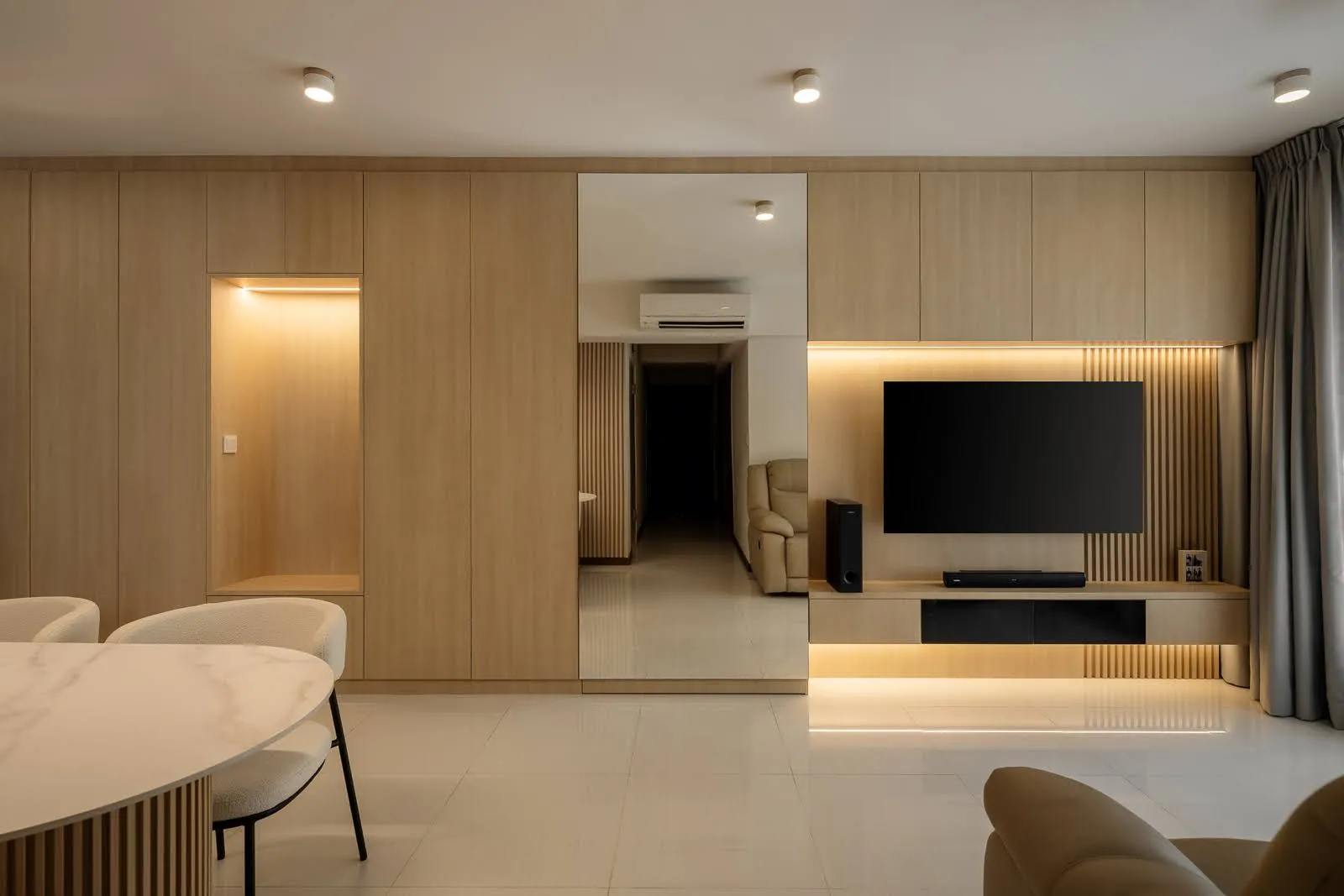
Choosing residential flooring involves balancing appearance with practical performance. As one of the largest continuous surfaces in a home, flooring contributes significantly to visual consistency, but it must also withstand daily movement, furniture placement, cleaning and occasional spills. Different materials respond differently to moisture, impact and wear, making it important to evaluate their characteristics before selecting a finish. The most suitable flooring is not necessarily the most expensive option, but the one that performs reliably under the household's expected conditions.
Porcelain tiles are commonly considered for Singapore residential interiors because of their durability and relatively straightforward maintenance. They are manufactured at high temperatures and generally have low water absorption, making them suitable for many living areas, kitchens and bathrooms when the correct product is specified. However, not all porcelain tiles offer the same surface performance. Polished finishes may be more slippery when wet, while textured tiles can provide better grip but require more attention during cleaning. Tile selection should therefore account for the intended room and its exposure to water.
Tile dimensions also affect the finished appearance and installation process. Large-format tiles can reduce the number of visible grout lines and create a more continuous surface, particularly in open living and dining areas. However, they demand careful substrate preparation and installation to achieve satisfactory alignment. Smaller tiles may be easier to accommodate in areas with complex geometry or drainage gradients. Homeowners should consider both visual preference and the technical suitability of tile sizes rather than assuming that larger formats are always preferable.
Vinyl flooring offers a different set of advantages. Many contemporary vinyl products provide a relatively thin floor finish, which can be useful when renovation works involve existing floor levels. Certain systems may be installed over suitable existing surfaces, subject to substrate condition and manufacturer requirements. However, vinyl is not automatically waterproof as an entire installed floor system simply because the individual planks resist water. Moisture beneath the flooring, unsuitable adhesives or poorly prepared substrates can still cause installation problems.
Surface quality varies considerably between vinyl products. The wear layer, construction method and manufacturer specifications influence resistance to scratching, indentation and everyday abrasion. Households with movable furniture, pets or frequent activity should evaluate these characteristics carefully. Vinyl can also respond to temperature changes and prolonged exposure to direct sunlight, depending on the product. Selecting a suitable specification and following installation guidance is more important than relying on broad material descriptions.
Engineered wood flooring appeals to homeowners who prefer the natural variation and tactile qualities of real wood. Its layered construction is designed to offer greater dimensional stability than some solid wood alternatives, although performance still depends on the product, installation and indoor conditions. Wood remains sensitive to moisture and may expand or contract as environmental conditions change. In Singapore's climate, proper acclimatisation, moisture assessment and appropriate installation detailing are particularly important.
Maintenance expectations should influence the decision to use wood flooring. Spills should generally be cleaned promptly, and excessive wet mopping may be unsuitable for certain finishes. Scratches and surface wear can develop over time, particularly in frequently used areas. Some engineered wood products can be refinished, while others have limited or no refinishing capacity because of their construction. Homeowners should verify these limitations before assuming that every wood floor can be restored in the same way.
Natural stone, including marble, offers distinctive surface variation, but its maintenance requirements should not be overlooked. Marble is relatively susceptible to etching from acidic substances, and some stones may require sealing to reduce staining. Polishing can restore certain forms of surface wear, although this introduces additional maintenance costs. For homeowners who prefer consistent appearance and straightforward cleaning, porcelain tiles with a stone-inspired finish may provide a practical alternative, without reproducing every characteristic of natural stone.
The condition of the existing floor is another important factor. Uneven substrates, hollow tiles, moisture problems and incompatible surface treatments can affect the success of a new installation. Overlaying existing flooring may reduce demolition work, but it also raises the finished floor level. This can influence door clearances, transitions between rooms and the relationship between wet and dry areas. In HDB flats, homeowners must confirm applicable requirements for flooring works, including restrictions relating to floor loading, wet areas and permitted renovation methods.
Acoustic performance may also influence flooring selection, especially in condominium apartments where management rules can include specific requirements. Hard flooring can transmit impact noise differently from softer finishes, while underlayments may provide varying levels of acoustic improvement. Any proposed acoustic system should be evaluated as a complete installation rather than judged solely by the properties of an individual material.
Ultimately, flooring should be selected according to how each room will be used. A household may benefit from durable tiles in wet areas, a resilient finish in frequently occupied living spaces and a warmer material underfoot in bedrooms. Understanding the limitations of each option allows homeowners to create a coherent interior while making practical allowances for maintenance, installation and long-term use.

Prioritise appropriate slip resistance, level transitions and ease of movement. Avoid abrupt changes in floor height and assess how the surface performs when wet. The suitability of a finish should be evaluated for each room.