
Curved walls, rounded furniture, and soft architectural details are becoming increasingly common in modern homes. Beyond aesthetics, these features influence how people move through a space, soften visual transitions, and create a calmer atmosphere. Understanding why designers incorporate curves can help homeowners decide whether this timeless approach is suitable for their own renovation.
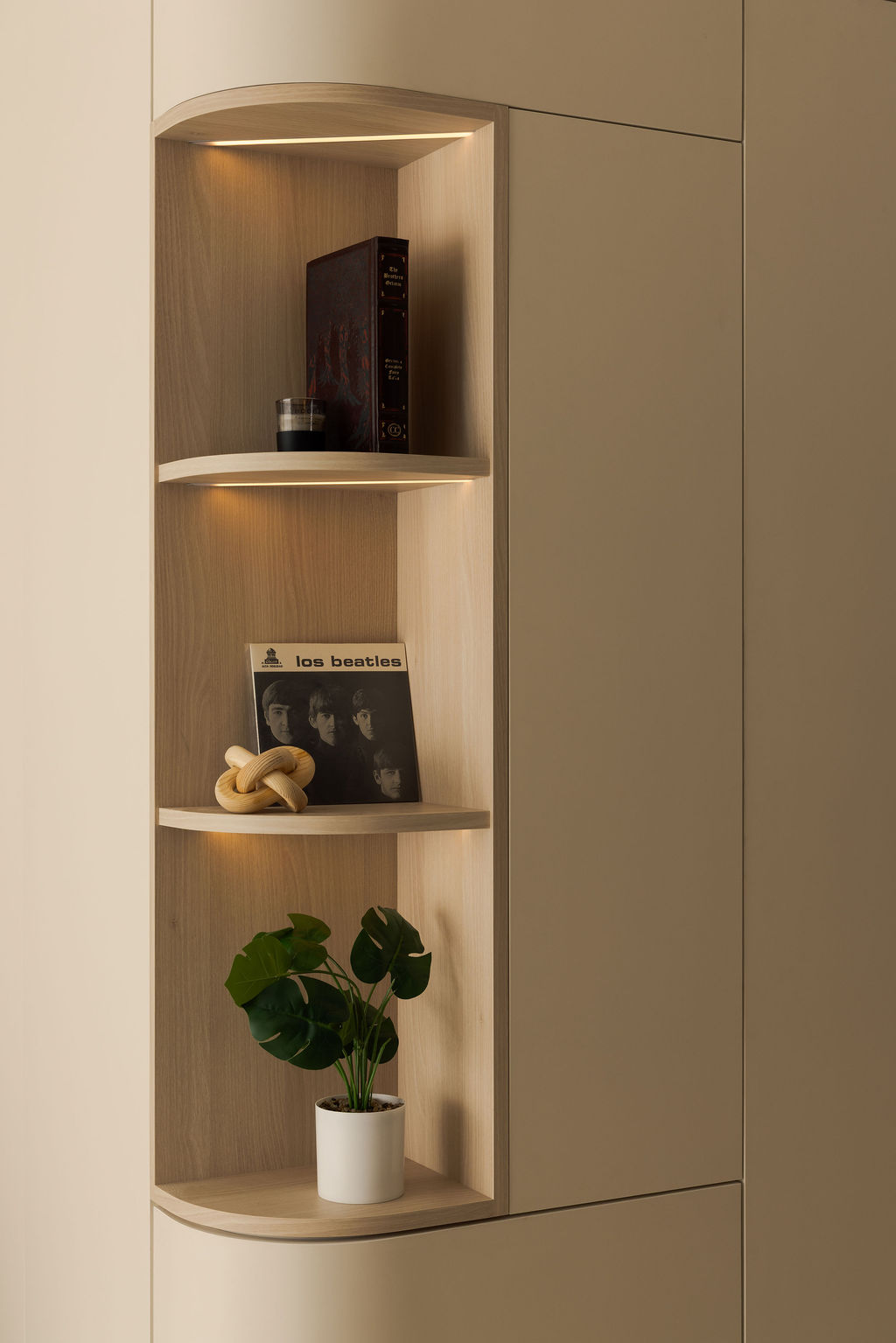
For many years, interior design was dominated by straight lines and sharp corners. Minimalist homes often relied on rectangular layouts, square cabinetry, and linear furniture to achieve a clean and organised appearance. While this approach remains popular, many homeowners today are looking for interiors that feel softer and more welcoming without sacrificing simplicity. This has led to the growing popularity of curved architectural elements throughout contemporary homes.
Curves influence how people experience a space on both a visual and practical level. Unlike sharp corners, rounded forms naturally guide the eye from one area to another, creating smoother transitions throughout the home. This subtle continuity makes interiors feel less rigid and more relaxed, even when the overall colour palette remains minimal.
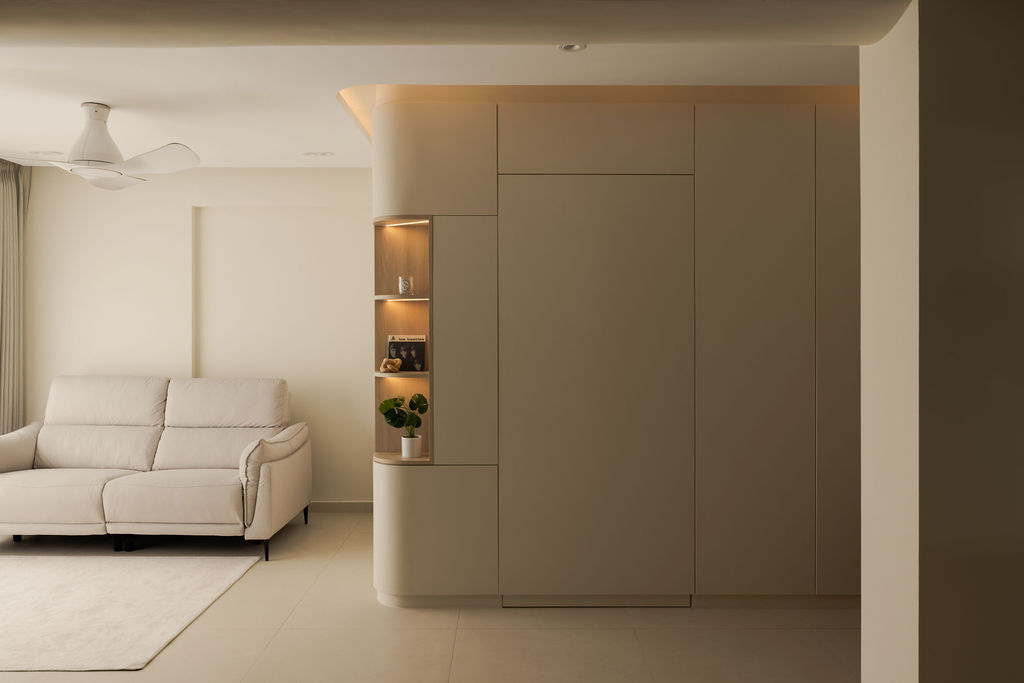
One of the biggest advantages of incorporating curves is improving the perception of space. Rounded edges eliminate abrupt visual stops, allowing walls, ceilings, and built-in carpentry to appear as though they flow seamlessly into one another. This is especially effective in apartments and HDB flats where every square metre matters. Even though the floor area remains unchanged, curved detailing can create the impression of a larger, more open interior.
Curved elements also improve circulation. In compact homes, sharp corners along walkways, kitchen islands, or built-in storage can interrupt movement and make narrow passages feel tighter than they actually are. By introducing rounded edges, designers create more comfortable routes through the home while reducing the likelihood of accidental bumps against furniture or cabinetry. Families with young children often appreciate this additional safety benefit as well.
The application of curves extends beyond walls. Rounded kitchen islands encourage easier movement around dining spaces, while curved dining tables improve seating flexibility by eliminating corners that often restrict circulation. Floating television consoles with softened edges appear lighter than traditional rectangular units, helping living rooms feel less visually cluttered. Even vanity tables, bedside units, and shelving can adopt rounded profiles to create greater visual harmony across the entire home.
Lighting plays an equally important role in highlighting curved forms. Concealed LED strips installed along curved ceiling recesses produce gentle gradients of light rather than harsh linear shadows. This indirect illumination emphasises the architectural shape while contributing to a warm and relaxing ambience. When combined with soft neutral colours, the overall effect creates interiors that feel calm throughout both the day and evening.
Material selection further enhances this aesthetic. Matte laminates, textured surfaces, light timber finishes, and natural stone all complement curved detailing because they reflect light softly instead of producing strong glare. Warm beige, ivory, and sand-coloured palettes reinforce the sense of tranquillity, allowing the architecture itself to become the primary design feature without relying on excessive decoration.
Although curves create visual softness, balance remains essential. Overusing rounded forms can make a home appear overly decorative or difficult to furnish. Designers typically combine curved focal points with simple straight cabinetry, clean storage solutions, and restrained material palettes to maintain functionality. This combination allows the home to remain practical while introducing enough variation to prevent the space from feeling monotonous.
It's also important to recognise that curved carpentry generally requires more precise fabrication than conventional straight-line construction. Achieving smooth, consistent curves often involves specialised carpentry techniques, careful material selection, and greater attention during installation. While this may increase complexity, many homeowners consider the resulting visual quality well worth the investment.
Ultimately, the growing popularity of curves reflects a broader shift in interior design. Rather than pursuing minimalism through stark simplicity alone, designers are increasingly creating homes that prioritise comfort, warmth, and everyday liveability. Curved architectural elements soften interiors without adding unnecessary ornamentation, proving that subtle design decisions can significantly influence how a home feels. When thoughtfully integrated into the overall design, curves become more than a visual trend—they create spaces that are inviting, functional, and timeless for years to come.
Curved elements create softer interiors, improve visual flow, and make spaces feel more welcoming while maintaining a clean contemporary appearance.
They can create the perception of a larger space by reducing abrupt visual interruptions and allowing the eye to move more naturally through the interior.
Generally yes. Curved carpentry often requires more specialised fabrication and installation compared to conventional straight-line cabinetry.
Yes. When used strategically, rounded corners and curved furniture can improve circulation and help compact homes feel more spacious.
While specific trends evolve, gentle curves have been used in architecture for centuries. When combined with neutral materials and timeless finishes, they remain a long-lasting design choice.