
Curved forms have become increasingly popular in contemporary interior design, but they are far more than a visual trend. When used intentionally, rounded corners, softened edges and flowing architectural details can influence how people move through a home, reduce visual clutter and make compact spaces feel noticeably more spacious. This residence demonstrates how subtle curves can transform both the functionality and atmosphere of everyday living.
One of the greatest challenges when designing compact homes is balancing functionality with visual openness. Every built-in cabinet, partition and wall occupies physical space, but it also contributes to the visual weight of a room. While homeowners often focus on colours or materials to make a home feel larger, the geometry of the interior plays an equally important role. Introducing curved forms is one of the most effective ways to soften a space while improving both movement and visual flow.
Most residential interiors are dominated by straight lines and ninety-degree corners. Walls, cabinetry, furniture and partitions naturally create a grid of rigid geometry. Although this approach is practical, an excessive number of sharp edges can make smaller homes feel compartmentalised and visually busy. Curved architectural elements interrupt this repetition, allowing the eye to move more naturally throughout the space and creating a calmer overall composition.
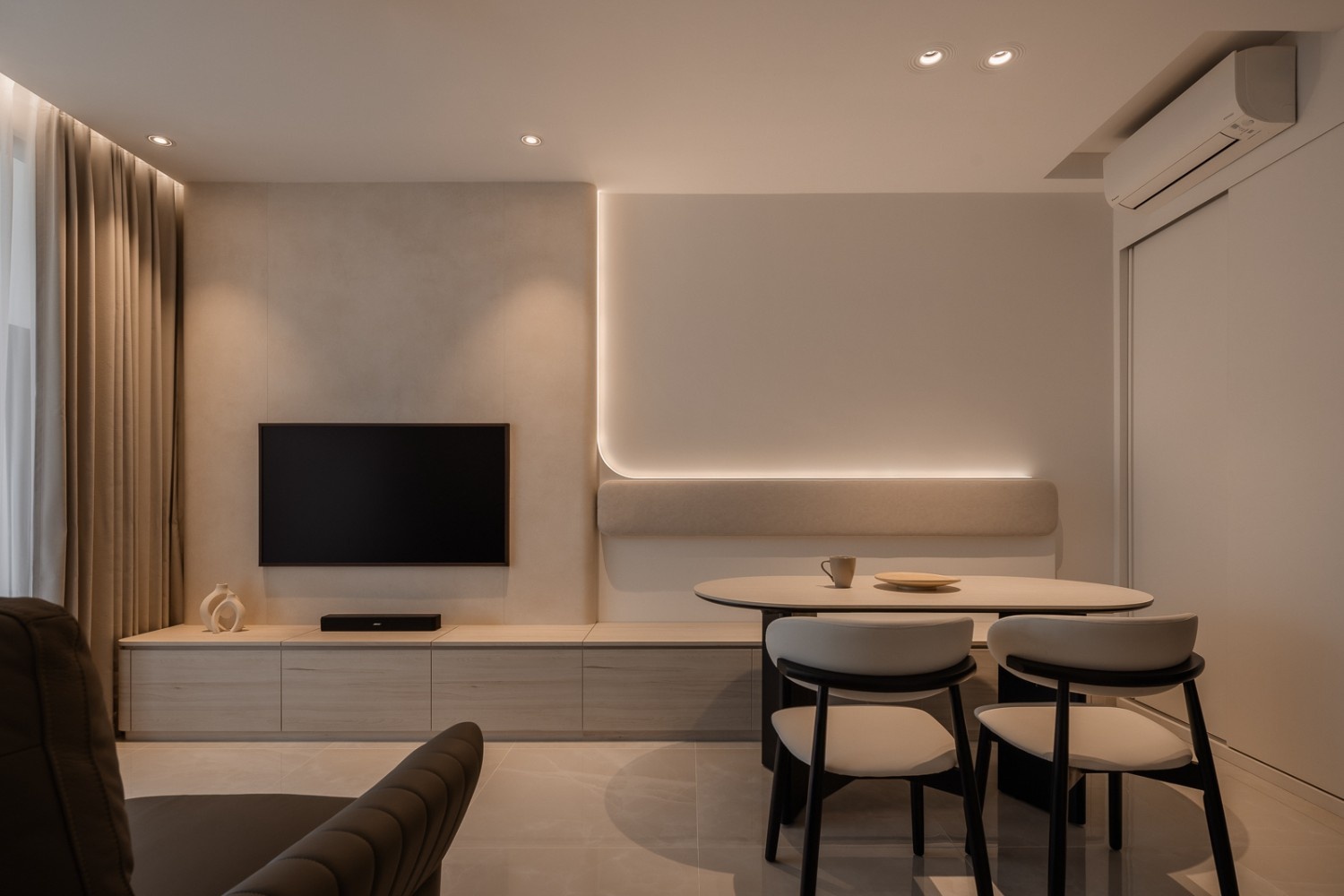
This home demonstrates how subtle curves can become an integral part of the architecture rather than merely decorative features. The rounded transition between the television feature wall and adjacent wall creates a softer visual boundary while framing the entertainment area without requiring bulky feature panels. Instead of feeling like separate elements, the walls appear to flow continuously into one another, making the living space feel more cohesive.
Curves are equally effective in circulation areas where homeowners move frequently throughout the day. Rounded corners reduce the visual interruption caused by projecting edges while making narrow walkways feel less confined. In homes where dining areas, living spaces and entrances are closely connected, this softer geometry encourages smoother movement and reduces the sense of compression that often occurs in compact layouts.
Another advantage of curved design is its ability to minimise visual bulk. Traditional square columns, cabinetry ends and partition walls create strong vertical and horizontal lines that immediately draw attention. Rounded edges soften these transitions, allowing larger architectural elements to blend more naturally into the surrounding space. As a result, built-in features appear lighter even though their actual dimensions remain unchanged.
Furniture selection also contributes to this effect. The rounded dining table in this home improves circulation by eliminating sharp corners, making it easier to move around in a limited footprint. Beyond safety, curved furniture promotes a more organic relationship between different functional zones, allowing the dining area to integrate comfortably with the living room without creating harsh visual divisions.
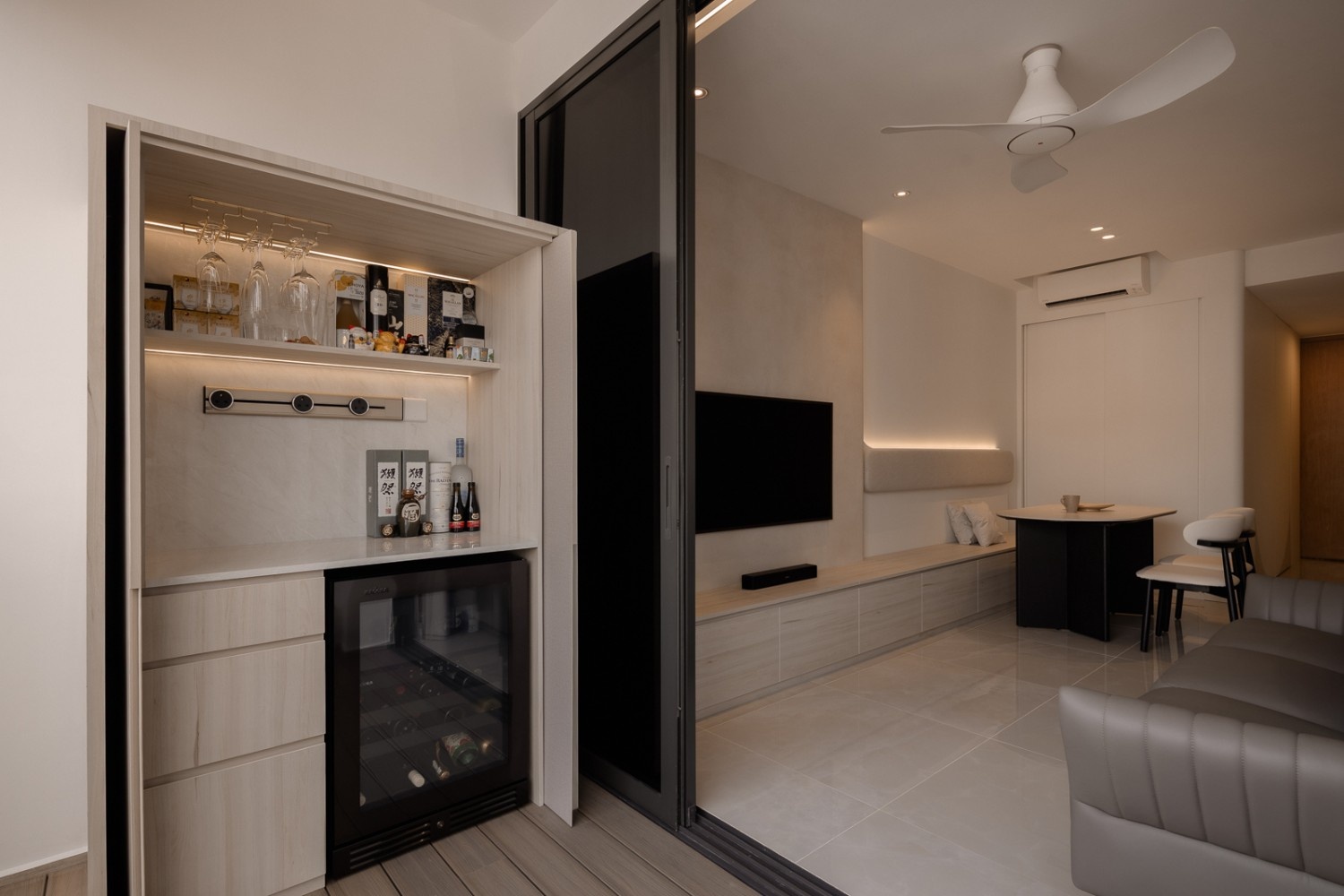
Material selection reinforces the calming effect of the architecture. Light wood grains, warm neutral wall finishes and soft fabric upholstery complement the rounded forms by maintaining a consistent visual language throughout the home. Rather than competing for attention through contrasting colours or textures, each element contributes to an environment that feels balanced, understated and inviting.
Curved upholstered seating further enhances both comfort and aesthetics. The integrated bench introduces softness to the dining area while providing practical seating without occupying additional floor space. Compared to individual dining chairs placed against a wall, built-in seating can improve space efficiency while maintaining clean circulation paths around the table.
Bedrooms also benefit from this design philosophy. Softly rounded bedheads and gently curved cabinetry corners create a more relaxing environment by reducing the rigid geometry typically associated with built-in furniture. While these details may seem subtle individually, together they contribute to a bedroom that feels quieter and more restful, supporting the room's primary purpose as a place for relaxation.
From a psychological perspective, people often perceive curved forms as more welcoming than sharp angles. Studies in environmental psychology suggest that rounded shapes are generally associated with comfort, safety and calmness, whereas sharp corners can subconsciously signal caution or tension. Although homeowners may not consciously recognise this effect, the cumulative influence of softer forms contributes significantly to how a home feels over time.
Importantly, curved elements should be introduced selectively rather than applied everywhere. Too many curves can make an interior appear overly decorative or reduce the clarity of the overall design. Successful contemporary interiors balance straight architectural lines with carefully positioned rounded features that guide movement, soften focal points and create moments of visual interest without overwhelming the space.
Ultimately, designing with curves is not simply about following current design trends. It is a thoughtful architectural strategy that improves circulation, reduces visual heaviness and creates a greater sense of openness within compact homes. When integrated with restrained materials, warm neutral colours and functional layouts, curved forms become an elegant solution that enhances both the appearance and liveability of modern interiors.
Curved forms soften interiors, improve visual flow and create a more welcoming atmosphere while helping compact homes feel more spacious.
While they do not increase the actual floor area, curved walls reduce harsh visual boundaries and help the eye move more naturally through the space, making rooms feel more open.
Yes. Rounded dining tables, benches and seating can improve circulation by removing sharp corners, making movement around furniture easier in compact layouts.
Curved carpentry generally requires more detailed planning and specialised fabrication than standard cabinetry, but it can significantly enhance the overall quality and character of a home.
Use curves selectively at key architectural features such as feature walls, partition corners, built-in seating or furniture. Combining them with clean lines and neutral materials creates a balanced, timeless interior.