
Lighting is often one of the most overlooked aspects of interior design, yet it has one of the greatest influences on how a home looks and feels. Rather than relying solely on ceiling lights, well-designed homes combine multiple layers of illumination to enhance functionality, highlight architectural features and create different moods throughout the day. This modern contemporary home demonstrates how thoughtful lighting design can elevate both aesthetics and everyday living.
Many homeowners begin planning their renovation by choosing flooring, cabinetry and furniture, only to consider lighting at the very end. However, experienced interior designers often take the opposite approach. Lighting should be planned alongside the layout because it affects how every material, colour and space is perceived. A carefully designed lighting scheme can make a compact apartment feel larger, create visual depth, improve daily functionality and provide a welcoming atmosphere that changes naturally from day to night.
The foundation of good lighting design begins with understanding the three primary layers of lighting: ambient lighting, task lighting and accent lighting. Ambient lighting provides the overall illumination of a room and ensures comfortable visibility for everyday activities. Task lighting is more focused, helping homeowners perform activities such as cooking, reading, applying makeup or preparing meals without casting unwanted shadows. Accent lighting is used to highlight architectural details, decorative niches, textured surfaces or artwork, adding dimension and visual interest to a space.
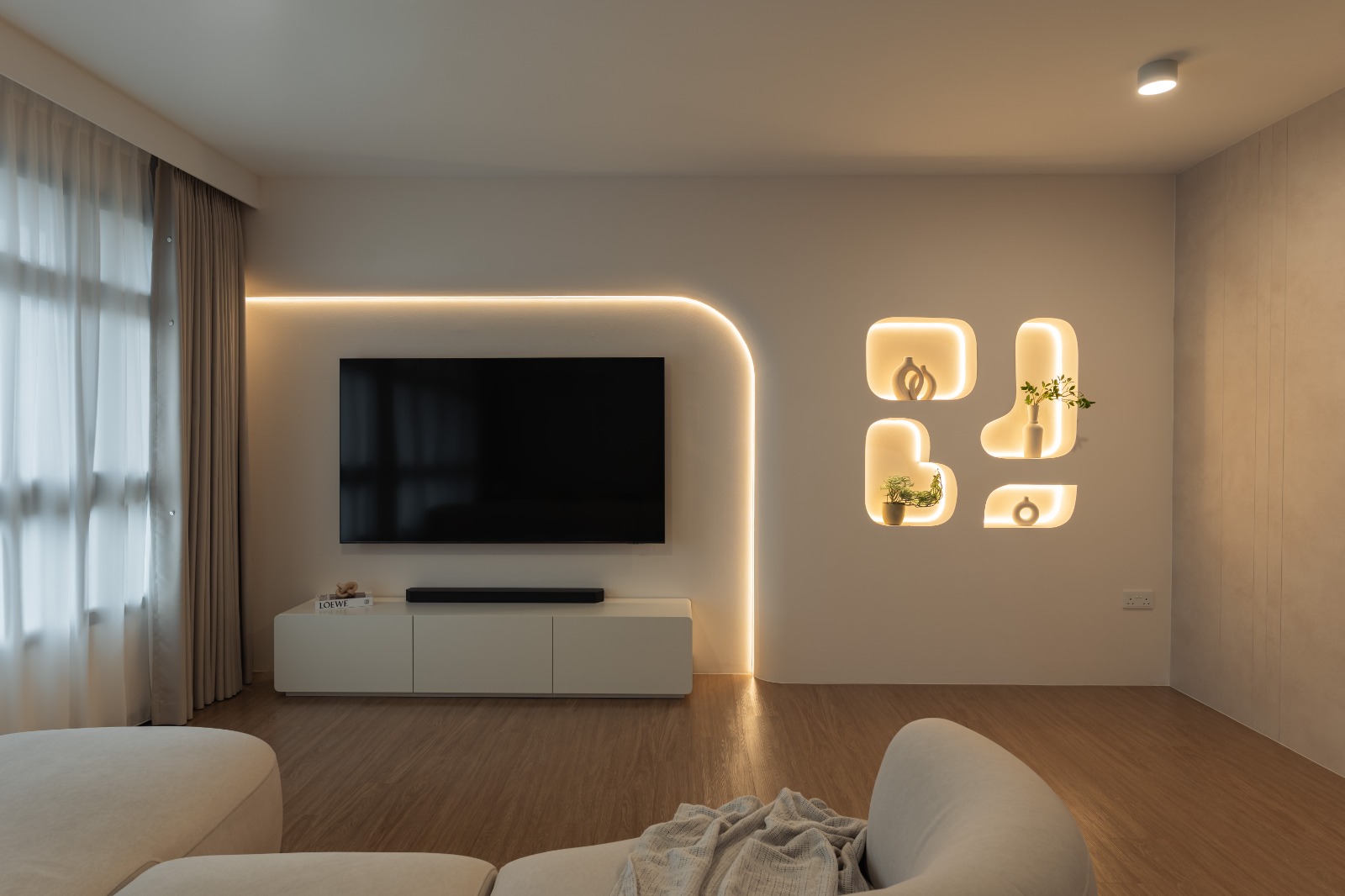
This residence demonstrates how these three layers work together seamlessly. During the day, generous natural light fills the living spaces, reducing the need for artificial lighting. As evening approaches, concealed LED strips behind the television feature wall provide a soft glow that reduces contrast between the television screen and the surrounding wall. This not only creates a more luxurious appearance but also improves visual comfort during extended viewing sessions by reducing eye strain.
Decorative recessed niches become another important source of accent lighting within the living room. Rather than functioning purely as storage, these illuminated alcoves transform everyday decorative objects into focal points while introducing warmth and depth to an otherwise minimalist wall. Because the light source remains concealed, the attention remains on the objects themselves instead of the lighting fixture, producing a clean and refined appearance.
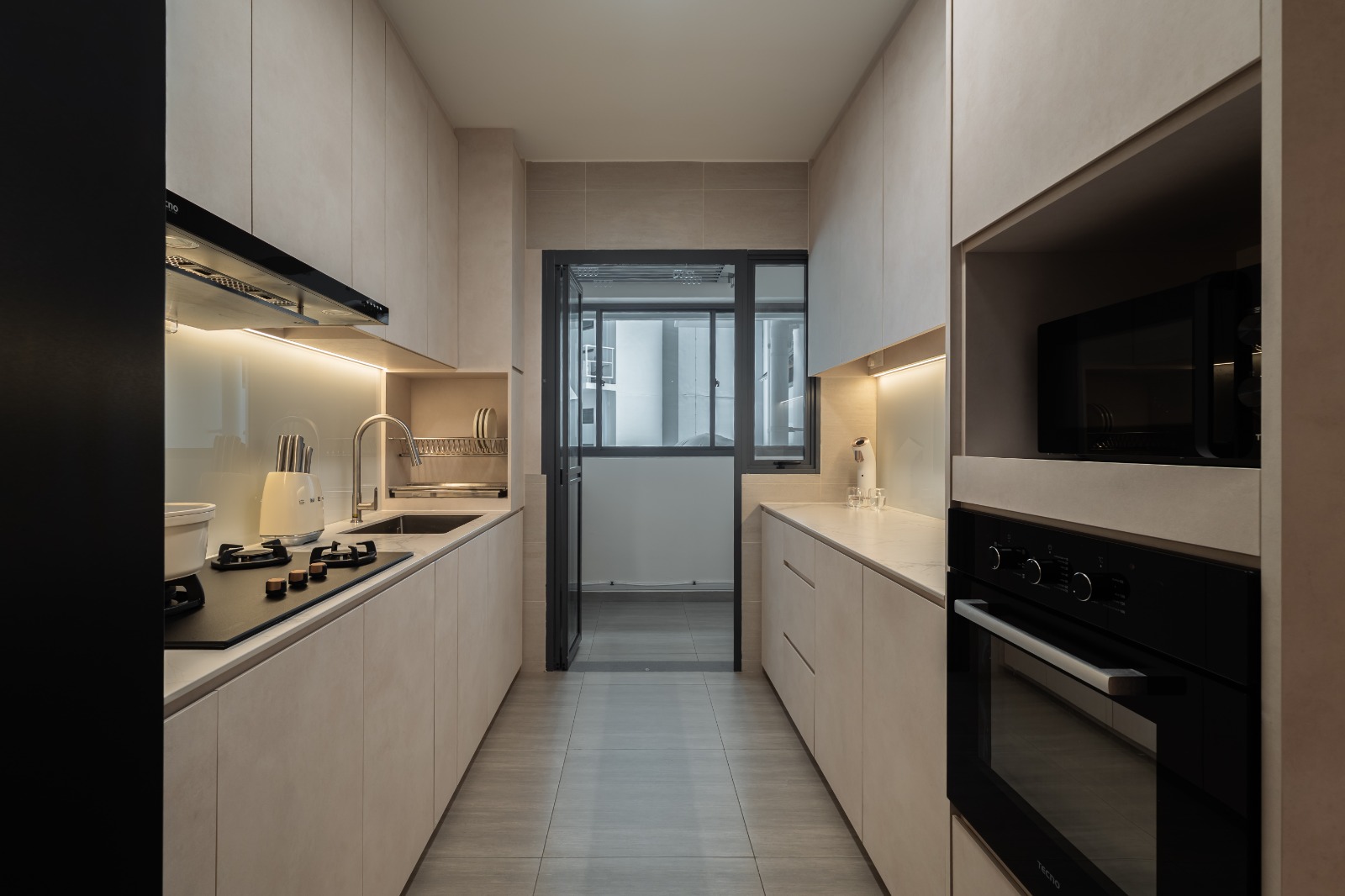
The kitchen showcases another important principle of layered lighting: task illumination. Under-cabinet LED lighting evenly illuminates the countertop, making food preparation safer and more comfortable. Without dedicated task lighting, the user's body often blocks overhead ceiling lights, creating shadows directly over the work surface. Proper under-cabinet lighting eliminates this problem while enhancing the appearance of the backsplash and countertop materials.
Bathrooms also benefit significantly from thoughtful lighting placement. Instead of relying on a single ceiling fixture, the backlit mirror creates soft, even illumination across the face. This reduces harsh shadows that commonly occur with overhead lighting, making everyday grooming activities such as shaving or applying skincare products much easier. The result is both more functional and visually relaxing.
Another lesson demonstrated throughout this home is the importance of indirect lighting. Unlike exposed light bulbs or highly visible fixtures, concealed lighting reflects softly off walls and ceilings before reaching the eye. This creates a diffused glow that feels significantly more comfortable than direct illumination. Indirect lighting also emphasises curved architectural elements, as seen in the television feature wall, where the continuous lighting follows the gentle rounded profile to reinforce the home's soft contemporary aesthetic.
Colour temperature plays an equally important role in determining how a space feels. Warm white lighting, typically between 2700K and 3000K, creates a calm and inviting environment that complements residential interiors. Cooler lighting, while suitable for certain commercial environments, can make living spaces feel clinical and less relaxing. Throughout this home, the consistent use of warm lighting enhances neutral finishes and natural textures while creating a cosy atmosphere during the evening.
Consistency is another hallmark of successful lighting design. Rather than introducing different light colours in every room, the lighting throughout this residence follows a unified approach. This creates visual continuity as occupants move between the living room, kitchen, bedrooms and bathrooms, allowing the entire home to feel cohesive rather than disconnected.
Layered lighting also provides greater flexibility for different activities throughout the day. Bright ambient lighting may be preferred during cleaning or entertaining guests, while softer accent lighting creates a more relaxing environment for watching television or winding down before bedtime. By incorporating multiple lighting layers, homeowners gain the ability to adjust the mood of their home without making any physical changes to the space itself.
One common mistake during renovations is treating lighting as a decorative afterthought. Installing only ceiling downlights often produces flat, uninspiring interiors with harsh shadows and limited ambience. By contrast, integrating ambient, task and accent lighting from the earliest stages of design allows electrical points, carpentry details and architectural features to work together cohesively. The result is a home that is not only more beautiful but also more comfortable, functional and enjoyable to live in every single day.
Ultimately, successful interior design is about creating spaces that support everyday living rather than simply looking attractive in photographs. Layered lighting demonstrates how thoughtful planning can dramatically enhance the perception of space, improve functionality and elevate the overall experience of the home. When carefully integrated with architecture, materials and furniture, lighting becomes one of the most powerful design tools available, quietly transforming the atmosphere of a home from morning through to night.
Layered lighting combines ambient, task and accent lighting to create a balanced lighting scheme that improves functionality while enhancing the atmosphere of a home.
Indirect lighting produces a softer, more comfortable glow by reflecting light off surrounding surfaces. It reduces glare, creates depth and highlights architectural features without exposing the light source.
Warm white lighting between 2700K and 3000K is generally recommended for living spaces as it creates a welcoming, relaxing atmosphere while complementing natural materials and neutral colour palettes.
Under-cabinet lighting illuminates work surfaces directly, reducing shadows caused by overhead lighting and making food preparation safer and more comfortable.
Lighting should be planned during the early design stage alongside the home’s layout and electrical planning. This allows lighting, cabinetry and architectural features to be fully integrated for the best aesthetic and functional outcome.