
Modern Japandi interior design combines the warmth of Scandinavian living with the simplicity of Japanese design principles. Rather than relying on trends, it prioritises natural materials, efficient layouts, concealed storage, and carefully selected details that make everyday living more comfortable and visually calming.
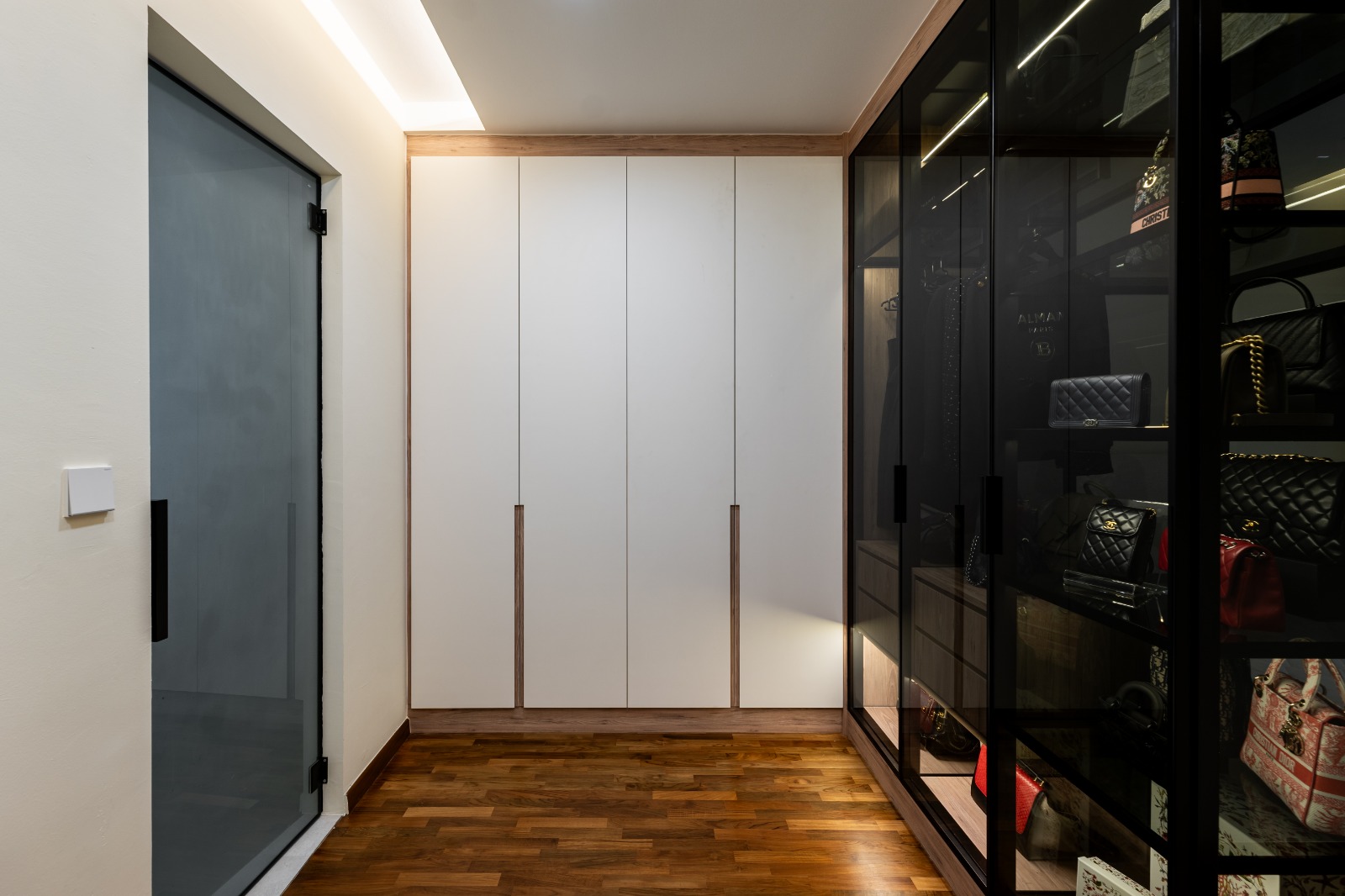
Japandi design is built upon the philosophy that simplicity should improve functionality rather than reduce character. This home demonstrates how restrained material choices and thoughtful detailing can create a highly liveable environment without feeling sparse.
A neutral palette of light timber, warm whites, and soft grey stone establishes visual continuity throughout the home, while black-framed glass partitions provide subtle contrast and define individual spaces without sacrificing natural light.
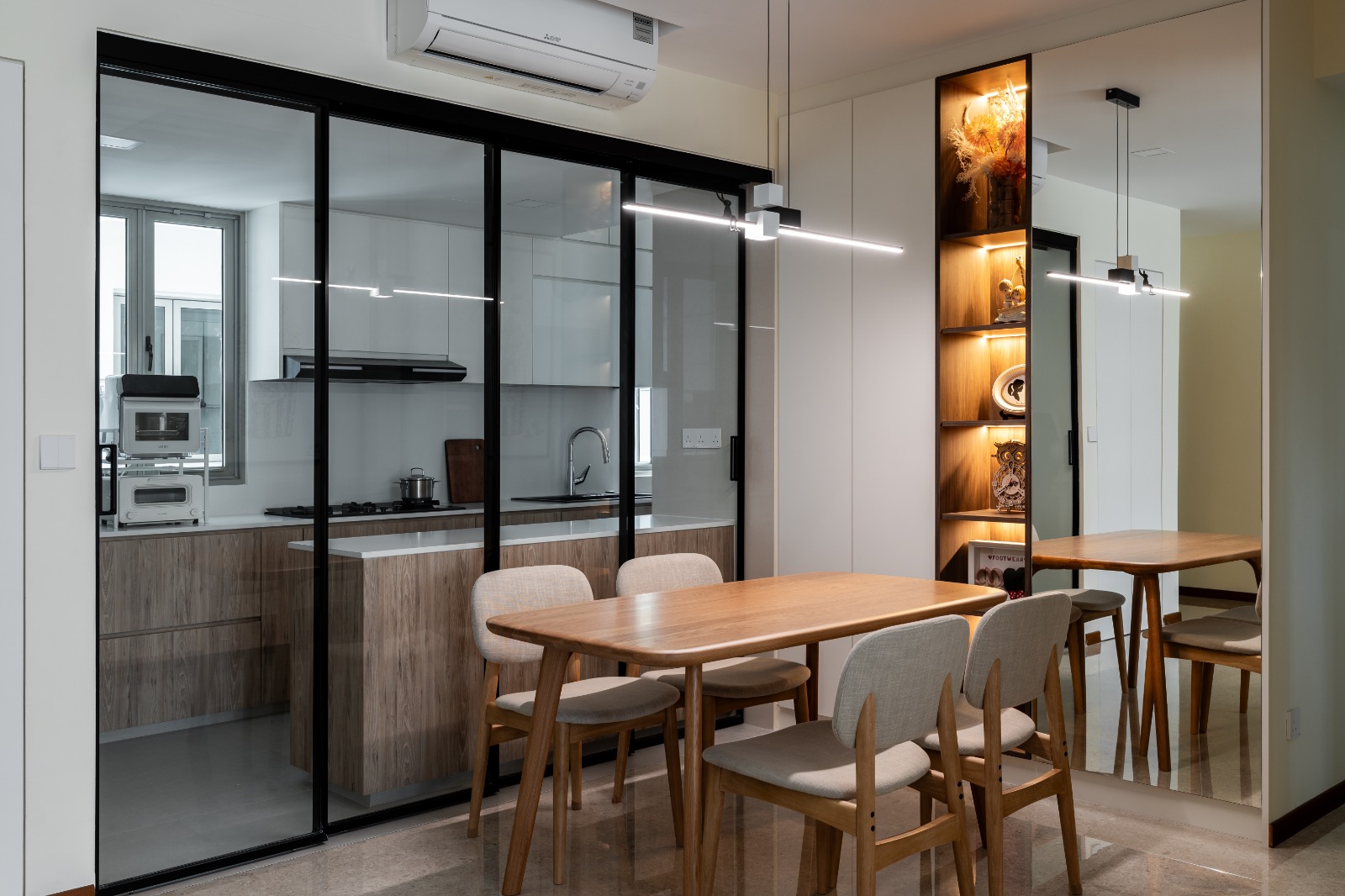
The enclosed kitchen illustrates one of the most practical applications of glass partitions, allowing cooking fumes to be contained while preserving visual openness between the kitchen and dining area. Full-height cabinetry maximises storage, enabling daily items to remain concealed and maintaining uncluttered surfaces.
The living room continues this approach through integrated television cabinetry and vertical slatted feature panels, which introduce texture while avoiding unnecessary ornamentation. Display niches with warm lighting create focal points that personalise the home without overwhelming the minimalist aesthetic.
In the bathrooms, large-format tiles reduce grout lines, making maintenance easier while creating a more seamless appearance. Organic mirrors soften the geometry of the cabinetry and tiles, demonstrating how curved forms can balance the straight lines commonly found in modern interiors.
The walk-in wardrobe incorporates glass display cabinets alongside concealed storage, allowing frequently used collections to be showcased while protecting them from dust.
Throughout the home, natural daylight is complemented by warm artificial lighting, producing a comfortable ambience from morning through evening.
The project demonstrates that Japandi interiors are not defined by minimal decoration alone, but by deliberate planning, efficient storage, timeless materials, and careful attention to proportion that supports everyday living.
Organic mirrors soften the straight lines created by cabinetry and wall tiles, introducing visual balance while making compact bathrooms feel less rigid.
Integrated storage keeps everyday items hidden, reduces visual clutter, improves organisation, and helps maintain the clean appearance that Japandi interiors are known for.
Japandi is a design style that blends Japanese minimalism with Scandinavian warmth, focusing on functionality, natural materials, craftsmanship, and uncluttered living spaces.
Glass partitions separate cooking areas while maintaining visual openness and allowing natural light to flow between spaces, making compact homes feel larger.
Neutral colours create a calm environment, reflect natural light more effectively, and provide a timeless backdrop that can easily accommodate changing furniture and décor.