
Contemporary interior design is most successful when every element serves both a practical and aesthetic purpose. This home embraces clean architectural forms, a restrained material palette, and carefully integrated lighting to deliver a space that feels elegant, uncluttered, and comfortable for everyday living.
A contemporary home does not rely on bold colours or elaborate decoration to leave a lasting impression. Instead, it achieves visual interest through proportion, material consistency, and carefully considered details that improve both functionality and atmosphere.
This residence adopts a palette of soft stone-inspired finishes, warm whites, and muted greys, creating a seamless backdrop that allows natural light and architectural forms to take centre stage.
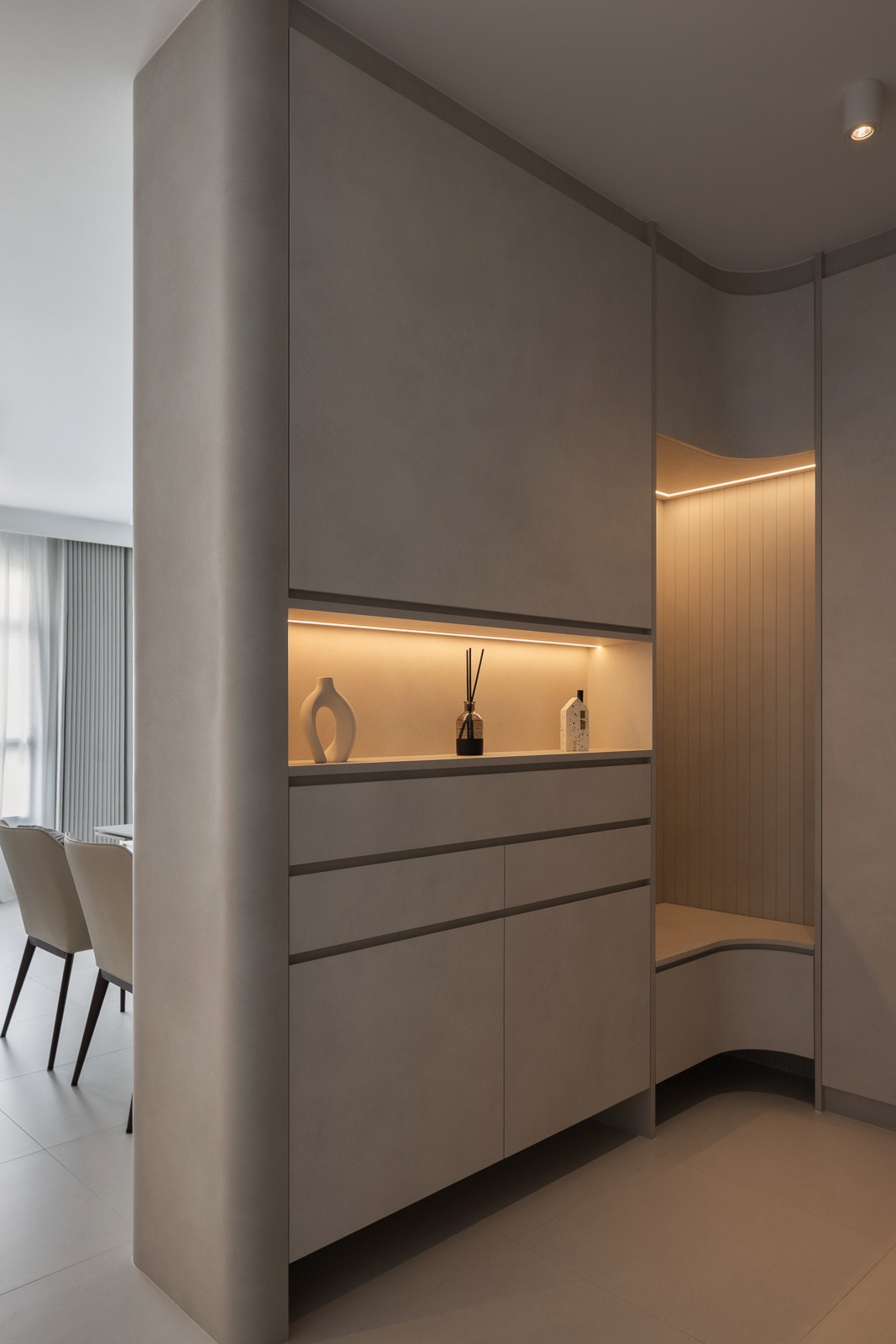
One of the defining features is the custom-built entrance cabinetry, where rounded corners soften the geometry of the carpentry while introducing a welcoming sense of flow upon arrival. A recessed display niche illuminated by concealed lighting transforms everyday storage into a subtle design feature without adding visual clutter.
Throughout the home, full-height cabinetry provides generous concealed storage, allowing the living spaces to remain organised while maintaining clean, uninterrupted lines.
The kitchen continues the restrained material language through handleless cabinetry, integrated lighting beneath the wall cabinets, and a neutral work surface that enhances brightness while remaining practical for daily cooking.
Lighting plays a particularly important role across the home. Rather than relying solely on ceiling fixtures, layered lighting combines recessed downlights, under-cabinet illumination, cove lighting, and decorative pendants to create depth and warmth at different times of the day.
The bathrooms adopt the same philosophy, using backlit mirrors and minimal detailing to create a calm, hotel-inspired environment while maintaining excellent functionality.
In the bedroom, upholstered finishes, soft textiles, and ambient wall lighting establish a restful atmosphere, demonstrating how subtle lighting can influence comfort without overwhelming the space.
Curved transitions between walls, ceilings, and built-in furniture appear repeatedly throughout the home, reducing visual harshness and giving the interiors a softer, more refined character.
By limiting the material palette and carefully integrating storage, lighting, and architectural detailing, the home achieves a timeless contemporary aesthetic that remains elegant, practical, and highly liveable for years to come.
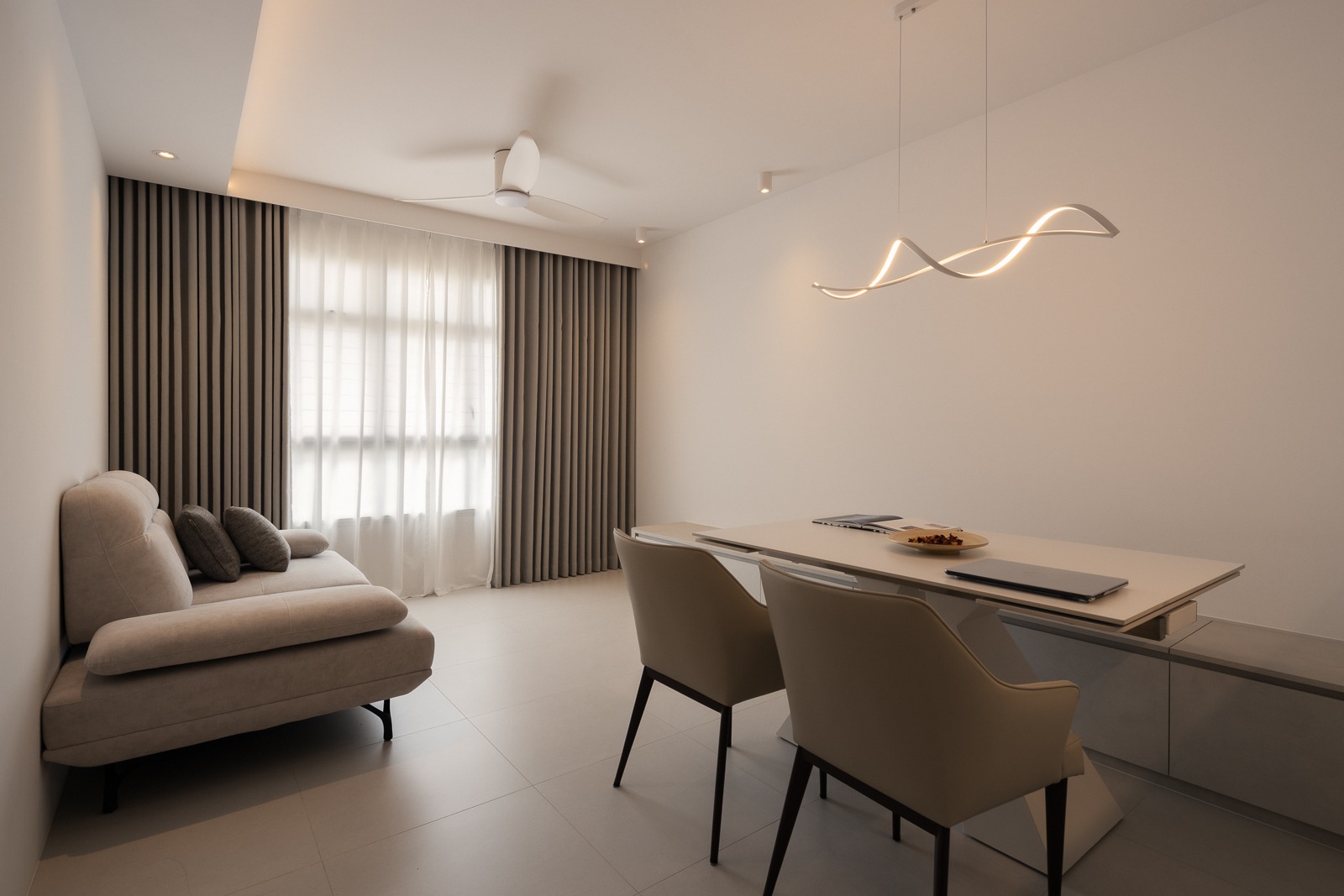
Contemporary interior design focuses on clean architectural lines, functional layouts, restrained material palettes, and timeless detailing that reflects modern living rather than temporary trends.
Curved corners and rounded transitions soften the appearance of built-in furniture and walls, creating a more welcoming environment while improving the visual flow throughout the home.
Concealed storage reduces visual clutter, keeps everyday belongings organised, and allows the architecture and material finishes to remain the primary focus of the space.
Layered lighting combines ambient, task, and accent lighting to create flexibility throughout the day, improving functionality while introducing warmth and visual depth.
Neutral stone-inspired laminates, textured finishes, warm timber accents, engineered stone worktops, and matte surfaces are commonly used to achieve a timeless contemporary aesthetic.