
What Is Japandi Style?
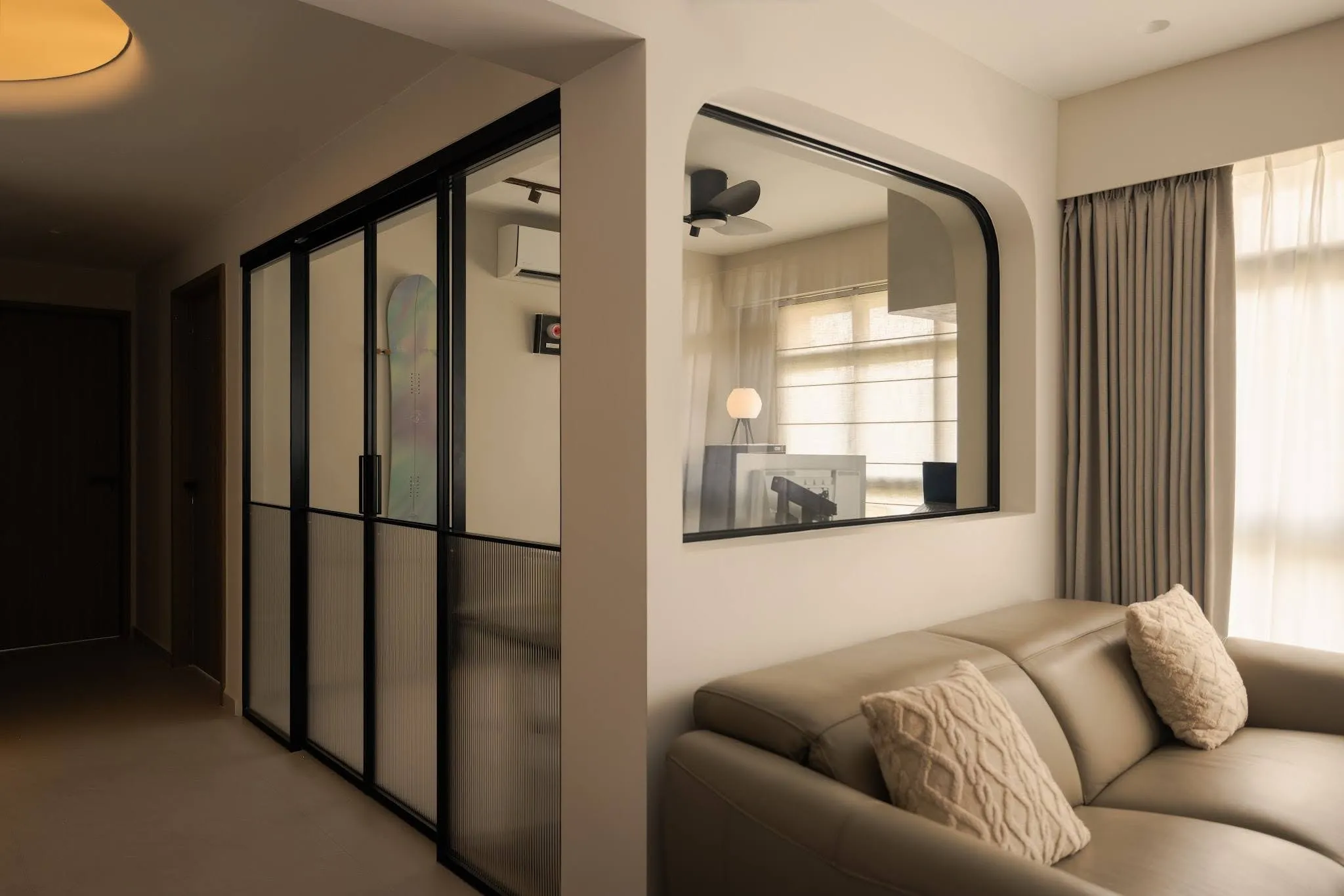
Japandi style is the fusion of Japanese minimalism and Scandinavian design. From Japan comes wabi-sabi: finding beauty in imperfection, natural materials, and the marks of time. From Scandinavia comes hygge: warmth, comfort, and the idea that a home should feel deeply cosy to live in.
The two philosophies work together precisely because both reject excess. A Japandi room is clean without being cold, minimal without being empty, and grounded in natural materials without looking like a forest floor.
1. Build a Japandi Colour Palette Around Singapore’s Light
The standard Japandi colour palette of warm whites, beige, stone grey, and muted greens is a good starting point. What most guides miss is that Scandinavian design was developed in soft, diffused grey northern European light. Singapore’s equatorial light is direct, strong, and warm-toned. Pure cool whites and pale greys look harsh and clinical in Singapore’s afternoon sun.
Choose warm whites with yellow or pink undertones. Use specific colour names that actually describe what you are after: mushroom, oat, ash grey, warm sand. Introduce depth through flooring and furniture in walnut, teak, or dark oak rather than through wall colour. The japandi colour palette is a layering exercise built bottom-up, not a single paint decision.
2. Choose Furniture That Fits a Singapore HDB Living Room
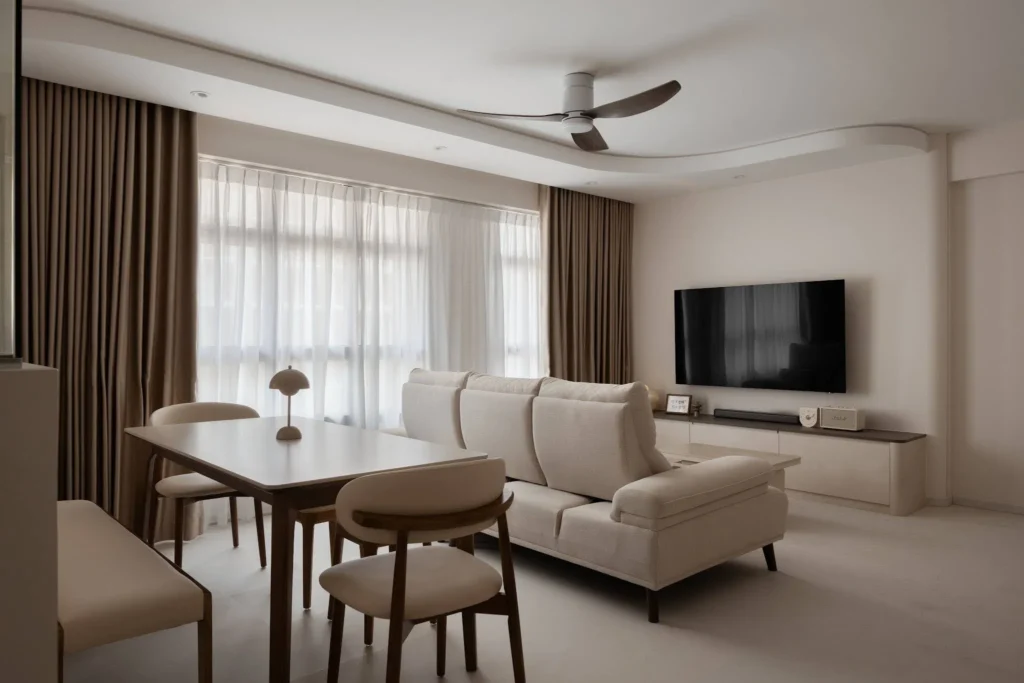
The standard 4-room HDB living room is around 3 by 4 metres. Low-profile Japandi furniture, sofas that sit at around 300 to 400mm from the floor, makes this space feel considerably more generous by drawing the eye across the room rather than upward.
Choose clean lines, tight arms, and natural fabric upholstery in linen, cotton, or a polyester-linen blend that handles Singapore’s humidity better than pure linen. Avoid oversized L-shaped sectionals. A compact 2.5 or 3-seater sofa paired with a low timber or stone coffee table does more for a HDB living room than a large sectional that dominates the space and leaves no room to move.
3. Nail the TV Console Before You Buy Anything Else
The TV console is the focal point of almost every Singapore living room and the element most Japandi guides ignore entirely. A Japandi TV console should sit low, extend the full width of the feature wall where possible, conceal all cables and media equipment behind push-to-open doors, and be finished in a single consistent timber tone.
Walnut or oak laminate works well. Mounted at around 400mm from the floor, a floating console creates the low horizontal line that anchors the entire Japandi aesthetic in the room. Getting this element right before you buy anything else makes every subsequent decision easier.
4. Mix Wood Tones the Way Nature Does
One of the most useful principles for a Japandi living room is this: mix light and dark timber tones, but keep the depth of each tone distinct. A pale ash or engineered oak floor, a medium walnut TV console or coffee table, and dark charcoal accessories work together because the contrast is clear.
Where Japandi living rooms go wrong is when two or three wood tones at similar depths sit next to each other and create visual muddle rather than layered warmth. If you are using three timber tones, make sure each one is noticeably lighter or darker than the others.
5. Use Built-In Carpentry to Make Clutter Invisible
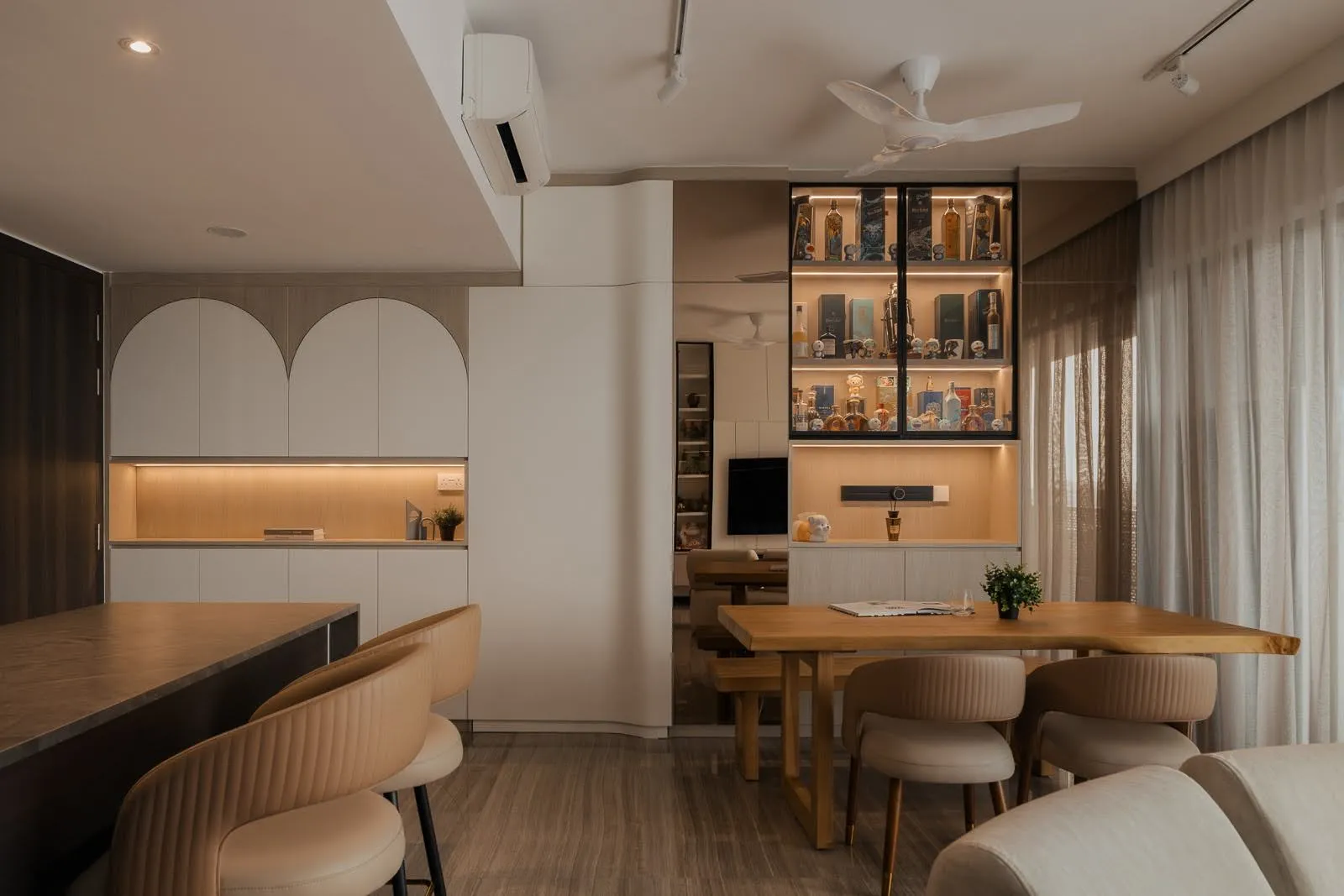
Clutter is the fastest way to undermine a Japandi living room. The most effective solution for a Singapore HDB is full-height built-in carpentry with concealed storage, which removes the visual noise of exposed shelving, media equipment, and the accumulated everyday objects that make a real home look like a real home.
A timber laminate storage wall with push-to-open panel doors is HDB-compliant, does not require hacking of structural walls, and adds genuine resale value. If you are renovating a japandi hdb flat, plan the storage system before you finalise anything else. Storage cannot be added easily after the renovation is complete. For examples of how built-in storage looks in completed Japandi HDB flats, see our HDB renovation portfolio.
6. Apply the Japandi Colour Rule Nobody Talks About
Every Japandi guide tells you which colours to use. Almost none explain the underlying principle. In a Japandi living room, colour is introduced through materials and objects, not applied to walls. The walls are a neutral ground.
The colour in the room comes from the warm walnut of the coffee table, the deep charcoal of a ceramic vase, the soft moss green of a linen cushion, and the natural texture of a jute rug. Once you understand this rule, the entire Japandi aesthetic becomes much easier to compose because you are building a material palette, not a paint palette.
7. Place Japandi Home Decor With a One-In, One-Out Discipline
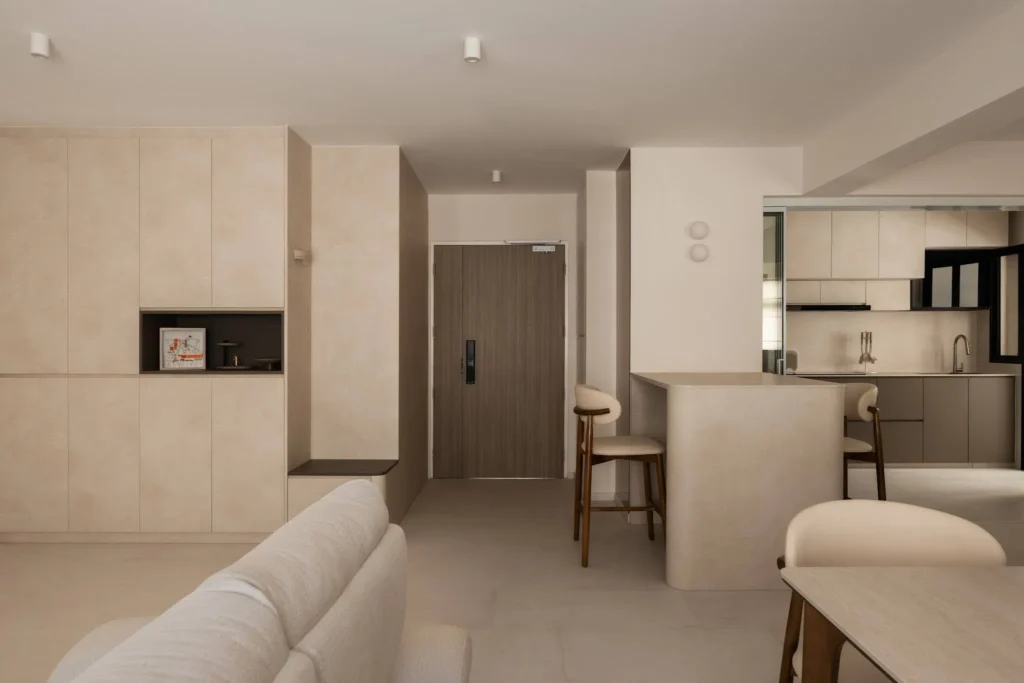
Japandi home decor works on a strict economy of objects. Every piece in a Japandi living room should have either a clear function or a genuine personal connection. The practical test is a one-in, one-out rule: before adding a new object to the room, decide what it replaces or removes.
In practice: one or two considered ceramic pieces on a floating shelf, not a collection; one indoor plant chosen for its form such as a snake plant, ZZ plant, or pothos for HDB low-light conditions; one woven basket or rattan tray with an actual purpose. Every object that earns its place makes the objects around it more significant.
8. Extend the Japandi Aesthetic to the Bedroom and Kitchen
A Japandi living room is most effective when it reads as one room in a coherent home. For the japandi bedroom, carry the same palette and material logic through: a low platform bed in natural timber, linen or cotton bedding in neutral tones, and minimal bedside decor.
The wall behind the bed should be simple, either a timber feature panel or plain plaster rather than statement wallpaper. For the japandi kitchen, handleless cabinetry in matte timber or a muted lacquer, a stone or composite benchtop, and concealed appliances create the same calm that defines the living room. Material transitions between rooms should feel like a continuation, not a contrast.
9. Apply Japandi to Your HDB: BTO vs Resale
The japandi hdb aesthetic works well for both BTO and resale flats, but the starting point is different. For a BTO renovation, you have a blank state.
Commit to a single flooring tone throughout the flat, a single timber laminate for all built-in carpentry, and walls prepared for minimal decor and deliberate empty space. Getting these three decisions right from the start creates the most coherent Japandi result. For a resale HDB, assess carefully what to keep, what to overlay, and what to replace.
In many cases, existing tiled floors can be overlaid with engineered wood or vinyl planks rather than hacked, keeping the renovation within HDB’s approved scope and significantly reducing cost. For a full breakdown of how Japandi translates to a Singapore home, see our Japandi interior design guide.
Japandi vs Scandinavian: The Difference
Both styles share a palette, a love of natural materials, and a preference for functional design. The difference is in warmth, depth, and philosophy. Scandinavian design tends towards lighter woods, brighter tones, and a more playful use of colour and pattern, developed to compensate for dark northern winters.
Japandi pulls the palette darker and warmer, uses deeper timber tones, applies stricter minimalism, and brings in wabi-sabi, an appreciation for imperfection and natural ageing that pure Scandinavian design does not emphasise. In Singapore’s equatorial light, the warmer tones of Japandi hold better than Scandinavian bright whites.
If your room has started feeling more like a Nordic cabin than a Japandi space, add one low-level floor piece, replace any pastel cushions with charcoal or warm sand tones, and choose one piece of decor with visible texture or natural aging. For homeowners drawn to the more organic end of this spectrum, our wabi sabi interior design guide covers the related aesthetic in depth.
How to Start Your Japandi HDB Renovation the Right Way
For a japandi hdb renovation, the first step is understanding what HDB’s renovation guidelines allow before you engage a contractor.
HDB requires a Renovation Permit for works involving hacking, new electrical points, or changes to wet areas. Most Japandi living room elements in this guide, including painting, flooring overlays, built-in carpentry, and light fitting replacements, do not require a permit as long as no structural walls are involved.
For a BTO flat, the renovation window typically opens three to six months after key collection. For a resale HDB, works can begin once the sale is completed. Starting the design conversation before you have the keys gives your interior designer enough lead time to source materials, finalise carpentry finishes, and schedule contractors without compressing the build timeline.
Conclusion About Japandi Living Room Ideas
A Japandi living room that works in a Singapore home requires more than a mood board and a paint colour. It requires decisions about timber tones, storage, lighting, furniture scale, and material maintenance that are specific to HDB dimensions and tropical conditions.
The ideas above are a practical starting point. If you are ready to move from inspiration to a renovation designed around your flat, your budget, and how you actually live, the Twothree Design team offers complimentary design proposals for Singapore homeowners at every stage of planning.