
Modern interiors are increasingly embracing curved forms as homeowners seek spaces that feel warm and inviting rather than rigid and clinical. From rounded furniture and arched cabinetry to softly curved ceilings and mirrors, these subtle design decisions influence how a home looks, feels, and functions. When thoughtfully integrated, curves introduce visual harmony while making everyday spaces more comfortable to live in.
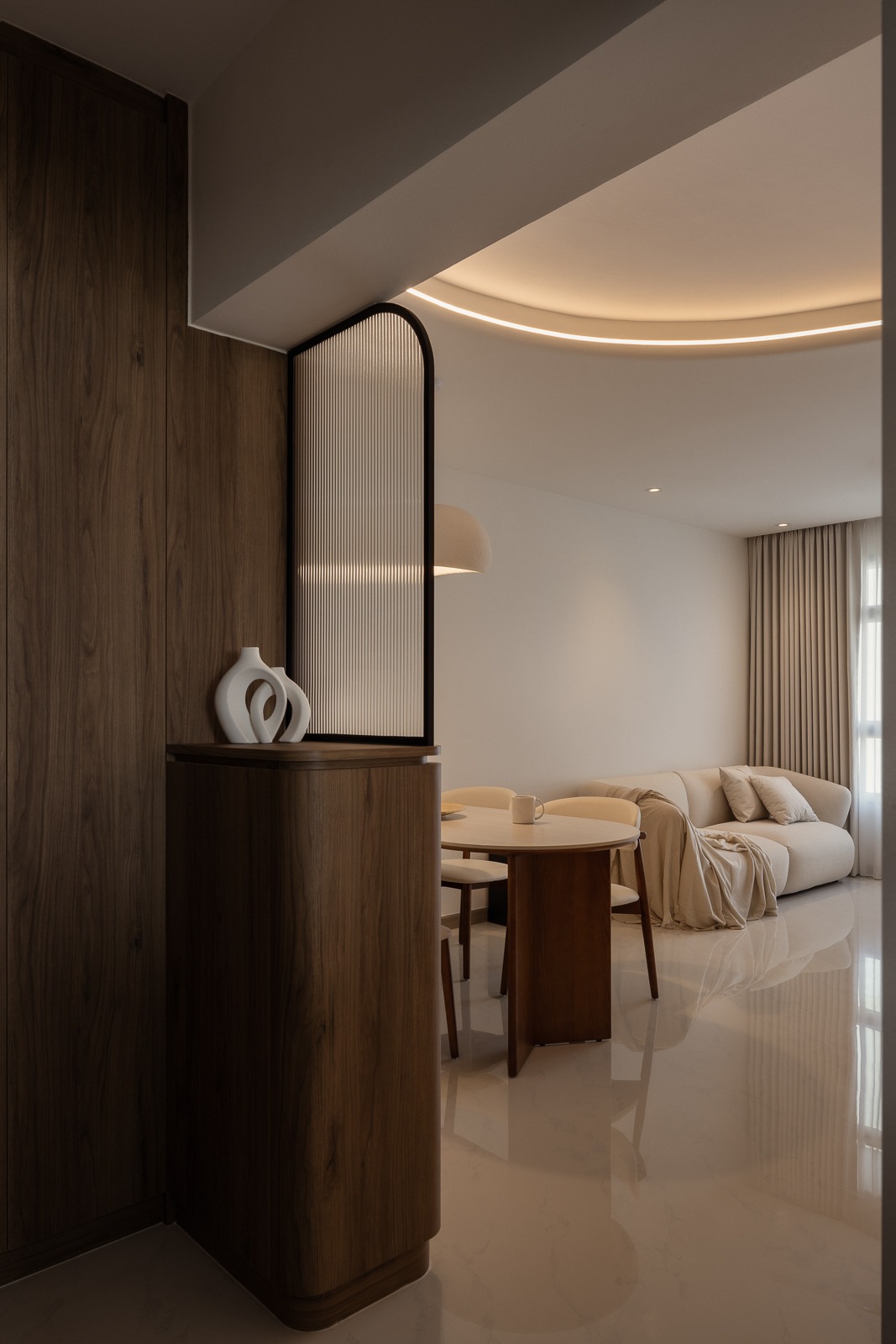
Curves have become one of the defining characteristics of contemporary interior design, but their appeal extends far beyond aesthetics. While straight lines communicate order and precision, curved forms introduce softness that naturally makes a home feel more welcoming. By balancing structure with gentle transitions, designers create interiors that feel calm, comfortable, and timeless without compromising practicality.
One of the greatest advantages of curved design is how it influences the way people experience a space. Sharp corners naturally create visual stopping points, whereas rounded edges encourage the eye to move smoothly throughout a room. This uninterrupted flow helps interiors feel more cohesive, particularly in apartments and HDB homes where multiple living functions often share the same open-plan area. Rather than each zone feeling separate, curved elements help connect spaces into a unified whole.
Curves also improve the experience of moving through a home. Dining areas, walkways, and entrances are often high-traffic zones where people pass one another throughout the day. Rounded furniture edges, curved feature walls, and softened cabinetry reduce visual bulk while making circulation feel more intuitive. Although the physical difference may be subtle, these details contribute to a home that feels less confined and easier to navigate.
In minimalist interiors, curved forms play another important role by introducing warmth. Modern homes frequently rely on clean lines, concealed storage, and simple colour palettes to achieve a refined appearance. Without careful planning, however, these elements can sometimes feel overly rigid or sterile. Rounded design features soften this precision, creating visual contrast that makes the overall environment feel more relaxed and inviting. The result is a home that retains its minimalist character while becoming noticeably more comfortable to live in.
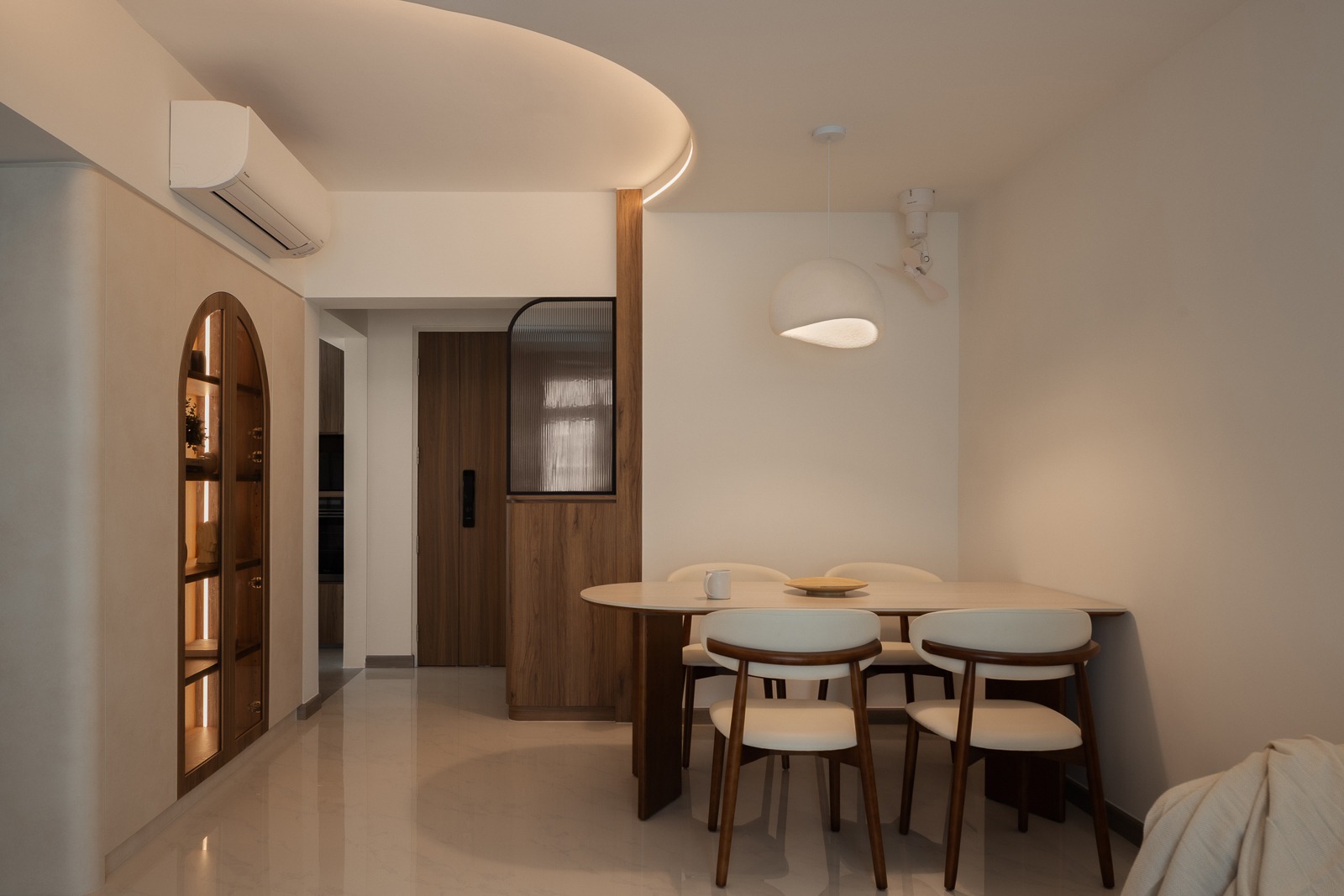
Curves also create natural focal points without relying on excessive decoration. An arched display cabinet, a circular mirror, a curved ceiling detail, or a rounded dining table immediately draws attention through its silhouette alone. Because the shape itself becomes the feature, fewer decorative elements are required to create visual interest. This aligns particularly well with contemporary design philosophies that prioritise quality over quantity and allow carefully selected pieces to stand out naturally.
Material selection further enhances the effectiveness of curved forms. Warm walnut finishes, textured wall surfaces, fluted glass, and soft neutral colours complement rounded profiles by reinforcing a sense of comfort and balance. These materials diffuse light gently across curved surfaces, creating subtle highlights and shadows that add depth without overwhelming the overall design. Together, shape and material work hand in hand to produce interiors that feel layered despite maintaining a restrained palette.
Lighting can also emphasise curved architecture in subtle yet impactful ways. Concealed LED strips integrated within curved ceilings, cabinetry, or display niches help highlight the continuous flow of each element while producing soft ambient illumination. Unlike direct lighting that draws attention to individual fixtures, integrated lighting allows the architectural form itself to become the focal point. This creates a calm atmosphere while reinforcing the seamless aesthetic that many contemporary homeowners seek.
Curved design is equally valuable from a practical perspective. Rounded corners on furniture and cabinetry can feel safer in households with young children, reducing the likelihood of accidental knocks against sharp edges. Circular dining tables often encourage conversation while improving circulation around the seating area, making them particularly suitable for compact homes where flexibility is important. Even small details such as rounded vanity countertops or softly curved shelving can improve everyday usability while maintaining a refined appearance.
Despite their many advantages, curves should be used thoughtfully rather than excessively. Incorporating too many rounded elements throughout a home may reduce visual definition and make spaces feel repetitive. Instead, successful interiors typically balance curved features with clean linear cabinetry, simple architectural lines, and restrained detailing. This contrast allows each curved element to stand out while preserving clarity and order within the overall composition.
Ultimately, curved design demonstrates that functionality and aesthetics do not have to compete. When integrated with intention, rounded forms improve movement, soften visual perception, and create homes that feel naturally inviting without relying on excessive ornamentation. Rather than being a passing trend, curves represent a timeless design approach that continues to enhance how people experience their living spaces every day.
Curved forms soften minimalist interiors, improve visual flow, and create spaces that feel warmer, calmer, and more welcoming than purely angular designs.
Yes. Rounded edges can improve circulation, reduce sharp corners, and make compact spaces feel more open while maintaining practicality.
Popular locations include dining tables, display cabinets, mirrors, feature walls, ceilings, kitchen islands, vanities, and decorative partitions.
Warm timber finishes, fluted glass, textured walls, natural stone, and neutral colour palettes complement curved forms while enhancing depth and warmth.
Absolutely. When used selectively, curved features improve movement and soften the appearance of compact layouts without making spaces feel cluttered.