
The entryway is one of the most frequently used areas of a home, yet it is often overlooked during interior planning. Shoes, bags, keys, deliveries and everyday essentials can quickly accumulate near the entrance. By organising storage around daily routines and maintaining clear circulation, even a compact entryway can become a practical and visually welcoming part of the home.
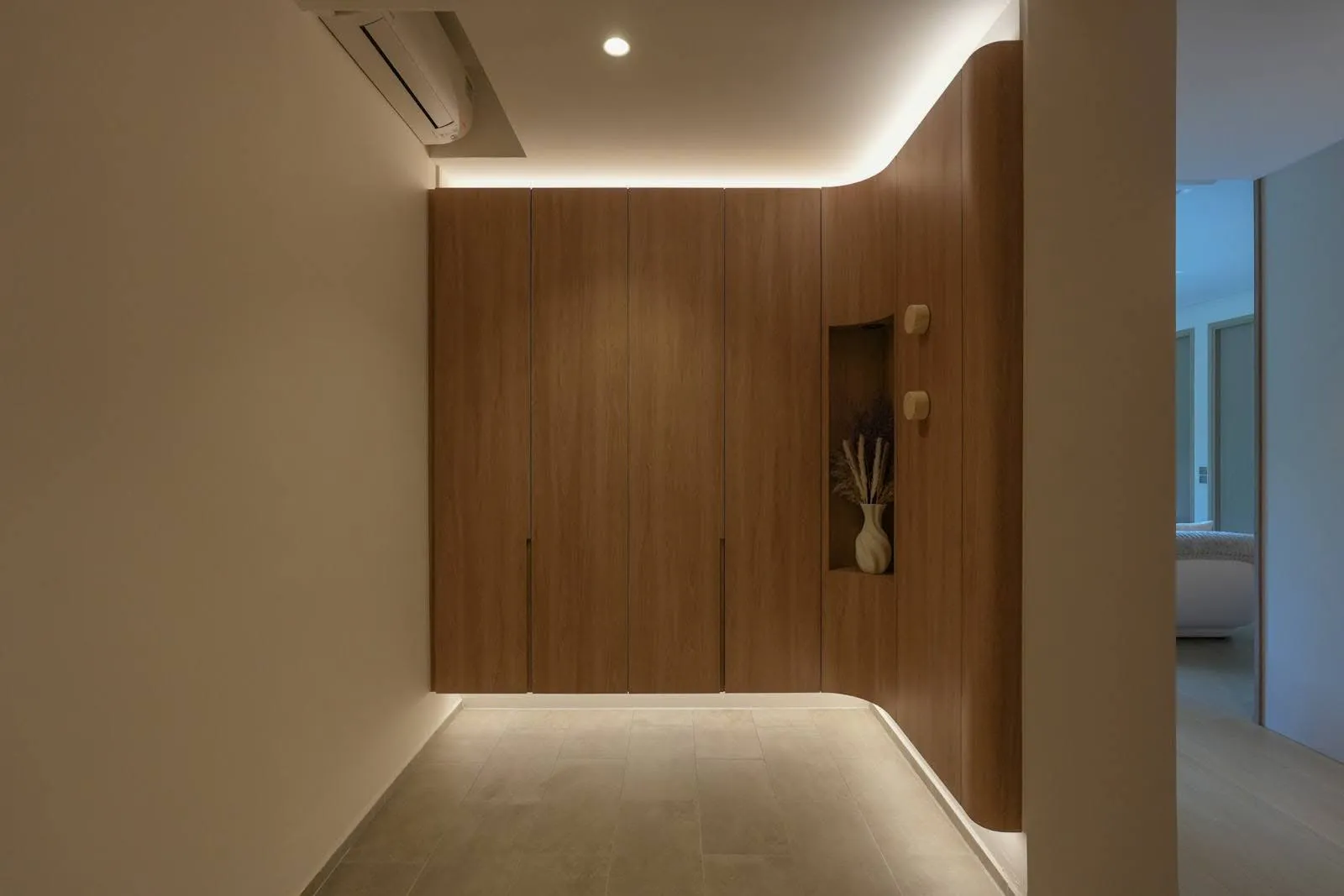
The entrance of a home serves a different purpose from most other rooms. It is a transition space where people arrive, remove shoes, put down belongings and prepare to leave again.
Because these activities happen repeatedly throughout the day, small inconveniences can become noticeable over time.
A practical entryway should therefore be designed around the household's daily routines rather than simply treated as a location for decorative cabinetry.
Shoe storage is often the largest requirement, particularly in Singapore homes where shoes are commonly removed before entering the main living area.
Before deciding on a shoe cabinet, homeowners should consider how many pairs need to be stored and how frequently they are used.
Everyday footwear should remain accessible, while less frequently worn shoes can occupy higher or deeper compartments. Designing all shelves at the same height may waste space because different types of footwear have different dimensions.
Adjustable shelving can provide flexibility for sneakers, formal shoes and taller footwear. Ventilation should also be considered, particularly when shoes may retain moisture after outdoor use.
The relationship between shoe storage and circulation is equally important. A cabinet that is too deep can narrow the entrance and create an uncomfortable passage into the home.
Where space is limited, a shallower cabinet or carefully planned built-in may be more appropriate than a large freestanding storage unit.
A seating area can also improve everyday functionality. A compact bench provides somewhere to sit while putting on shoes, particularly for children, older family members or anyone who prefers not to balance while changing footwear.
If space allows, the bench can be integrated into the shoe cabinet or include storage beneath it. Combining functions reduces the need for additional furniture.
Another useful feature is a dedicated drop zone. Keys, access cards, wallets and small bags are often placed on the nearest available surface when someone enters the home.
Providing a shallow drawer, recessed shelf or small countertop gives these belongings a consistent location and prevents them from accumulating on dining tables or kitchen counters.
Hooks can be useful for frequently used bags, but their placement should be considered carefully. Too many exposed hooks can make the entryway appear cluttered, especially when several bags are hanging simultaneously.
A combination of concealed compartments and limited open storage generally provides greater visual control.
Lighting is another important consideration. Entryways may receive less natural light than adjoining living spaces, particularly when surrounded by full-height cabinetry.
A well-positioned ceiling light can provide practical illumination, while concealed lighting within a niche or beneath cabinetry can create a softer transition into the home.
Mirrors can also serve a practical purpose. Beyond allowing homeowners to check their appearance before leaving, they reflect light and can help a narrow entrance feel less visually enclosed.
However, mirror placement should respond to the layout. A mirror positioned directly opposite a cluttered storage area may simply reflect that clutter.
Material selection should account for frequent contact and cleaning. Entryway floors encounter outdoor dirt, moisture and repeated foot traffic, making durability and maintenance important considerations.
Cabinet surfaces may also be touched frequently when shoes and belongings are retrieved. Finishes that are reasonably easy to clean can be more practical than highly delicate surfaces.
The visual relationship between the entryway and living room should also be considered. Because the entrance is often the first view into the home, overly contrasting cabinetry can create a strong visual interruption.
Using finishes that relate to the wider interior helps the entrance feel integrated rather than designed as a separate compartment.
Privacy can be another consideration, particularly where the main living area is directly visible from the front door. A partial-height feature, carefully positioned cabinetry or a suitable screen may help establish a more gradual transition without fully enclosing the entrance.
Any additional partition should be evaluated against the available circulation and natural light.
Ultimately, a successful entryway is not measured by how elaborate its feature wall or cabinetry appears. Its value comes from making repeated everyday activities easier.
When shoes, bags, keys and other essentials have convenient locations, the entrance becomes easier to maintain and the rest of the home is less likely to accumulate unnecessary clutter.

Providing concealed storage for shoes and bags, limiting exposed hooks and creating dedicated locations for everyday essentials can help maintain a more organised entrance.