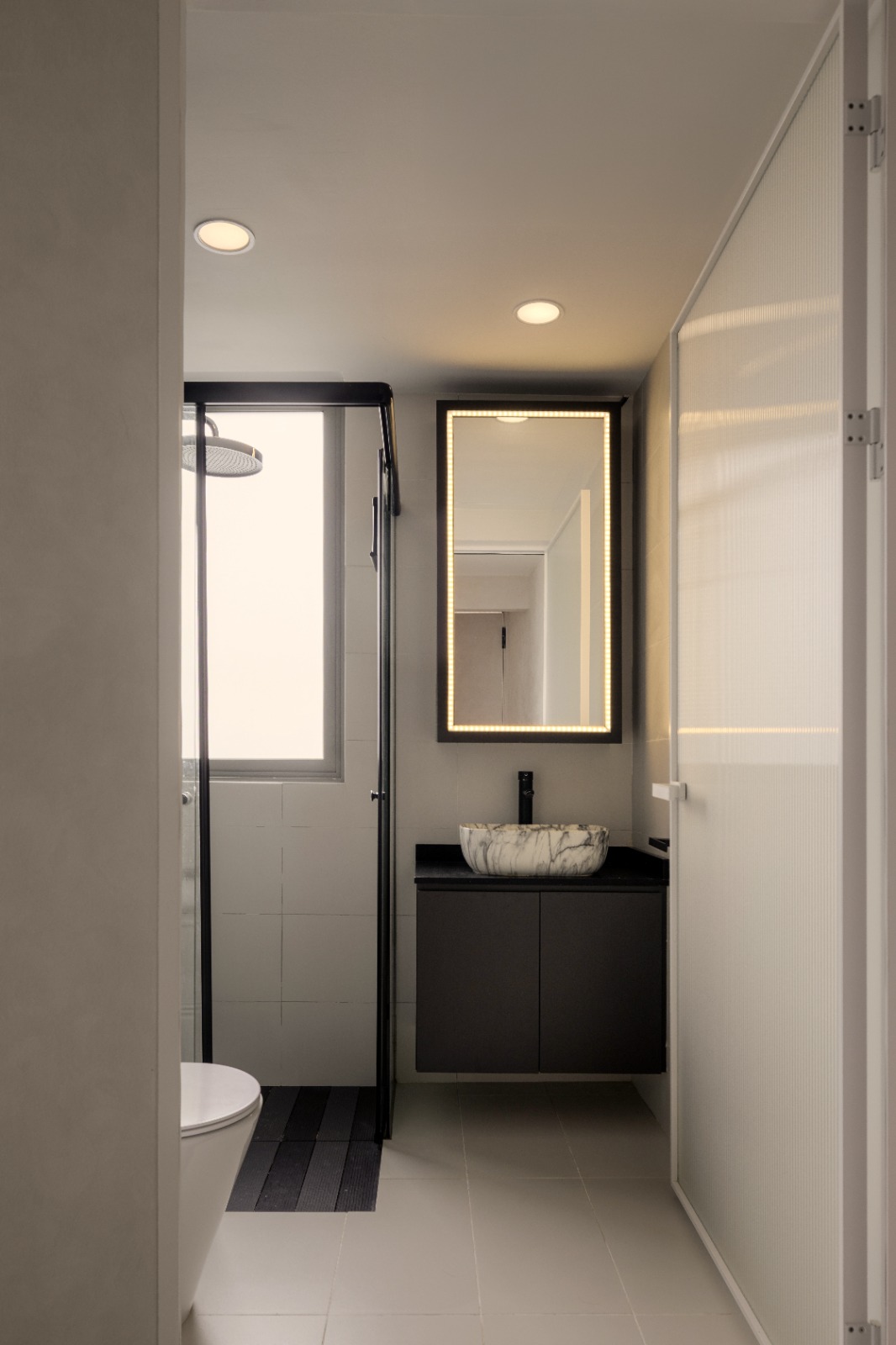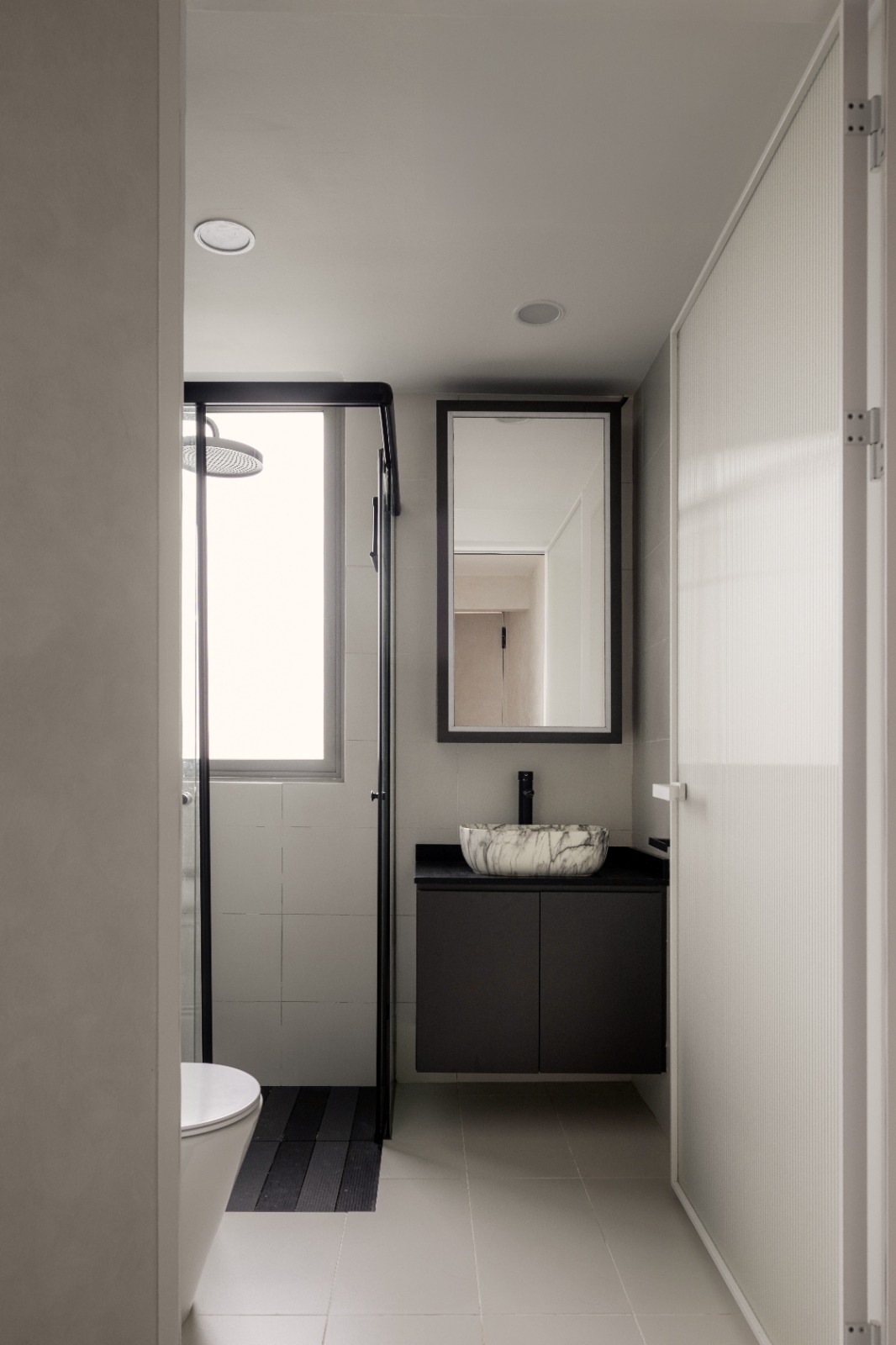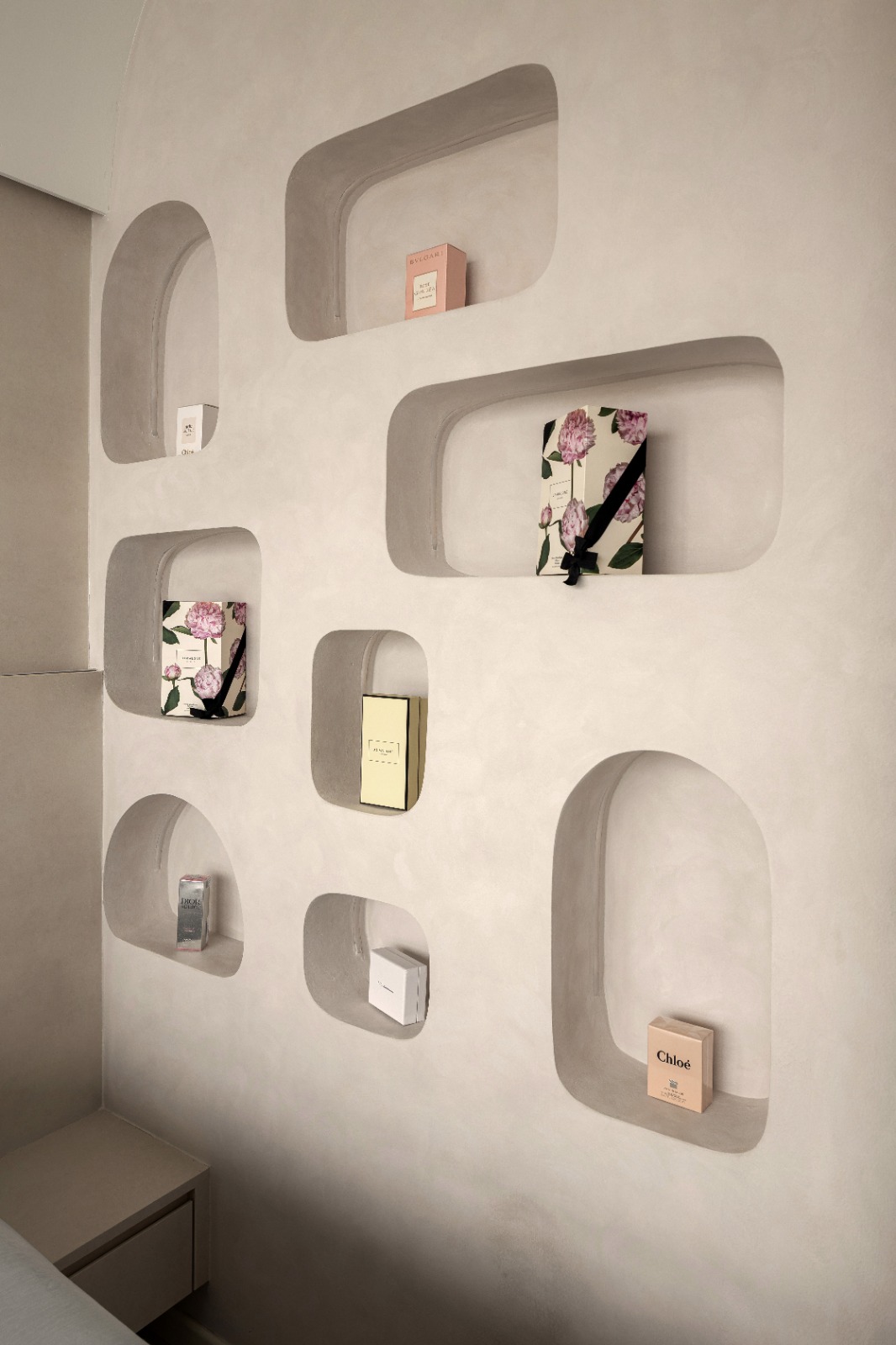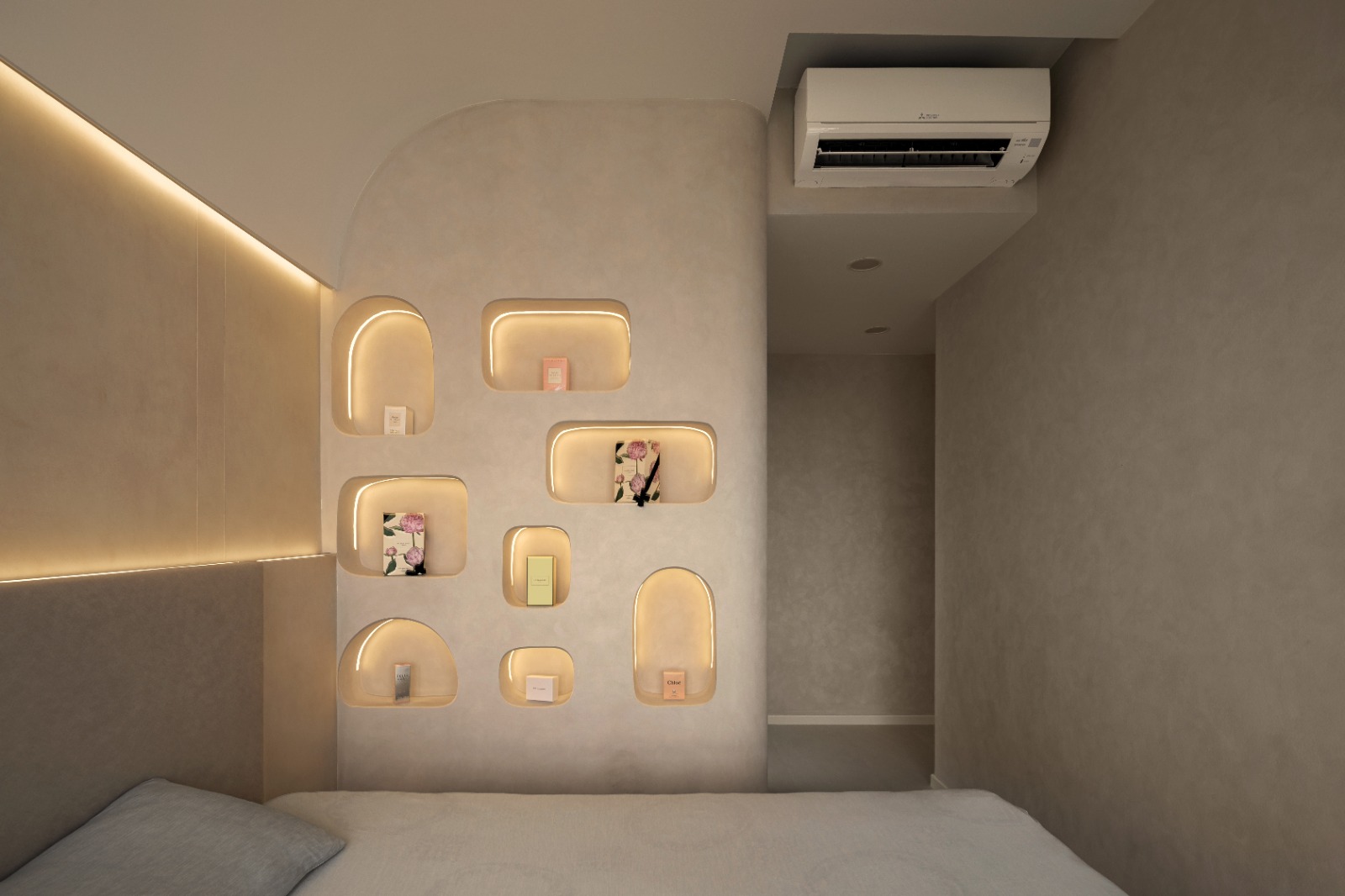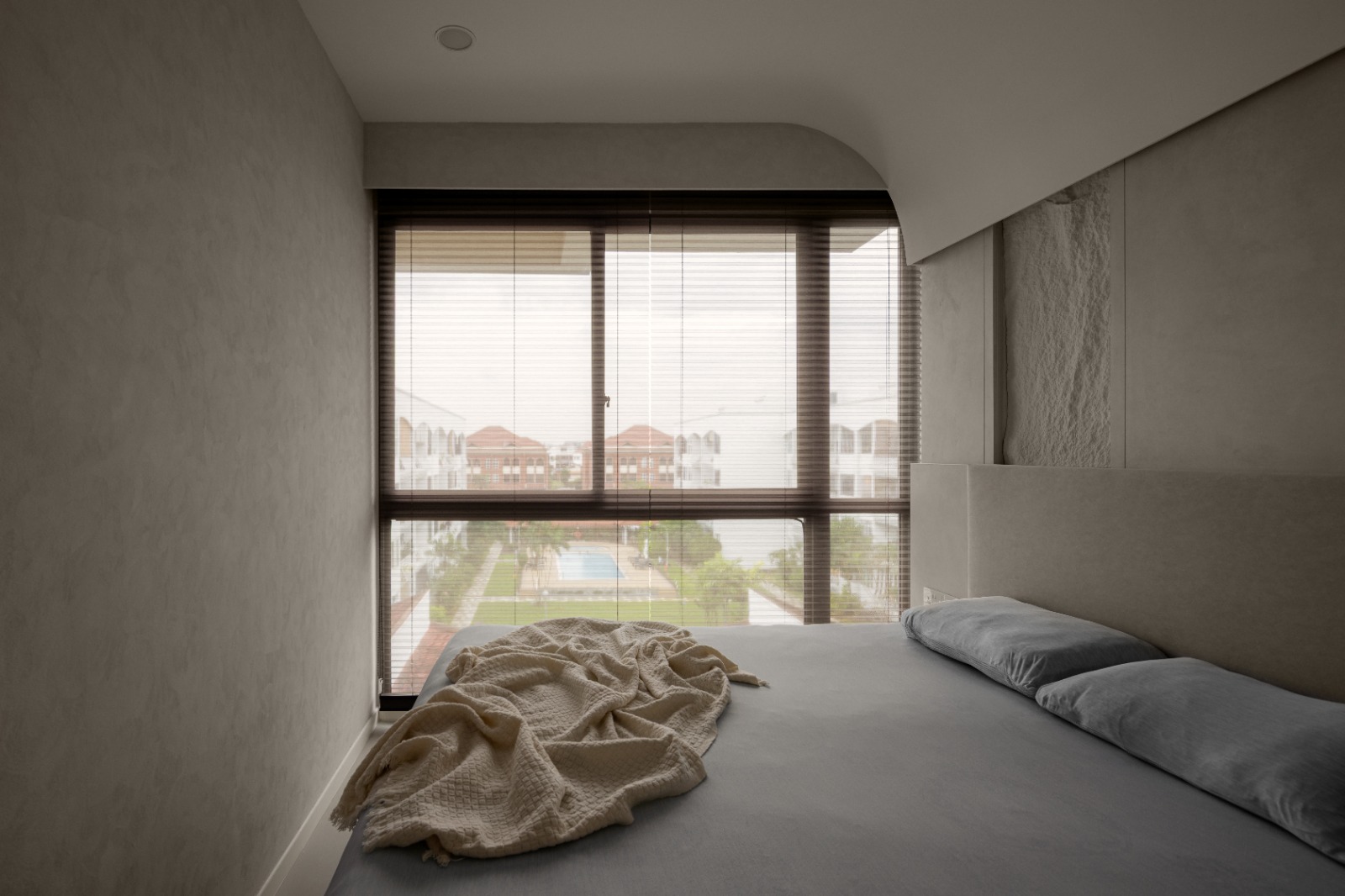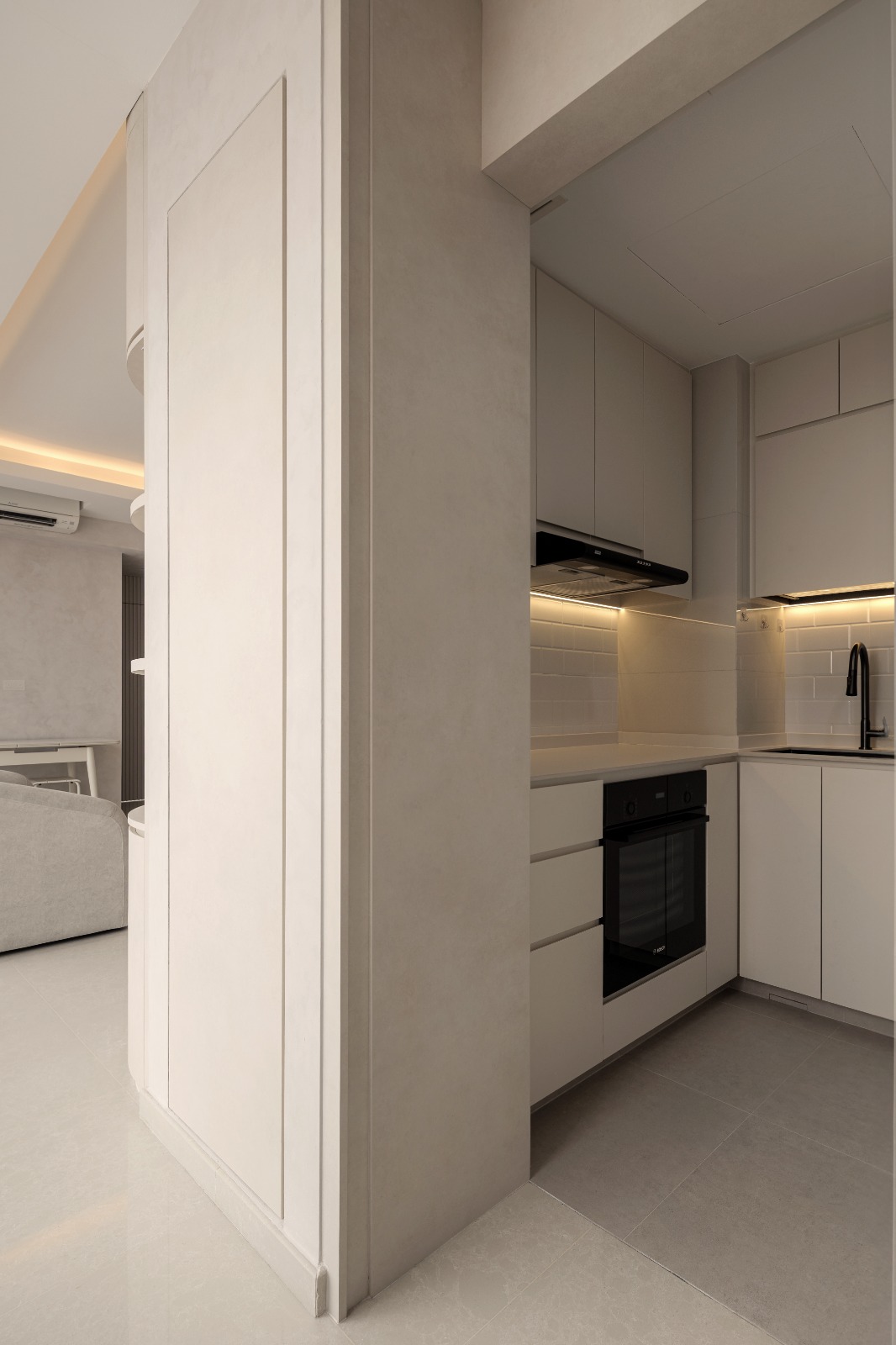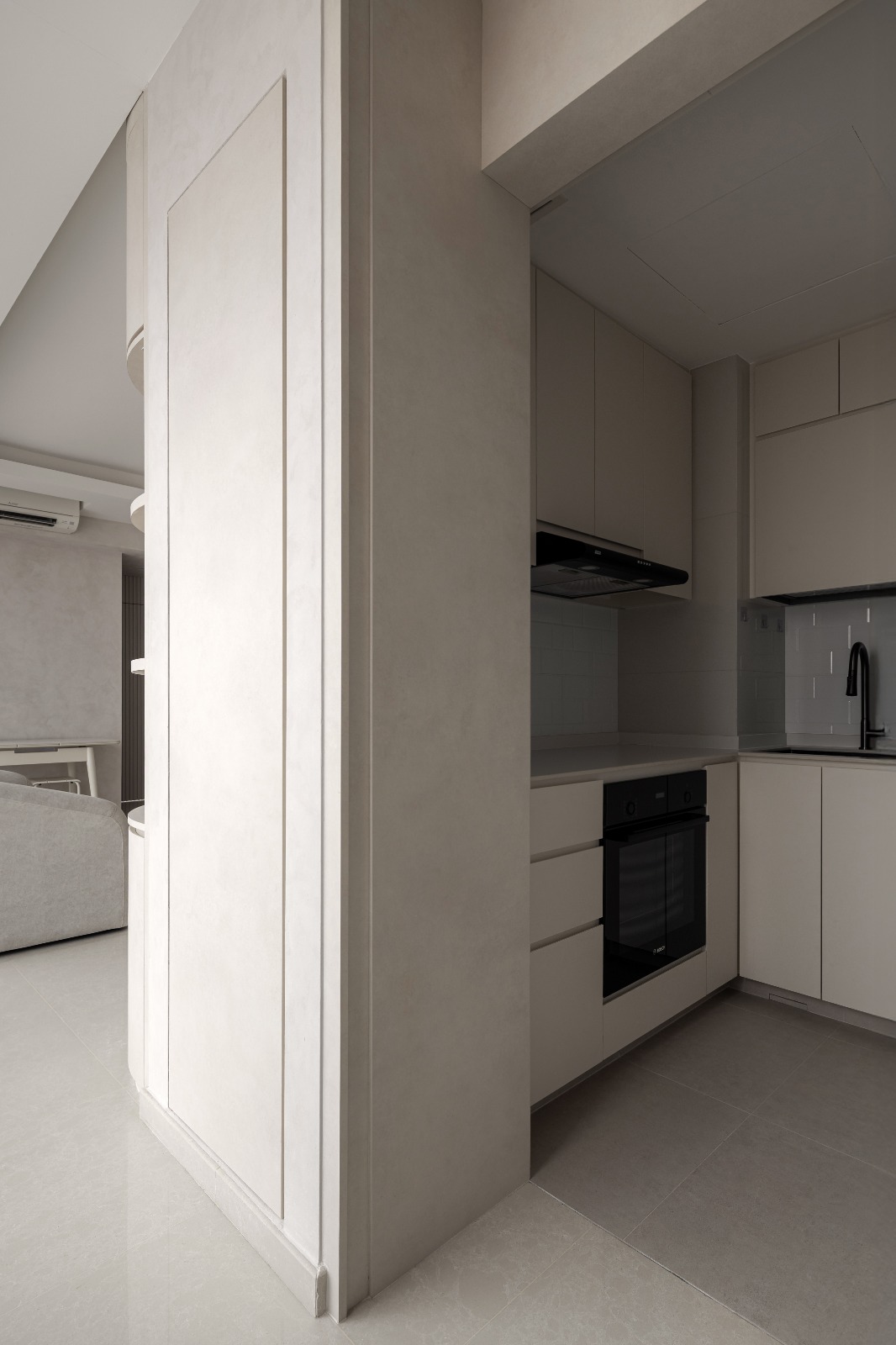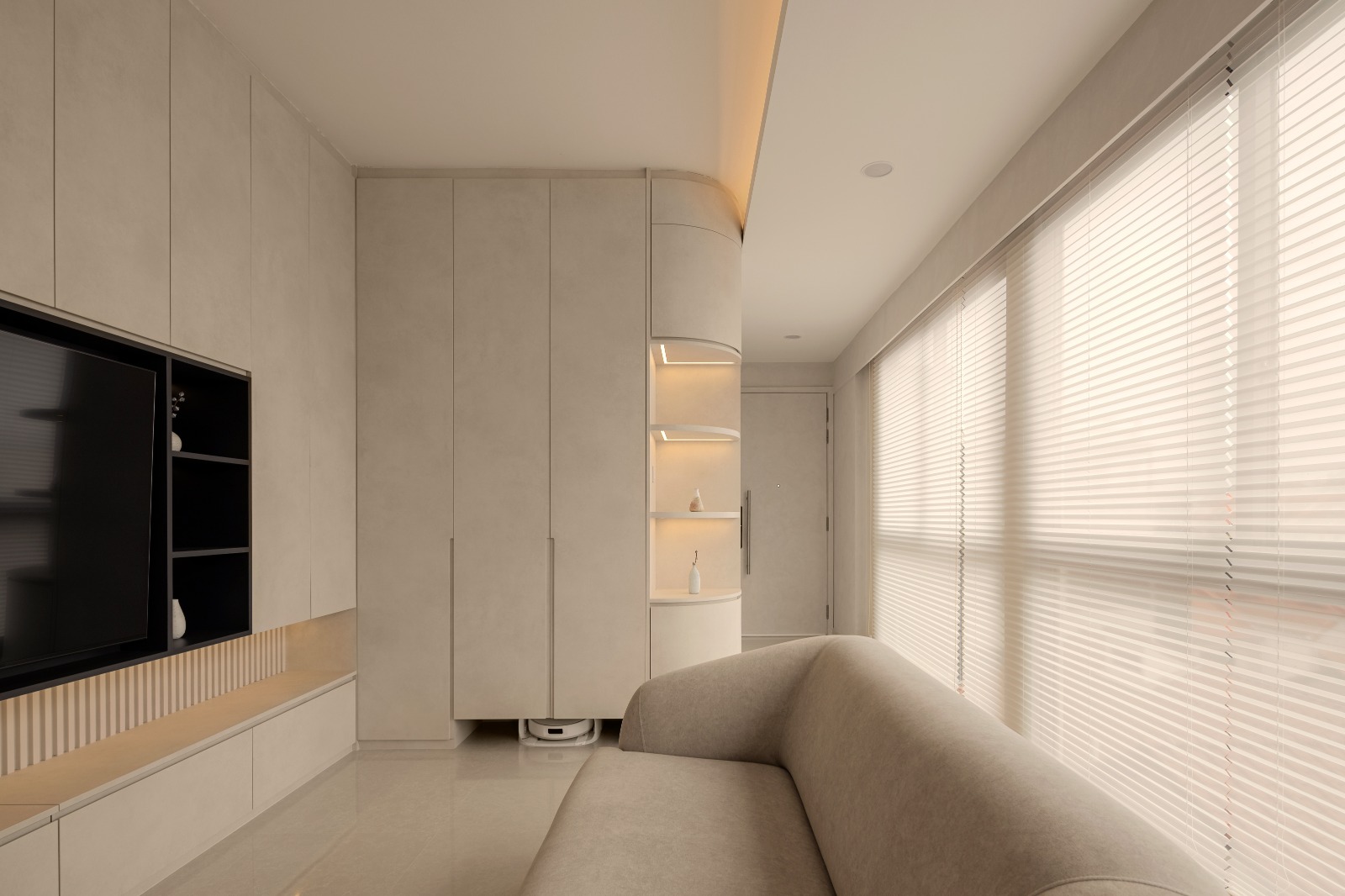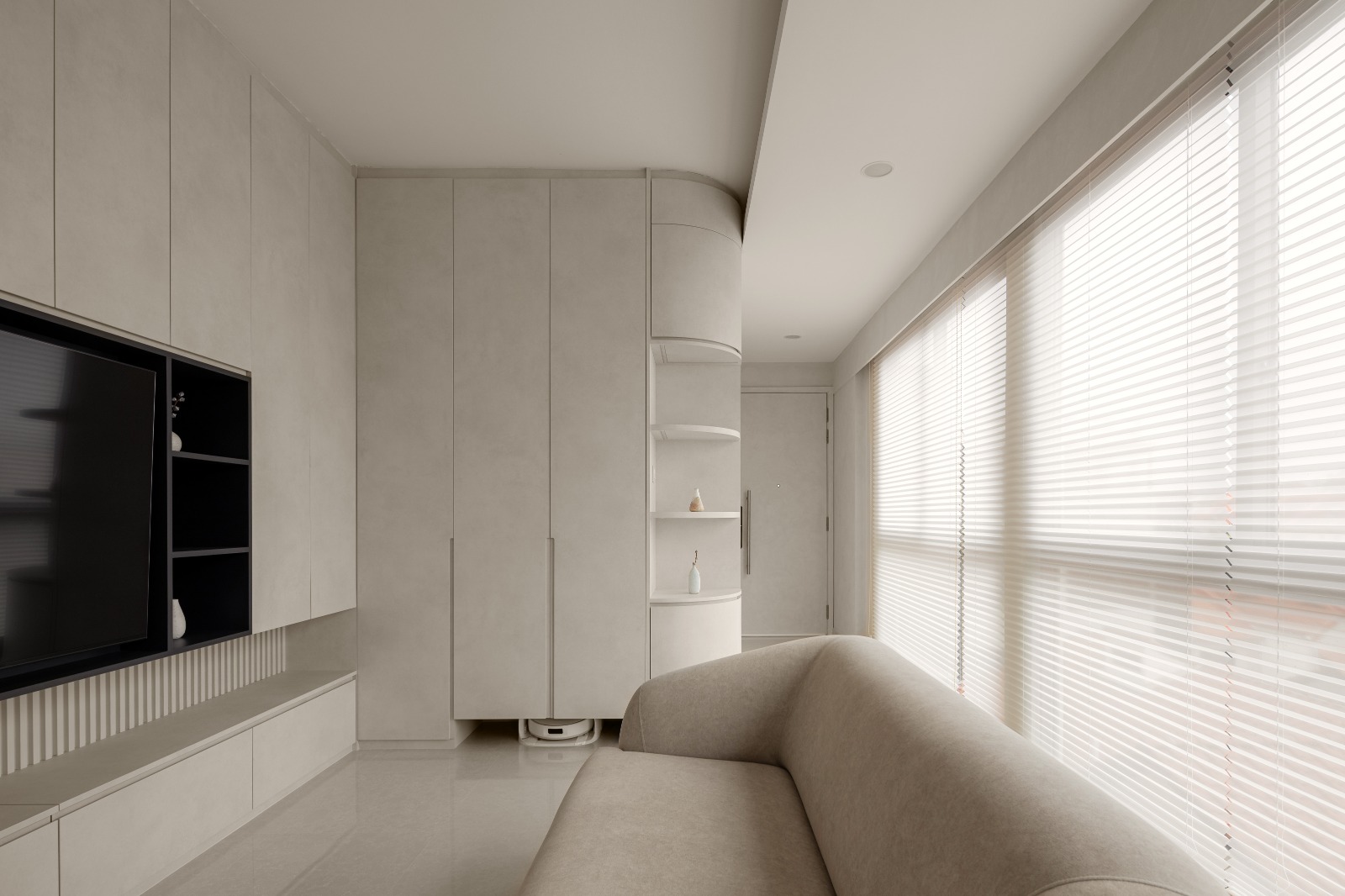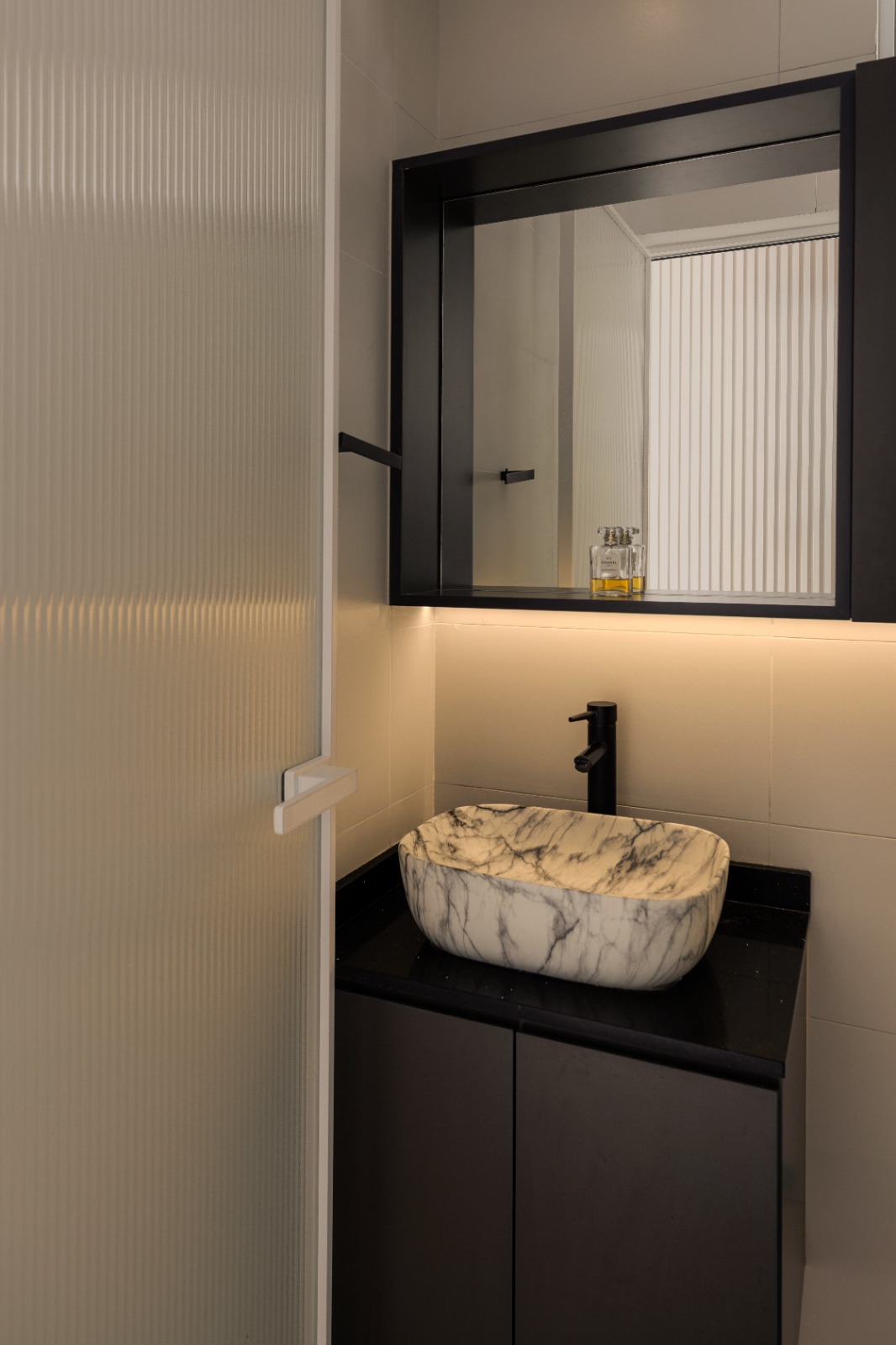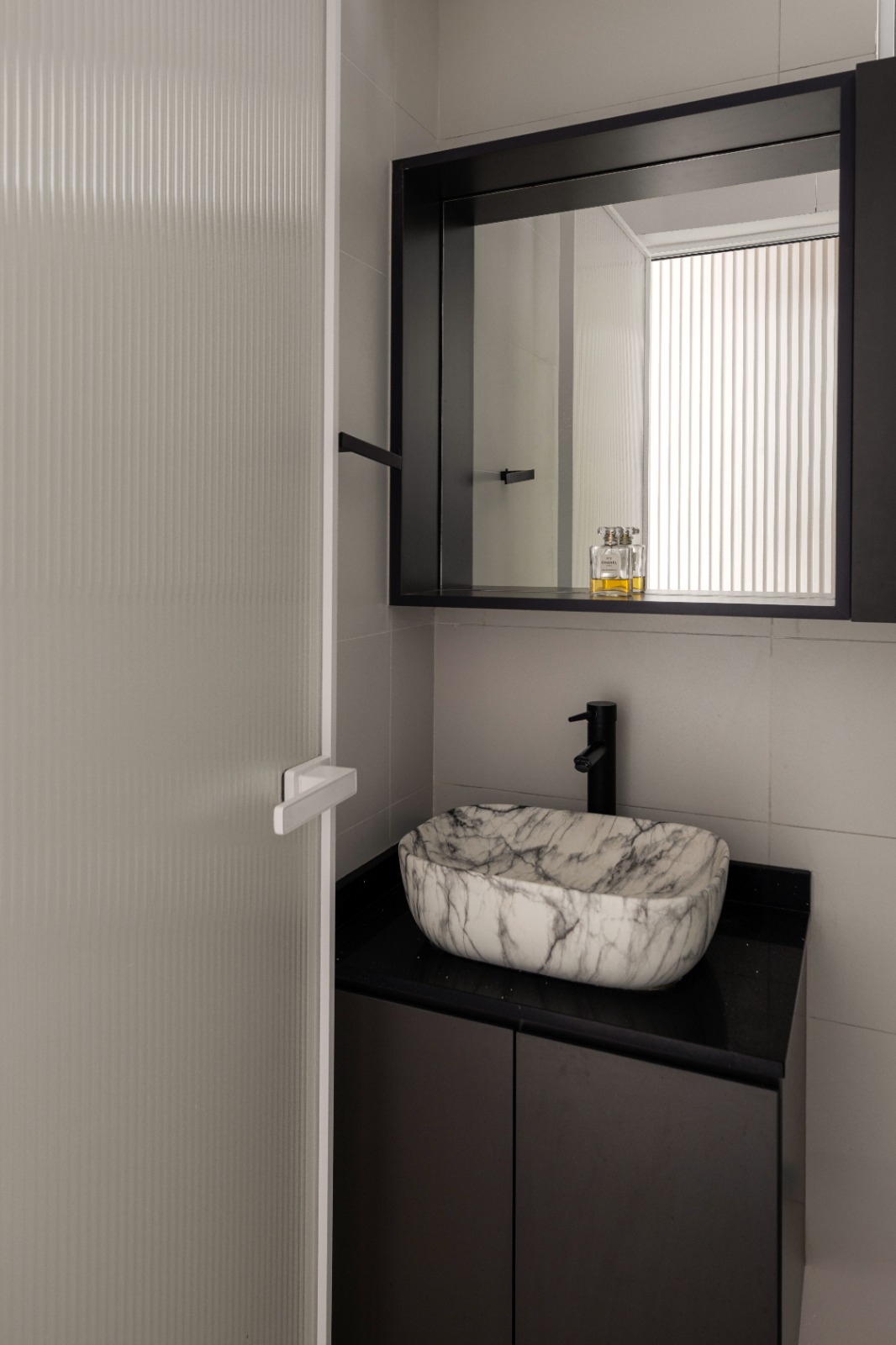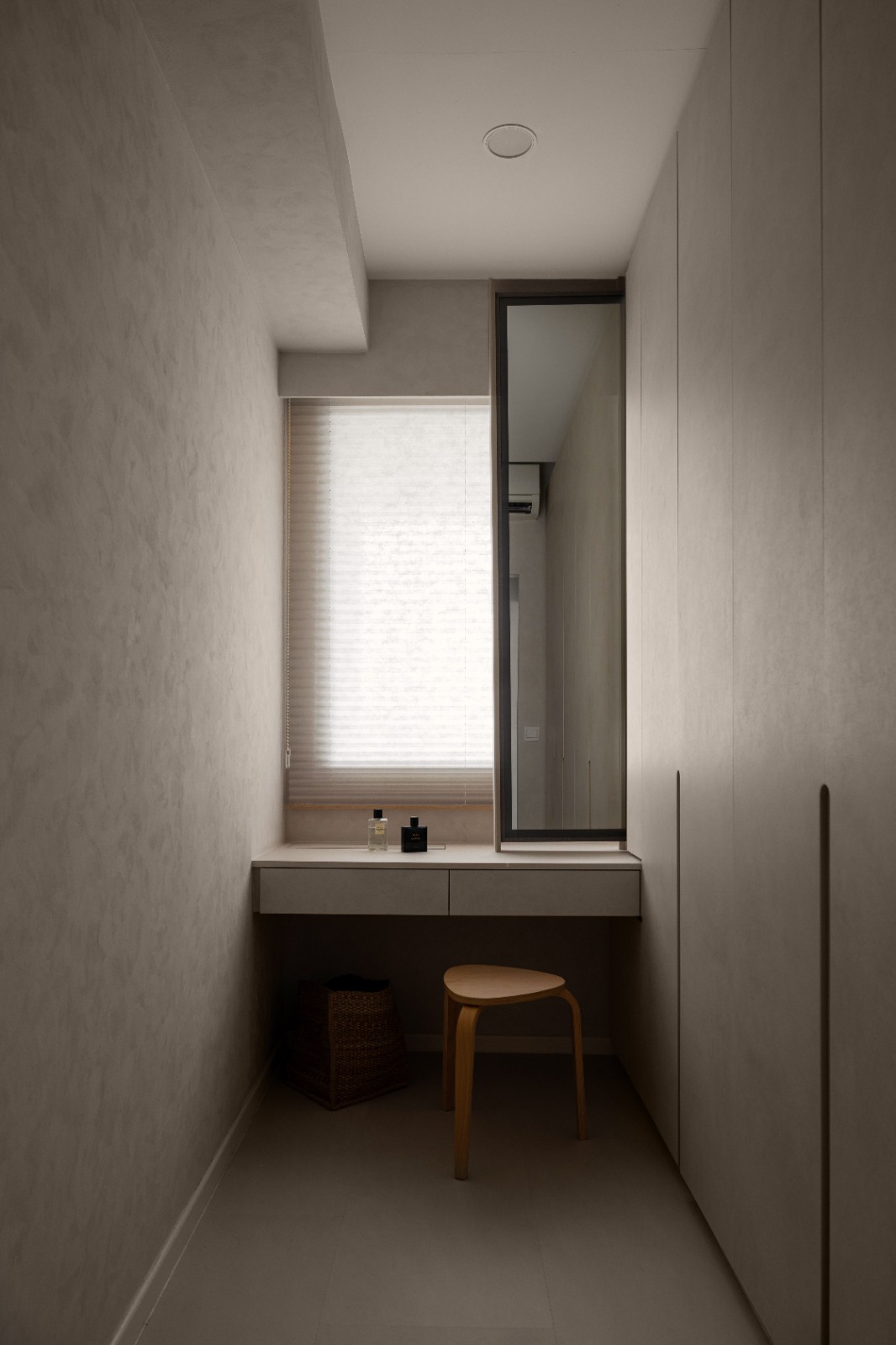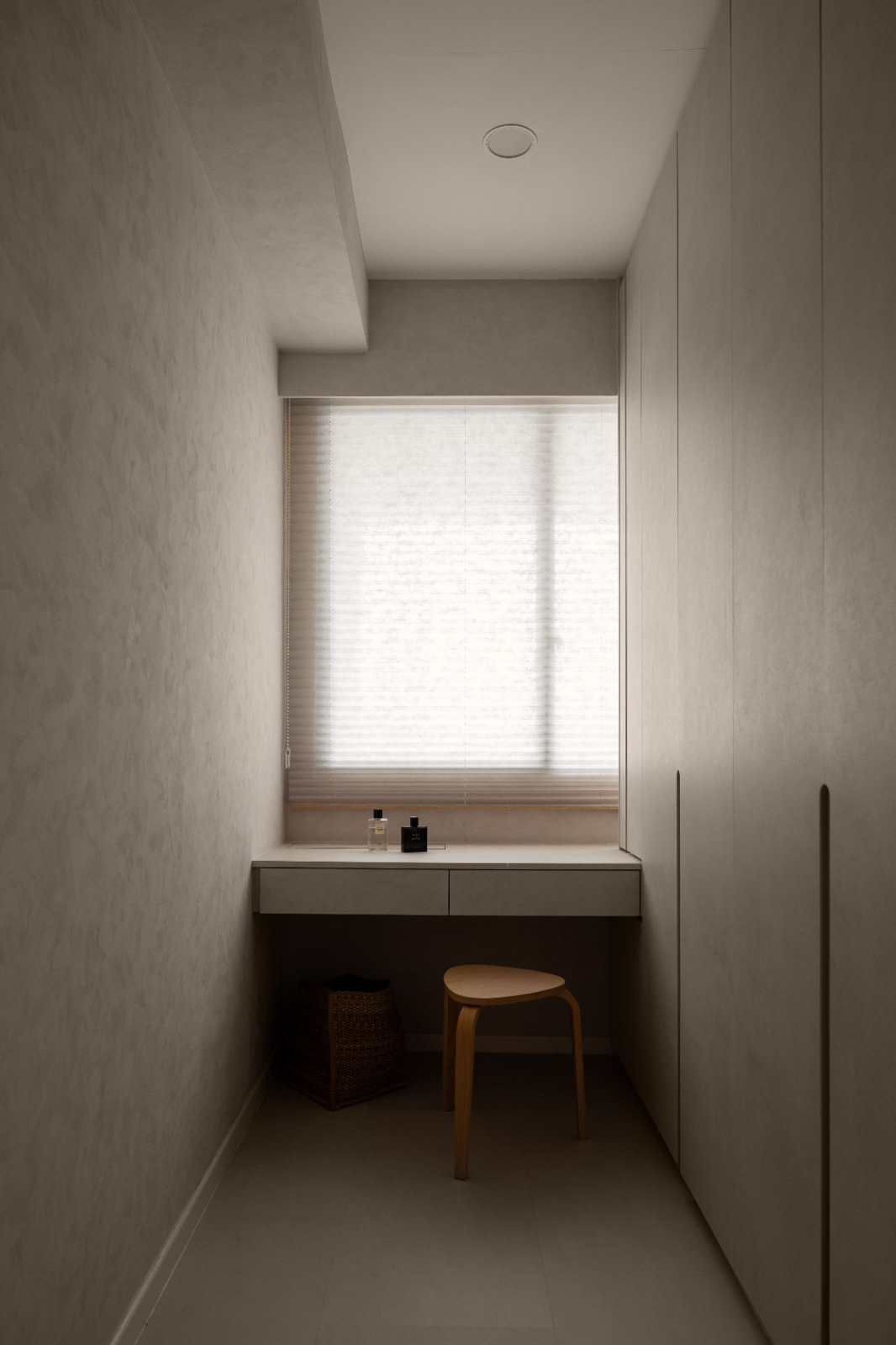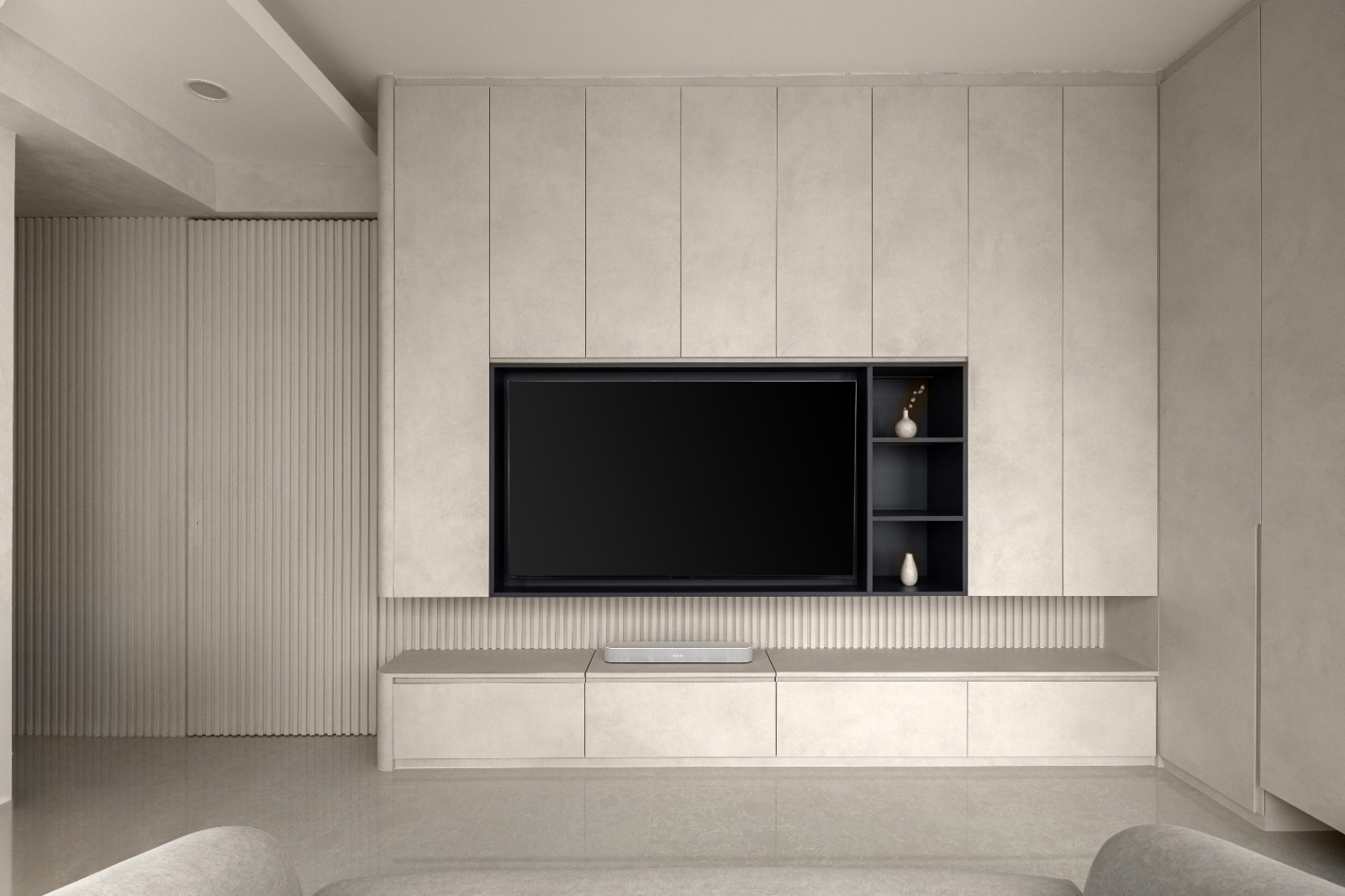
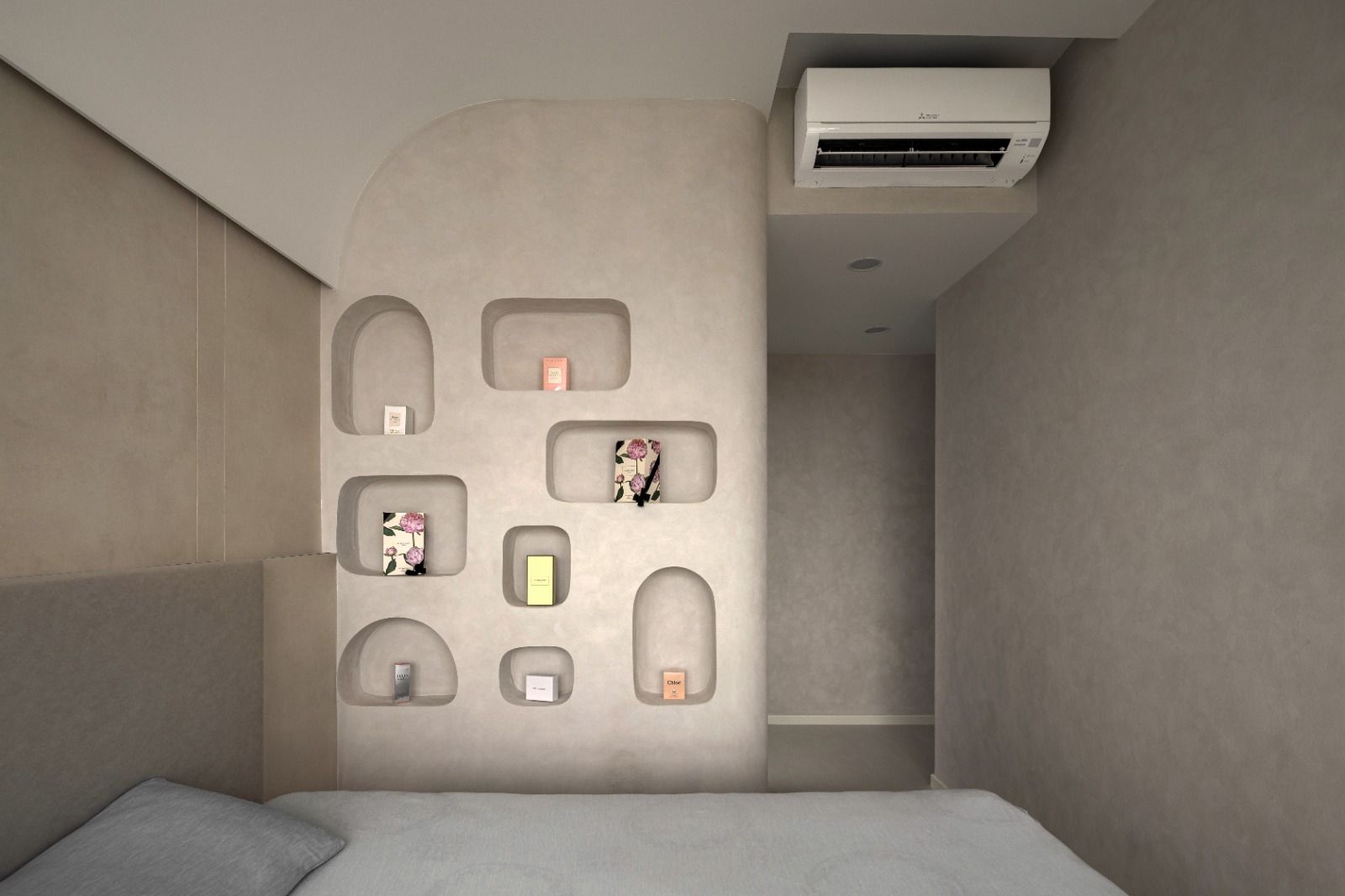
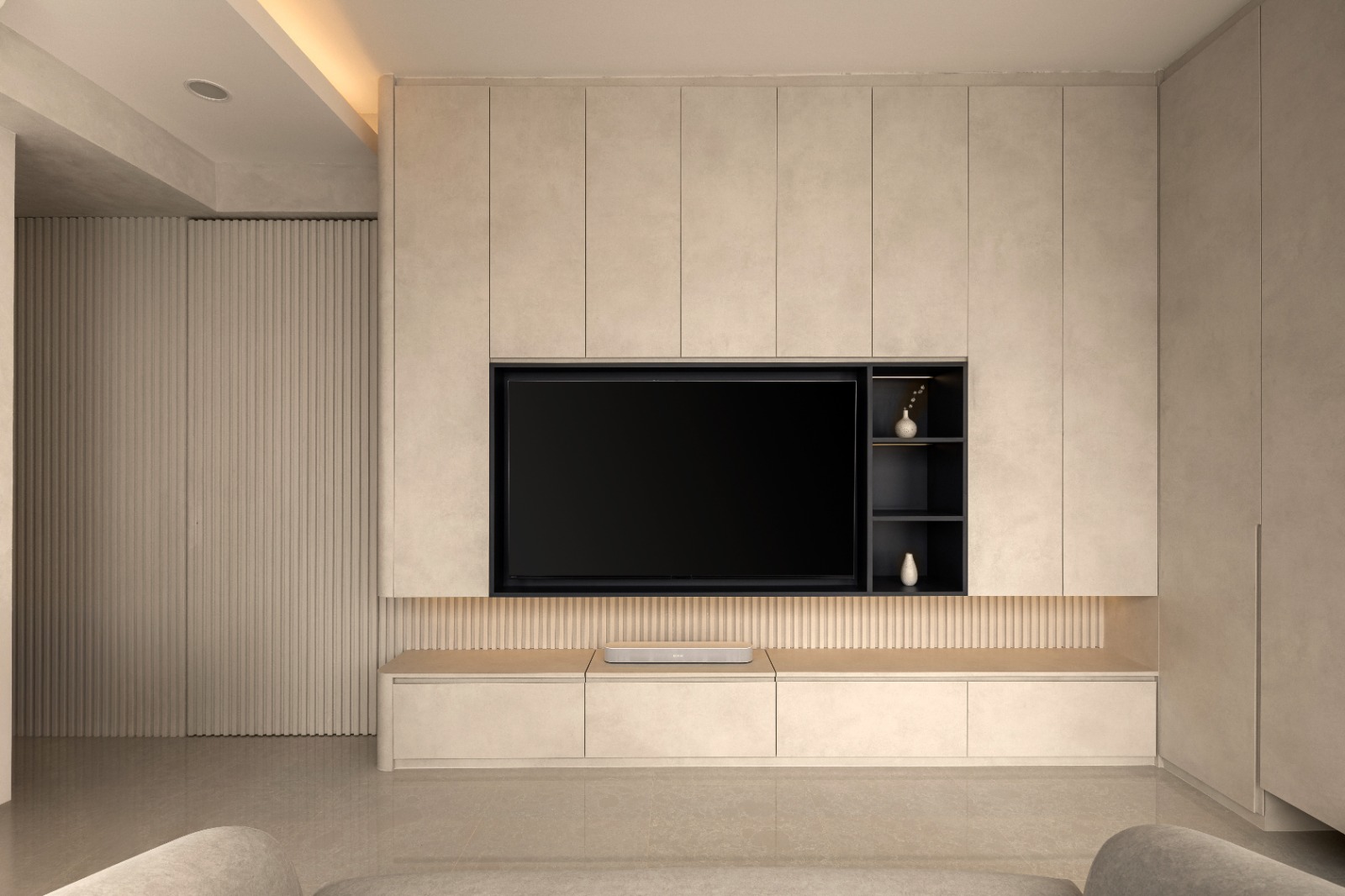
Lighting becomes a more expressive architectural element in the bedroom, where a composition of irregular rounded niches forms a distinctive feature beside the bed. Each recess is individually illuminated, turning everyday objects and fragrances into part of the room’s visual composition while providing a softer alternative to conventional display shelving. Elsewhere, concealed lighting follows ceiling edges, cabinetry and bathroom mirrors to provide ambient illumination without adding visual clutter. Practical functions are similarly integrated throughout the home: full-height storage extends around the living area, a compact vanity is positioned beneath the bedroom window, and the kitchen uses continuous upper and lower cabinetry to maximise storage within a relatively small footprint. In the bathrooms, black fittings and a veined vessel basin introduce sharper contrast against the neutral surroundings, while translucent fluted doors allow light to pass through without sacrificing privacy. Together, these details show how a minimalist interior can develop a strong identity through thoughtful lighting, texture and carefully controlled architectural gestures rather than decoration alone.